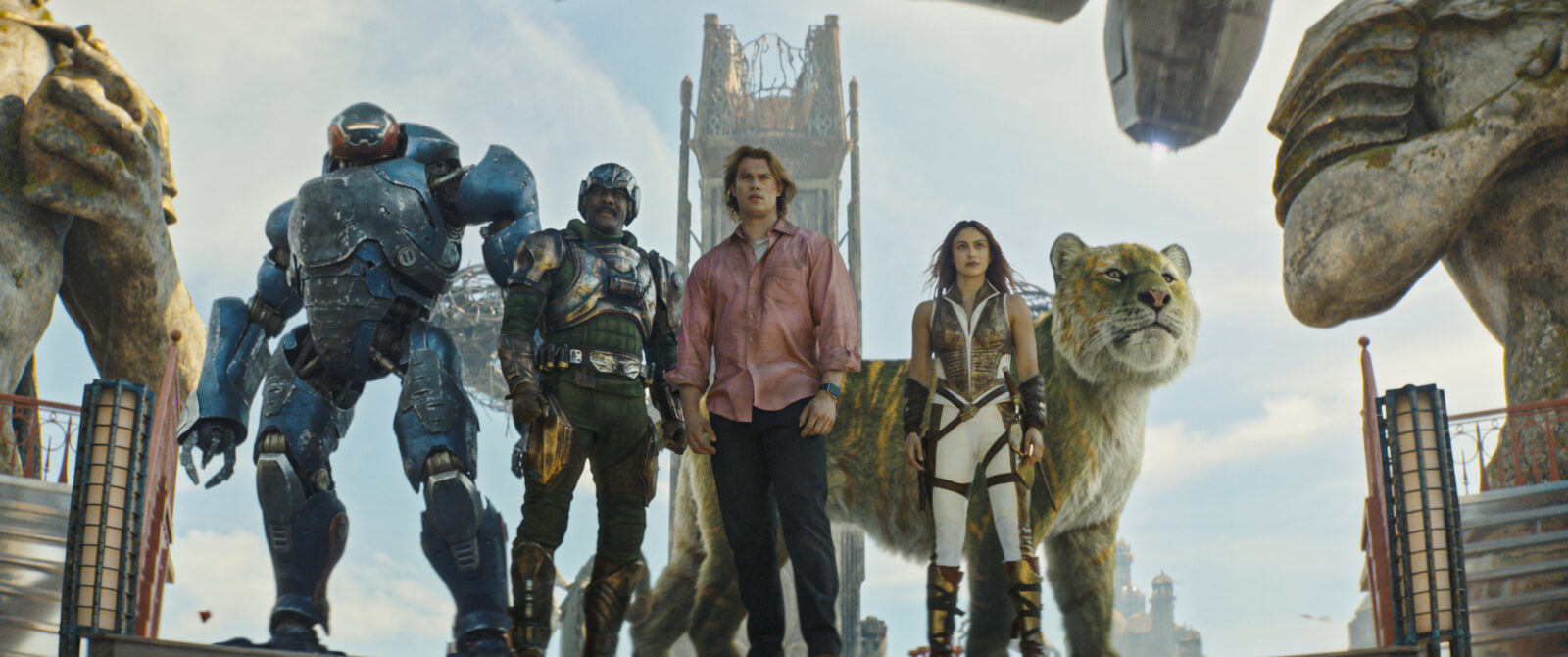

For production designer Guy Hendrix Dyas, the world of Masters of the Universe was never just about nostalgia. It was about scale, immersion, and treating Eternia as a fully realized world that could stand alongside the biggest modern fantasy universes. In our set visit for the film in the UK, he shared with us some behind-the-scenes insights.
“Each time on Earth, it’s really just enough to put this other incredible world in context,” Dyas explained. “Seventy-five percent of movies are not on Earth.”
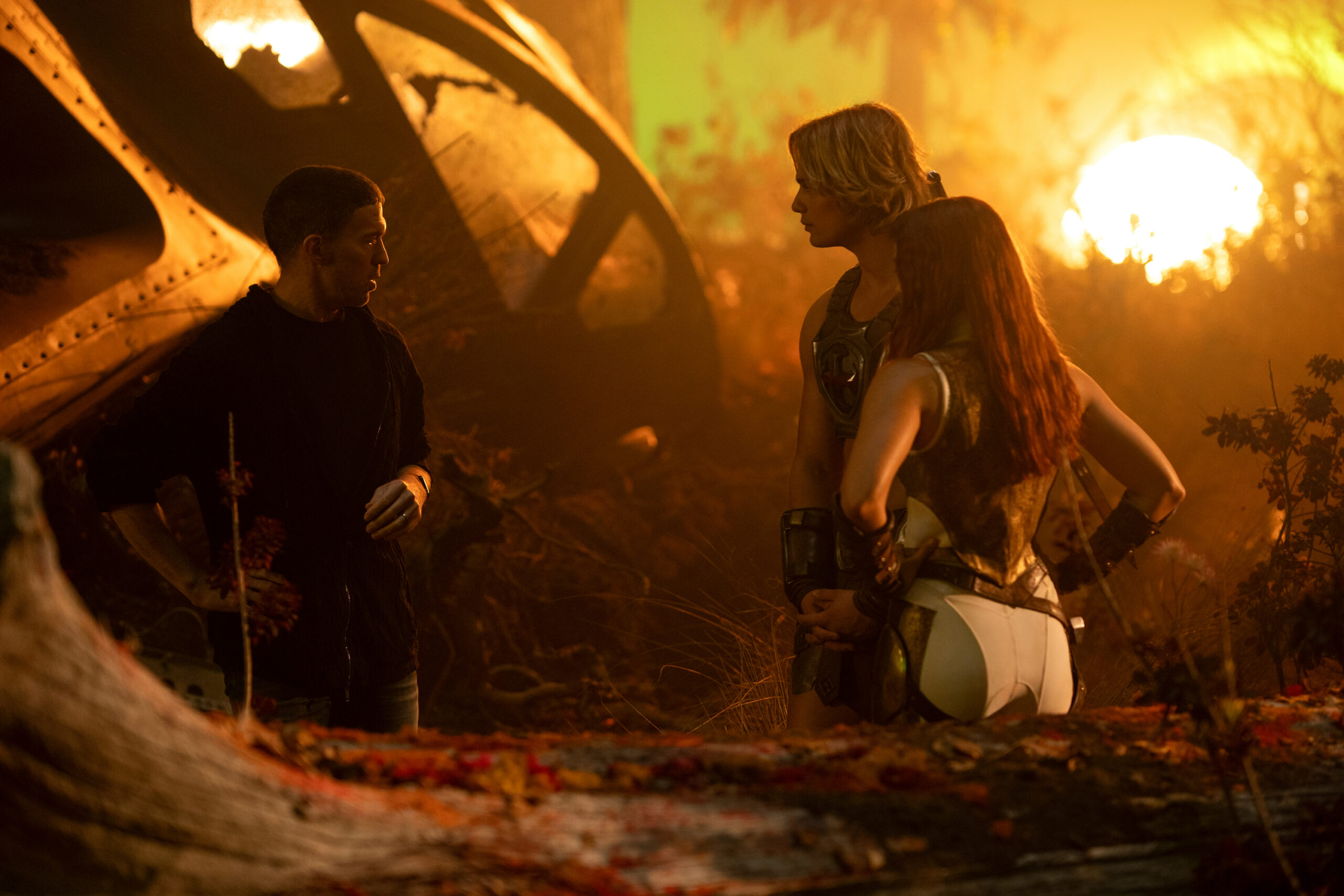
That mindset shaped everything he and director Travis Knight built together. Rather than treating Eternia as a stylized callback to the 1980s animated series, they aimed to reframe it as something visceral and grounded in its own internal logic. Dyas emphasized that the goal was to move beyond the franchise’s sometimes playful reputation and create something emotionally and visually believable.

From the beginning, Dyas deliberately avoided revisiting the original animation in detail. Instead, he leaned on memory and instinct. He wanted the designs to come from emotional connection rather than direct replication.
“I made a point of not looking at the animation,” he said. “I didn’t want to just go back and copy it.”
That approach allowed him to rebuild key locations like Eternos and Castle Grayskull with more depth and architectural history than had ever been shown before. One of the biggest creative challenges was Grayskull itself, a location so iconic that any reinterpretation carries enormous fan expectation. Dyas treated it as a structure that had evolved over time, built in layers like real-world castles.
“Every castle is a castle built upon a castle upon a castle,” he explained.

Because the original series rarely showed anything beyond Grayskull’s front-facing silhouette, Dyas had to imagine what existed beyond it: fortifications, internal spaces, and a broader architectural ecosystem. The result is a fully developed structure that feels ancient, functional, and mythic all at once.
That same process extended to the wider world of Eternia. Dyas worked from early script readings, sketching as he went, then refining ideas over multiple passes. Subternia, for example, began as a relatively simple concept of a hidden world beneath the surface. Dyas reimagined it as a massive stalactite-like formation, with entire communities built into its vertical landscape. The idea expanded the scale of the film’s mythology while also giving the filmmakers a striking new environment for action and storytelling. Collaboration with Knight was central to every step of the process. Dyas described him as a director with a strong visual instinct and a clear sense of how each environment would eventually be filmed.
“Travis already knew how he was going to shoot it,” Dyas said. “He has such great taste and such a good eye.”
Rather than a top-down hierarchy, Dyas saw his role as collaborative and responsive, feeding ideas into Knight’s vision while shaping the physical world around it.
“I see my role as his sidekick,” he said. “I’m just there to feed the fire.”
A major challenge throughout development was balancing fidelity to the original franchise with the need for reinvention. Dyas and the team made a conscious decision to preserve recognizable silhouettes, colors, and character identities while expanding everything around them into something more grounded and cinematic. That meant maintaining the essence of figures like Skeletor, Man-At-Arms, and Goat Man, while rethinking how they existed within a lived-in world.
“We made a pact as fans,” Dyas said. “We didn’t want to disappoint the fanbase.”

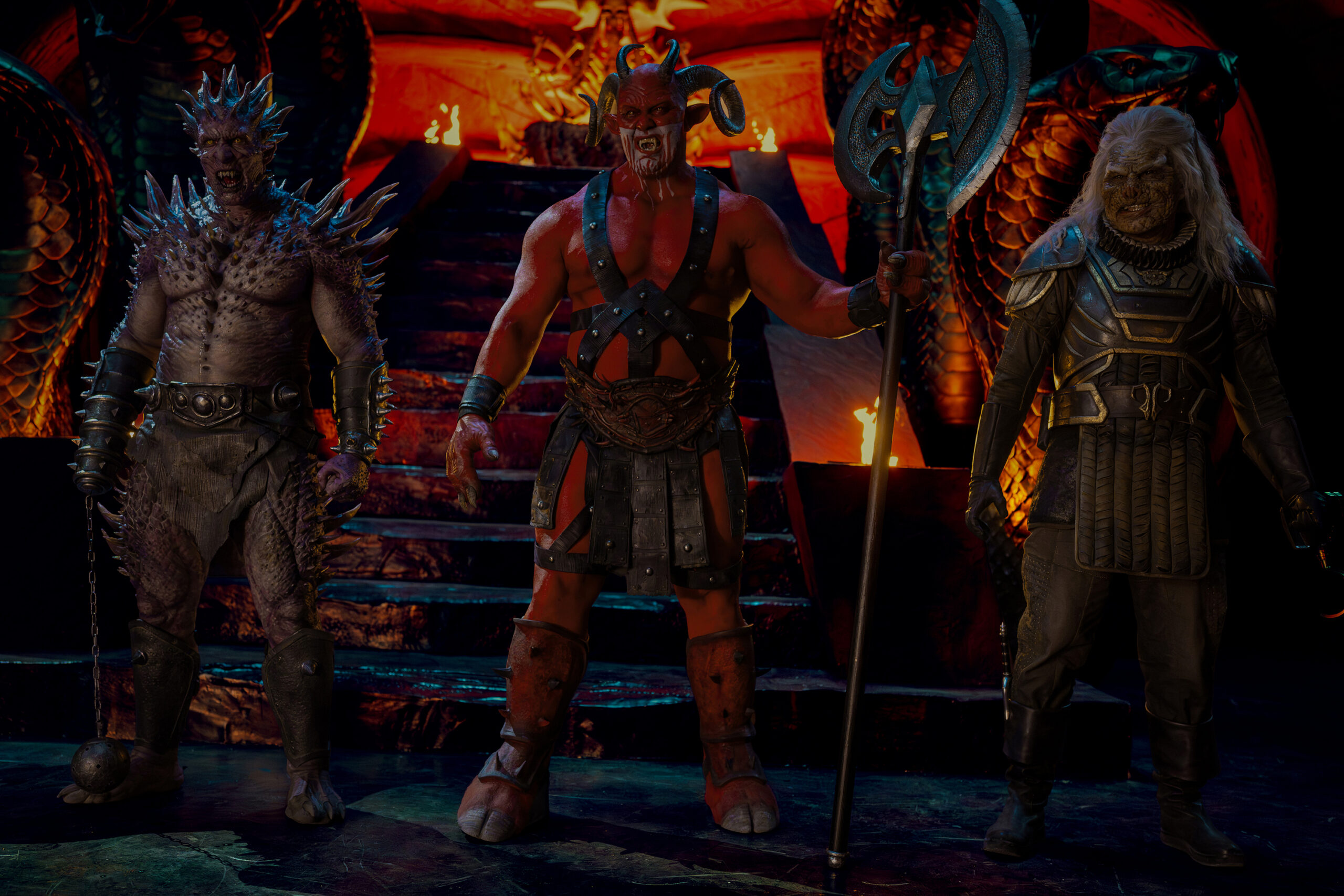
Even minor characters were reexamined and expanded. Goat Man (Hafþór Júlíus Björnsson), originally a peripheral figure, became more significant after Dyas’ design work reshaped how he fit into the world. Visual development often fed directly into narrative decisions, with design influencing story direction.
Across the board, Dyas focused on giving the world weight and history. He described the importance of building environments that feel ancient and layered, even if audiences only glimpse parts of them on screen. Whether designing monumental cityscapes or sacred spaces like the Sanctum, every element was intended to reinforce the idea that Eternia is a place with deep roots and forgotten histories.
“It’s about giving everything weight,” he said. “A sense of history.”
The work was supported by a large international team of artists who translated Dyas’ sketches into fully realized sets and environments. He described the process as deeply collaborative, with little ego involved and a shared commitment to bringing the world to life.
“I have this little creative family,” he said. “We’re all playing different instruments, but it’s the same piece of music.”
In the end, Dyas’ vision for Eternia is not just about updating an 80s icon for modern audiences. It is about expanding it into something cinematic, textured, and emotionally grounded, while still honoring the bold imagination that made it iconic in the first place.
Masters of the Universe premieres in theaters June 5th.