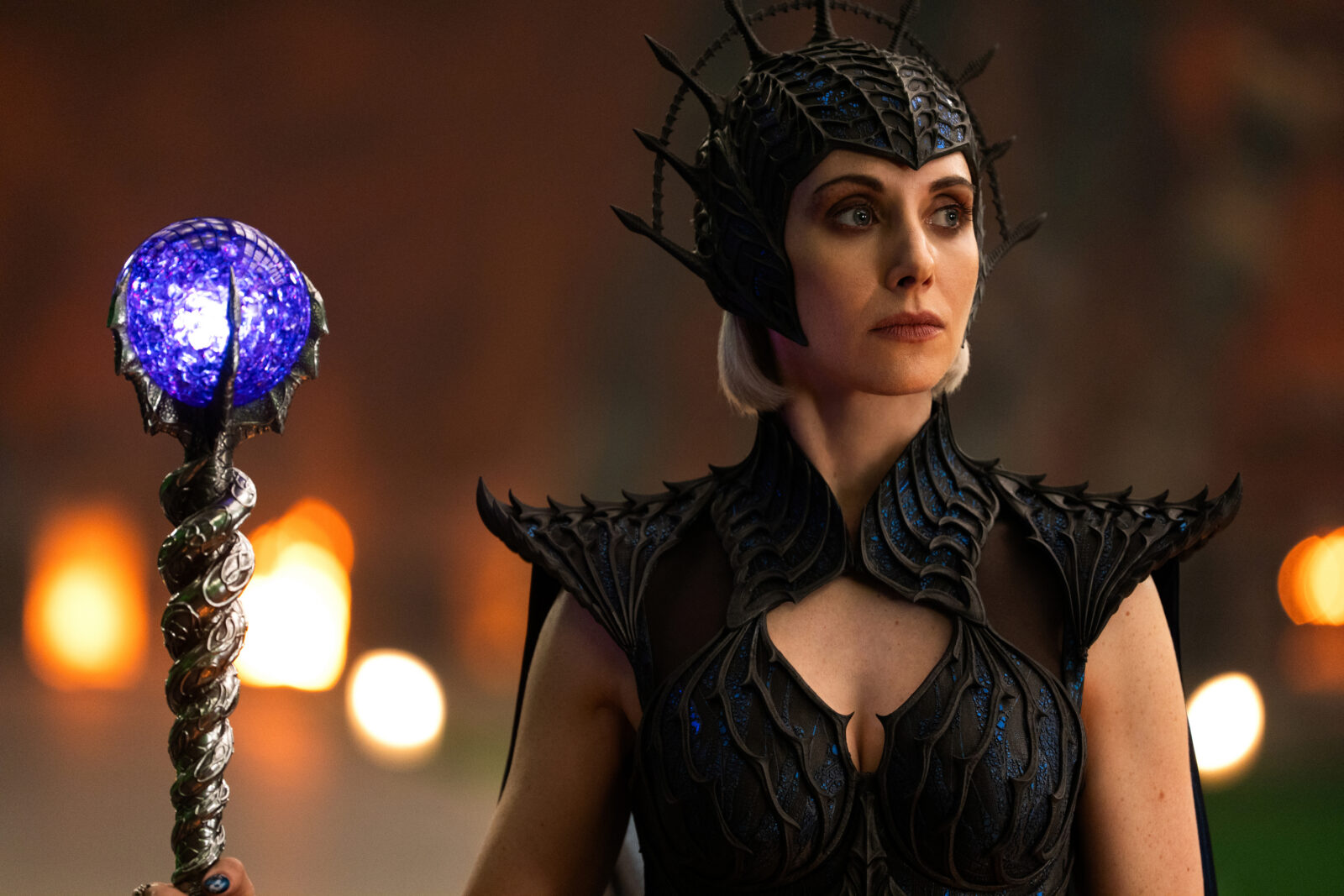

Bringing Masters of the Universe to life meant walking a delicate line between nostalgia and reinvention. For costume designer Richard Sale, the mission was never about recreating the beloved animated series frame for frame. Instead, it was about honoring the spirit of Eternia while grounding its larger-than-life heroes and villains in a world audiences could believe in. During our set visit in the UK to speak with the production team of Masters of the Universe, Sale shared insights into the craftsmanship behind the film’s costume design.
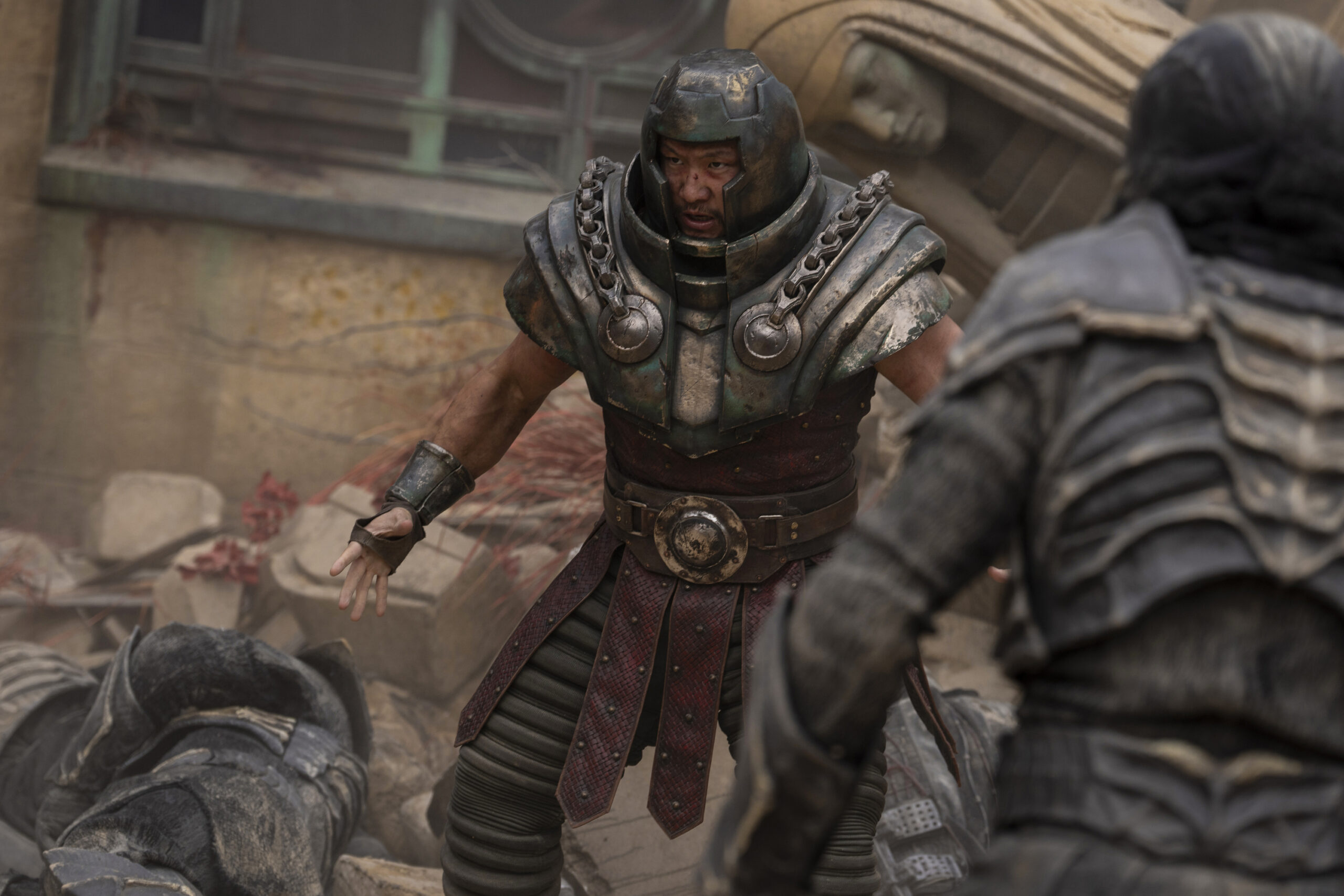
“The goal was to try and be true to the original,” Sale explained. “That was our starting point.”
From the beginning, Sale and the creative team approached the iconic designs with reverence for the original Filmation cartoon and toy line, while also recognizing that what worked in 1980s animation would need evolution for live-action storytelling.
“The toys are all quite flat,” Sale said. “Now we have the ability to give things a history and a depth and a richness.”
That philosophy shaped every costume in the film, from He-Man’s battle gear to the Sorceress’ ethereal robes. The result is a version of Eternia that still feels recognizable to longtime fans while layered with texture, realism, and intricate world-building details. One of the biggest design challenges centered around Prince Adam and He-Man, played by Nicholas Galitzine. Sale revealed the production went through “80 variations” of the character’s costume while trying to determine how faithful they could realistically remain to the original design.
“We teased Nick for a long time,” Sale joked, recalling early conversations about whether the actor would wear the classic fur loincloth and skin-tight look from the original series. Instead, the team focused on adapting the essence of He-Man while accounting for the realities of filming, movement, and Galitzine’s physical transformation throughout production.
“We didn’t actually finalize the shape and size of it until the week before he shot,” Sale revealed. “His physique changed dramatically.”
Because Galitzine’s body composition evolved throughout training, the costume department constantly adjusted proportions, armor placement, and even emblem sizing to maintain the heroic silhouette fans associate with He-Man.
“It’s the whole ‘nipples in, nipples out, Batman thing,’” Sale laughed. “You’re constantly adjusting proportion.”
The same obsessive attention to detail extended across every character in the film. Sale proudly pointed to tiny hidden elements viewers may never consciously notice, including a miniature snake skull embedded into Skeletor’s costume design.
“It’s the little things that nobody may see,” he said. “But it helps.”
For Sale, those details are not just visual flourishes. They help actors fully inhabit these iconic roles.
“You want to feed them with all of that richness because you’re only going to get a better performance.”
That collaborative philosophy became especially important when designing characters like Man-At-Arms, played by Idris Elba. While the original cartoon famously featured orange armor, Sale struggled to rationalize what kind of metal would naturally exist in Eternia with that coloration.
The solution became copper armor, which retained the original tone while allowing the costume to develop weathering, oxidation, and storytelling texture.
“It gives us something to age into as well,” Sale explained.
One of the production’s most radical reinterpretations belongs to the Sorceress, played by Morena Baccarin. In the animated series, the mystical guardian appears draped in feathers with a giant bird-like headdress. Sale knew a literal recreation risked looking distracting or unintentionally theatrical on screen.
“She’s not wearing the outfit of a dead bird,” he said.
Instead, the design team leaned into an ancient, timeless aesthetic inspired by Greek and Egyptian influences. Delicate pleating, translucent fabrics, and intricate feather detailing replaced oversized wings and literal avian imagery. The costume was engineered to interact dramatically with light, especially during transformation sequences where the Sorceress morphs into a bird-like form.
“She becomes the bird,” Sale explained. “She’s not a bird.”
The redesign also reflected the practical realities of filmmaking and stunt performance, particularly for the film’s female warriors. Sale acknowledged that many original character designs from the 1980s simply would not function naturally in a grounded action film.

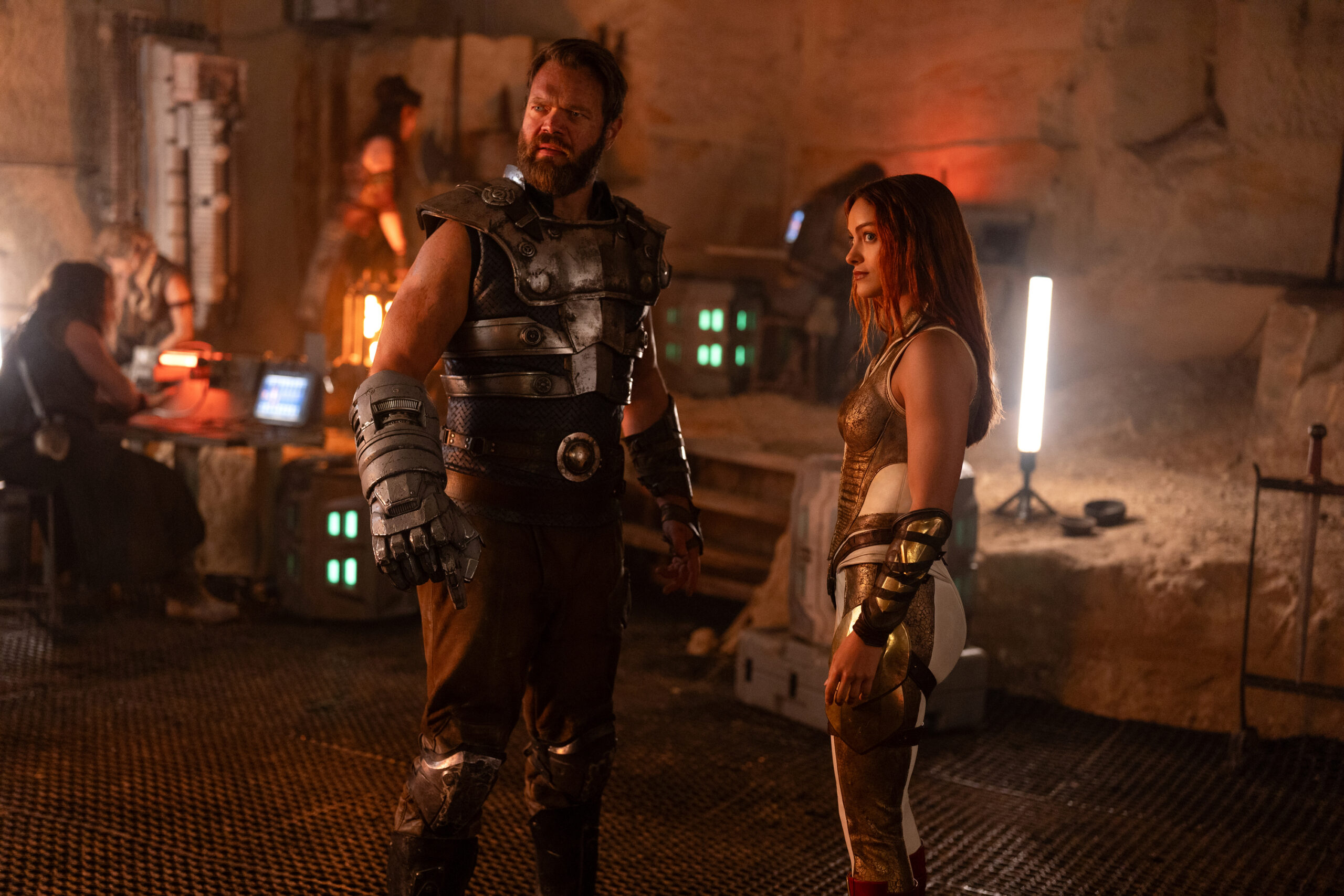
“Having Teela (Camila Mendes) run around in a high-cut swimsuit doing stunts would have been a bit of a distraction,” he said.
Throughout the process, Sale remained committed to avoiding earthly references that could pull viewers out of Eternia’s fantasy setting. The costumes intentionally avoid modern details like visible zippers or recognizable fasteners, drawing inspiration instead from medieval silhouettes fused with futuristic fashion sensibilities.
“It shouldn’t look like ‘Lord of the Rings.’ It shouldn’t look like Asgard,” Sale said. “It should have its own vibe.”
That unique visual identity became even more ambitious when combined with prosthetics and animatronics. Characters like Trap Jaw (Sam C. Wilson) required months of research and development, with articulated mechanical limbs made from dozens of molded components. Triclops’ rotating visor and Neck-Brace’s exaggerated proportions were carefully engineered to resemble living action figures.
“When they first came onto set,” Sale recalled, “it looked like six-foot-five toys walking around.”
Despite the enormous technical complexity, Sale described the experience as deeply rewarding, particularly because of the seamless collaboration between costumes, prosthetics, and production design.
“I’ve never done a job that’s so intertwined with prosthetics before,” he said. “It’s been really nuts.”
Above all, Sale hopes audiences recognize the love and craftsmanship embedded into every stitch, texture, and hidden detail throughout the film.
“It’s the fun of embracing that original IP,” he said, “and hopefully we’ve just given it a bit of life.”
Masters of the Universe premieres in theaters June 5th.