

There is a particular kind of tension that comes with playing a Resident Evil game. Ammunition is limited, danger could be hiding around any corner, and every object in your possession might determine whether you survive the next encounter. For the creative team behind the new Resident Evil movie, capturing that feeling was more important than simply recreating familiar images from the franchise.
During an interview with Black Girl Nerds, writer Shay Hatten, producer Carter Swan, and writer-director Zach Cregger discussed how they approached an adaptation connected to one of gaming’s most recognizable properties. Although the movie offers something new within the Resident Evil universe, the team remained focused on translating the games’ survival-horror experience to the screen.
For Hatten, honoring the franchise begins with understanding its identity rather than treating the source material like a checklist.
“I think, to me, the non-negotiable is just that you have to capture the spirit of what the franchise is all about to begin with,” Hatten said. “So that was really our goal with this movie, was do something new within the confines of the franchise, but also something that, if you’re a person like me who’s played these games for as long as you can remember, captures that spirit of being the player behind the controller.”
That distinction matters for a property that has existed across games, movies, television, and animation. Familiar creatures and references can help establish the world, but recognition alone cannot reproduce the anxiety of playing the games. The audience has to feel the pressure of every decision and understand how quickly one mistake can become fatal.
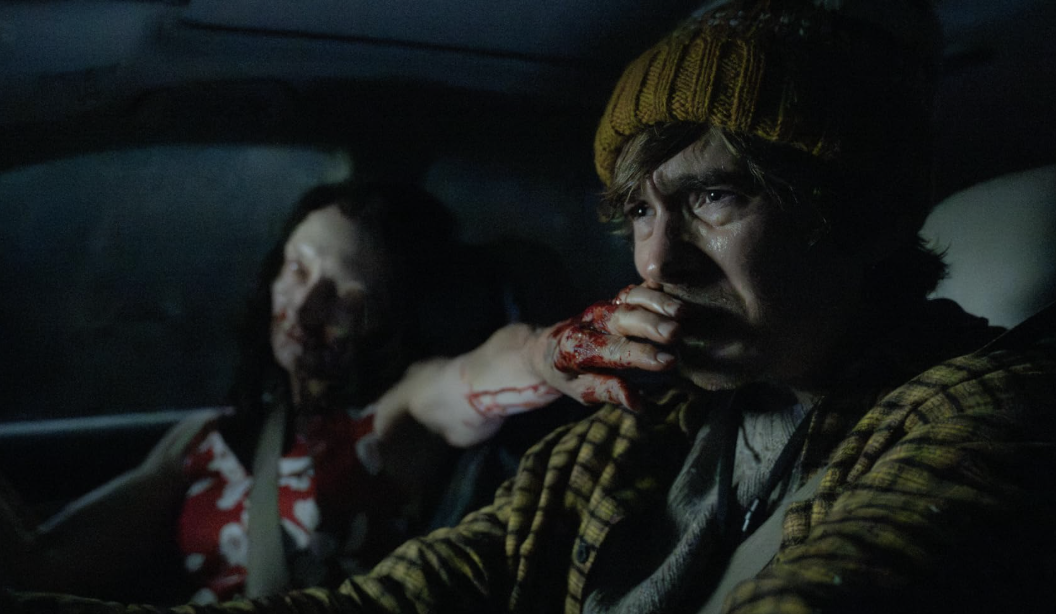
Austin Abrams Brings an Everyman Into the Nightmare
Producer Carter Swan believes Austin Abrams’ character gives viewers an especially accessible way into the story. Instead of centering another highly trained operative or superhuman action hero, the film follows someone who is unprepared for the nightmare unfolding around him.
“I think the best part about it for me is Austin’s character, who’s really just an everyman, right?” Swan said. “He’s not someone who’s very skilled or a genetic super soldier. He’s just an average person like us who isn’t going to jump out of a helicopter and doesn’t really know how to shoot a gun, and has to figure all those things out and overcome those challenges as he’s in a death-defying situation.”
That vulnerability could be one of the film’s greatest strengths. Survival horror works differently when the person at the center of the story cannot easily overpower every threat. Abrams’ character must learn, improvise, and make decisions under pressure, much like a player encountering a new environment without knowing what is waiting on the other side of the door.
“For me, that was a really cool way in and really different,” Swan added, “and I hope the fans love it as much as I do.”
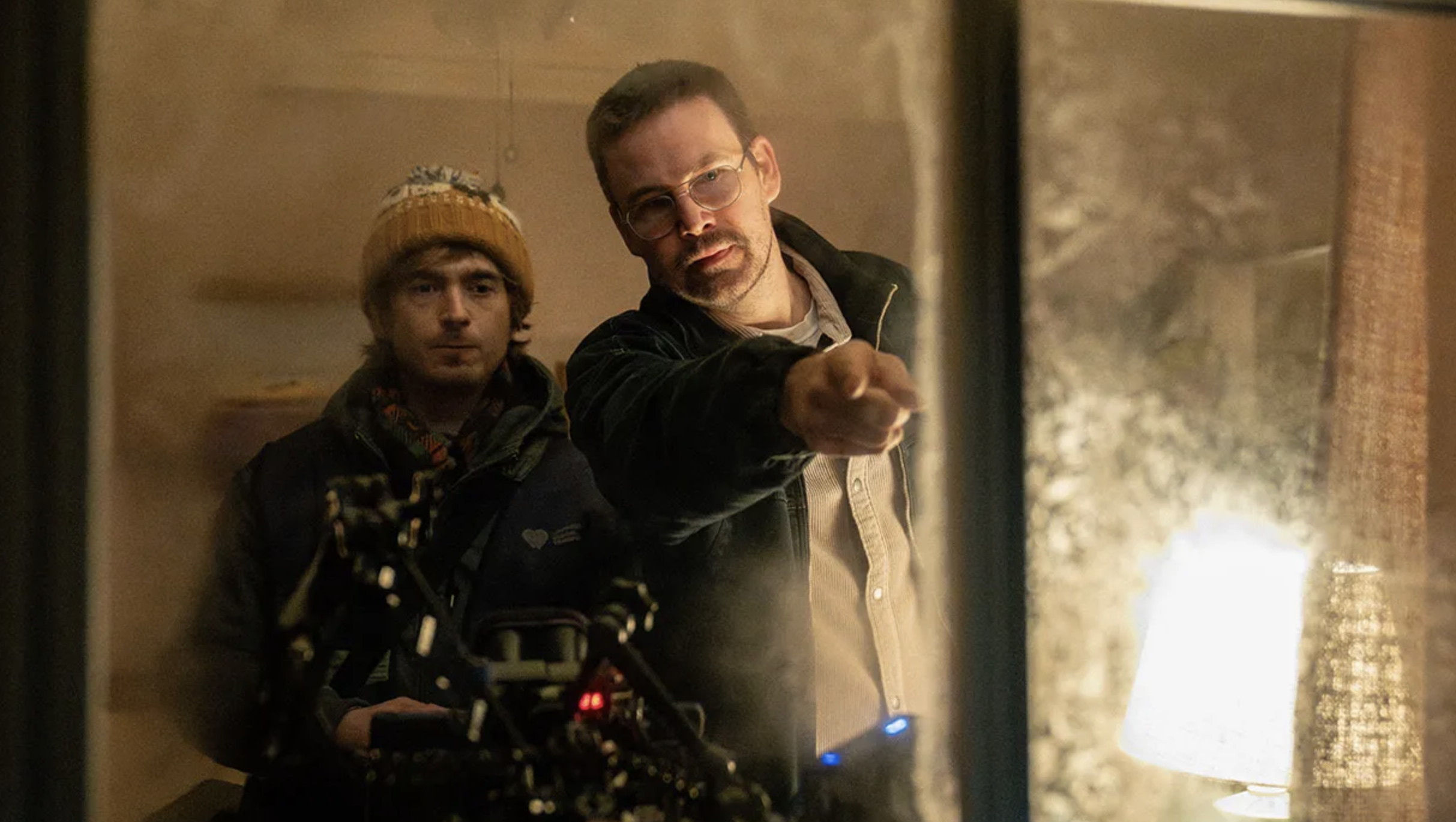
The Tiny Details Create the Survival-Horror Experience
Cregger’s approach is rooted in the small, practical details that allow viewers to track the character’s chances of survival. A weapon is not simply a prop, and a protected object cannot disappear from the audience’s awareness whenever the action begins. Each resource has to remain part of the story.
“A lot of the thing is just, like, him popping the clip out and counting the bullets, and now we know how many bullets,” Cregger explained. He also pointed to the importance of the character always knowing where the object he is protecting is located, including where it sits in the car and whether it has been damaged.
“You just have to always be kind of touching base with what he’s concerned with,” he said. “And I think when you do that, the audience feels like they’re participating.”
That sense of participation is essential to the games. Players constantly monitor ammunition, health, inventory, and their surroundings. By giving moviegoers the same information, Cregger can invite them to calculate the danger alongside the protagonist. If viewers know how many bullets remain, every shot carries more weight. If they understand what must be protected, every collision or attack creates another layer of anxiety.
For Cregger, the film’s greatest non-negotiable was its tone.

“The tone has to be accurate,” he said. “If I made a Resident Evil movie and, let’s say, I got some of the lore wrong or I took liberties with certain aspects of it, I think that’s okay as long as it feels like Resident Evil.”
He acknowledged that some fans may disagree with that philosophy, particularly when dealing with a franchise whose lore has developed over decades. Still, Cregger’s priority was clear: the movie needed to function as survival horror first.
“I wanted it to be absolutely clear that this was a survival-horror Resident Evil movie,” he said, “and I took my marching orders in terms of the tone and the pacing from the games.”
The team’s comments suggest that this adaptation is not relying solely on Easter eggs or nostalgia to connect with longtime fans. Its creative foundation is built around the experience of playing Resident Evil: entering a dangerous world as a vulnerable person, keeping track of limited resources, and feeling the consequences of every choice.
If the movie succeeds, audiences will not simply watch its hero attempt to survive. They will feel as though they are surviving alongside him, one bullet, one object, and one terrifying decision at a time.
Resident Evil is now playing in theaters.