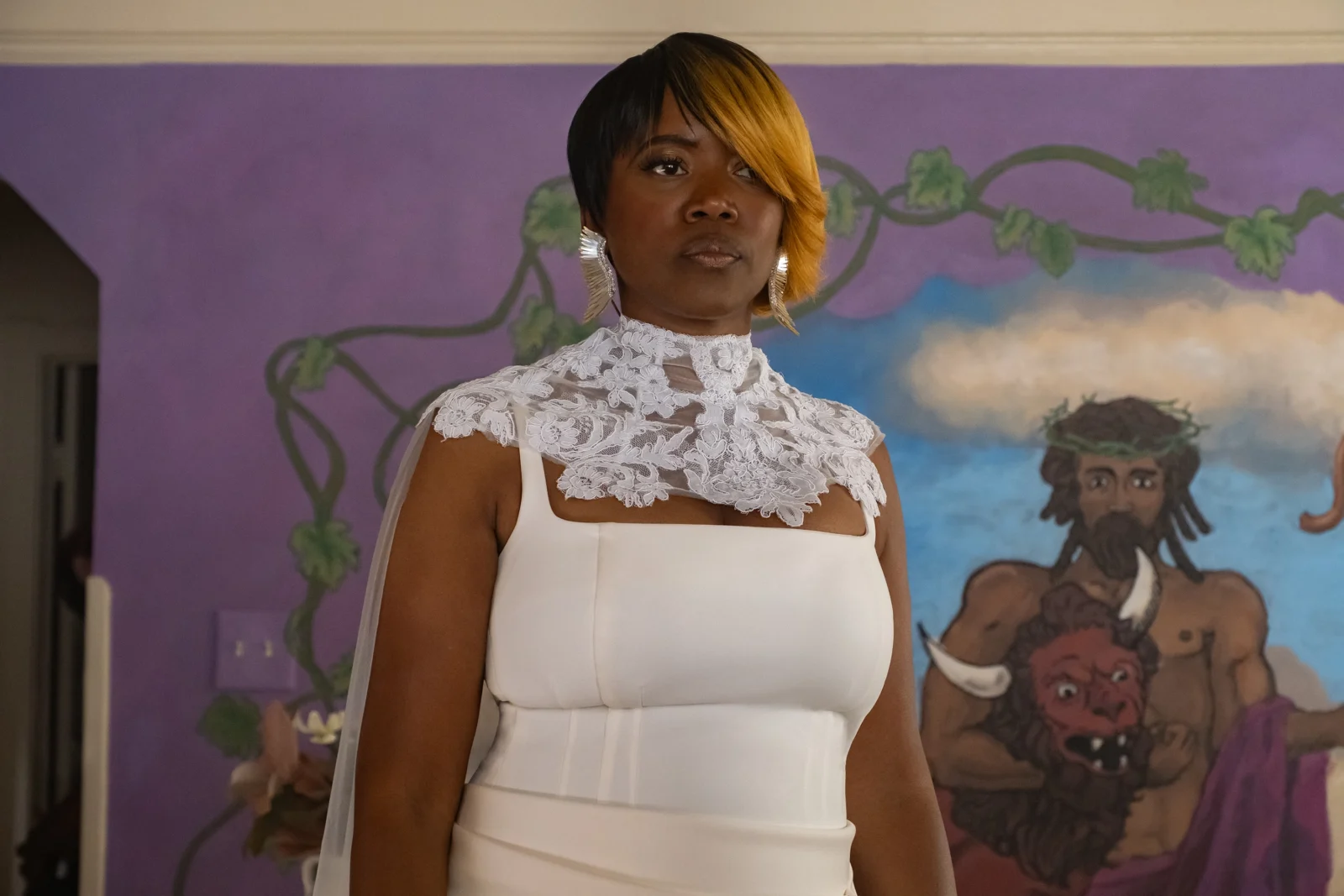

There’s something quietly devastating about the way Erika Alexander describes Divine in Is God Is. Not as a villain. Not even as a cautionary tale. But as someone suspended between belief and self-deception, clinging to a version of love that has long since curdled into something corrosive.
In an interview with Black Girl Nerds, for Alexander what emerges is an indictment of a very real archetype. Divine is the woman who wraps herself in the language of faith to avoid confronting the truth of her own emotional captivity. As Alexander puts it, Divine believes that being “camouflaged with God” absolves her from scrutiny, that morality will be projected onto her simply because she performs devotion. It’s a sharp observation, and one that cuts beyond the screen. We all recognize the type. The person who cloaks harmful behavior in righteousness, who confuses endurance with virtue.
But Divine is not just performative. She is deeply, painfully human.
Alexander leans into that contradiction, portraying a woman frozen in time. A “woman scorned,” yes, but not in the traditional revenge-driven sense. Divine isn’t plotting. She’s waiting. Waiting for a man who left her decades ago, while she was pregnant, and never returned. Waiting with a kind of stubborn faith that feels less like hope and more like imprisonment. The tragedy is not just that she believes he’ll come back. It’s that she’s built an entire identity around that belief.
That’s where the film’s exploration of toxic love becomes especially potent. Divine’s devotion is framed as duty. “He gave her an assignment,” Alexander adds. She’s not just holding on for herself. She’s maintaining something sacred, or at least what she’s convinced herself is sacred. “I’ve kept the faith. I’ve kept the church.” It’s a line that lands with unsettling weight, because it reveals how thoroughly she’s fused her personal longing with spiritual obligation.
And yet, there’s humor woven into that pain. Alexander points to the absurdity of Divine still holding on after all these years, her son now fully grown, a living testament to just how long she’s been waiting. It’s a moment that invites laughter, but the kind that catches in your throat. Because beneath it is a life half-lived, defined by absence.
What makes Divine compelling, and frankly unsettling, is that she doesn’t see herself as broken. She sees herself as faithful. That reframing is what allows her toxicity to flourish unchecked. Alexander describes her as “full of lust,” “burning inside,” driven by a desire that has nowhere to go. It festers, distorts and turns her inward.
This is where Aleshea Harris’ vision shines. The film refuses to moralize in simple terms. There’s no clean line between right and wrong, no easy redemption arc. Instead, Divine exists in a kind of emotional purgatory, shaped as much by her own choices as by the man who abandoned her. It’s uncomfortable, deliberately so.

And that discomfort is the point.
How many people stay in emotional holding patterns, convinced it’s faith, loyalty, or love? How often do we mistake stagnation for strength? Divine may be an extreme case, heightened by the film’s theatricality, but her core is painfully familiar. And in Alexander’s hands, she becomes less of a spectacle and more of a mirror.
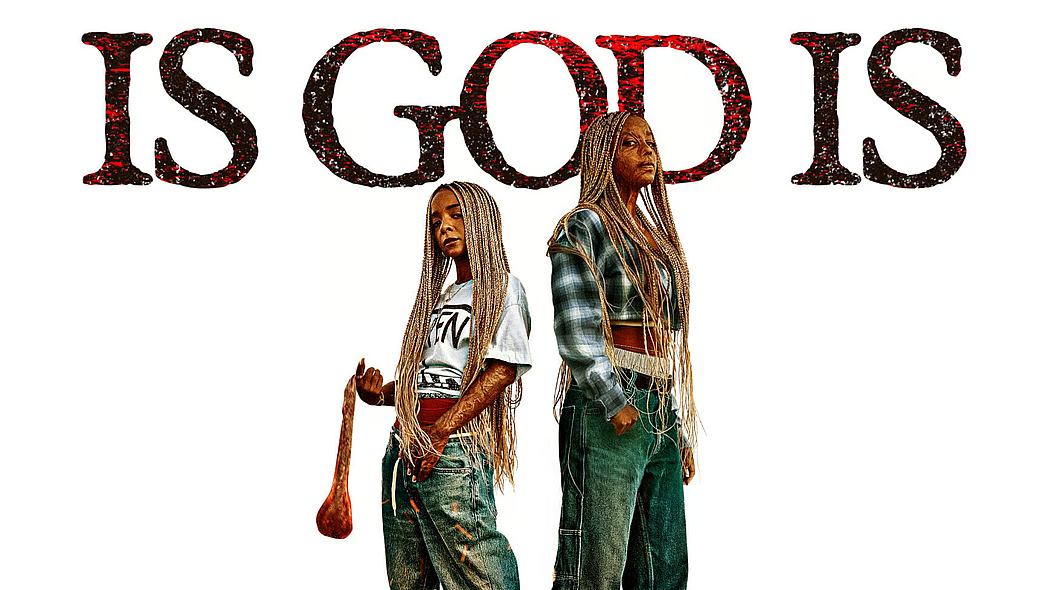
Is God Is premieres in theaters May 15th.