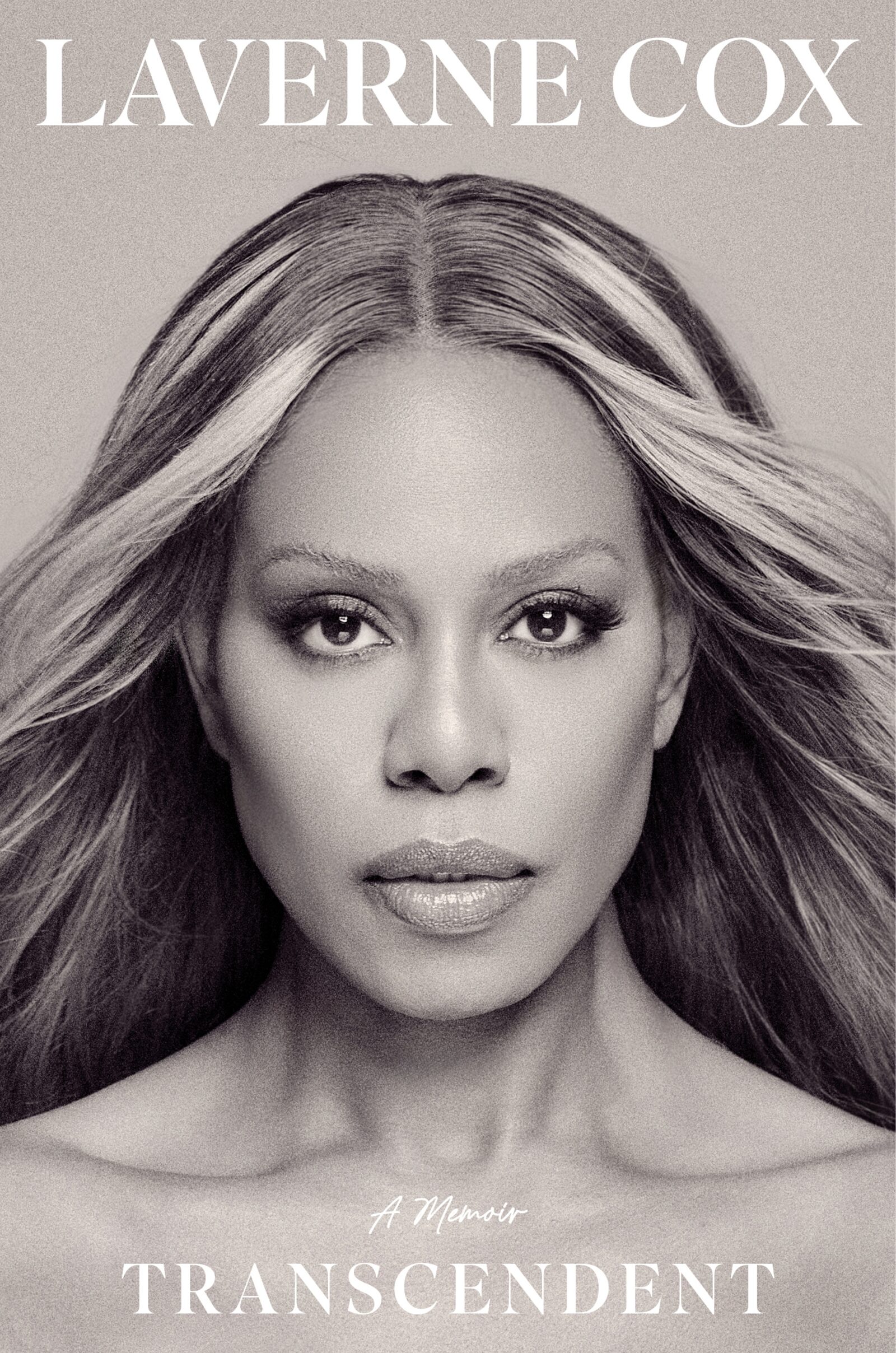

For more than a decade, Laverne Cox has been one of the most recognizable transgender women in the United States. Yet despite her public visibility today, the Orange Is the New Black star spent most of her childhood in Mobile, Alabama, trying to hide who she was.
In her new memoir Transcendent, Cox, now 54, reflects on her upbringing with her mother and twin brother, Lamar, describing a home where she says she was subjected to verbal, physical, and sexual abuse because of her gender expression. A childhood marked by emotional pain, Cox reveals that she attempted suicide as a child by swallowing her mother’s. After surviving the attempt, she moved on without telling anyone what happened.
Cox grew up in a part of downtown Mobile called “Down the Bay” which was a mostly Black neighborhood. Her mother, Gloria Jean Cox, worked four jobs to pay for their two-bedroom apartment.
In third grade, she caught the attention of her teacher, after fanning herself to cool off. The teacher called her mother, warning that Laverne would end up in New Orleans wearing a dress if she wasn’t placed into therapy right away. As a result, Cox was sent to conversion therapy at 8-years-old, where, she says, a therapist suggested injecting her with testosterone.
“The idea was that that was supposed to make me more masculine,” she says. “My mother, thank God, said no to that.” But it was at that point Cox knew she needed to leave Mobile.
Born male, Cox writes that she grappled with her gender identity from an early age and always expressed herself in feminine ways through her mannerisms, clothing, and sense of style. She recalls shopping at thrift stores she affectionately called “Salvation Armani.”
Transcendent is easily one of my favorite memoirs so far this year. Cox is candid about traumatic moments from her childhood, the early years of pursuing acting while transitioning, and how her ultimate rise to stardom occurred after years of hard work. I loved it and hope this reaches people who don’t have a lot of empathy for or understanding of transgender people, as well as the threat of violence they so often live with day to day.

I appreciated the way certain controversies were addressed such as naming the emotional suppression and dissociation she relied on to survive. Cox explains that as a Black transgender woman many of her experiences exist at an intersection society still struggles with.
There is a specific experience that Black women have that’s different from Black men and white women,” she said. “It’s misogynoir, and when you’re Black and trans, it’s called transmisogynoir.”
Cox also draws a connection between the dehumanizing language historically directed at Black people and the rhetoric increasingly aimed at transgender people today. She argues that while society has developed language to describe anti-Black discrimination, the unique ways transgender people are dehumanized have yet to be as recognized.
We need to get clear about it for trans people—what the dehumanizing language is, and how they dehumanize us, because it’s different and specific,” she said.
Cox did not begin her transition until her twenties; around the same time, she realized she wanted to pursue acting. Living in New York City, she pieced together a living by taking odd jobs in television and performing at Lucky Cheng’s, the famed drag cabaret. Without a driver’s license, she traveled from audition to audition by subway while balancing classes at Marymount Manhattan College. She also briefly worked as a telemarketer before continuing to perform in cabaret productions, all the while building the career she dreamed of.
What stood out to me was how much of Cox’s life has been shaped by the need to prioritize safety which is something many of us take for granted. Safety wasn’t just a matter of locking the door at night; it influenced where she lived, who she trusted, and how she navigated the world.
During her first semester in New York City, Cox moved into an apartment with a woman whose boyfriend was a dangerously homophobic man. According to Cox, he would deliberately bait her, seemingly hoping she would respond so he would have an excuse to become violent. Rather than confront the situation, she quietly moved out without ever telling her roommate what was happening.
She also writes about living in poverty while intentionally choosing apartments in safer neighborhoods. Even though it meant stretching her finances, she believed the tradeoff was worth it because it reduced the likelihood that she would be harassed or attacked for being gender nonconforming. It’s a sobering reminder that for many transgender people, especially transgender women, safety is a daily calculation that shapes nearly every decision they make.
She recounts her experiences with men over the years, most of them being physically or emotionally abusive. That last one though? DIABOLICAL.

In the book, Cox reflects on her “big break,” the doors it opened for her, and how the industry typecasted her for not only being transgender but also Black. She was offered the role of Sophia Burset in the Netflix drama Orange is the New Black at age 41-years-old, playing the resident hairstylist at Litchfield Penitentiary. Her character gave us a glimpse into the transgender perspective and why/how someone would transition. Cox became the first transgender person to be nominated for a prime-time Emmy award.
The trauma detailed throughout Transcendent is difficult to read. Yet, at its core, the memoir is a story of survival, resilience, and healing. Cox writes that revisiting her past reminded her that even in her darkest moments, she never lost her sense of purpose or determination.
Today, she says she meets those painful childhood memories with greater compassion for herself. When feelings of unworthiness surface, she no longer mistakes them for truth. Instead, she recognizes them as echoes of past trauma, not reflections of who she is today.
Transcendent is 10/10. It feels less like a traditional autobiography and more like reading someone’s private journal. It is intimate and vulnerable. By the final page, the book does not just chronicle what she endured. But it shows what it looks like to move beyond it. It is, in every sense of the word, proof that healing is possible and that people can transcend even the deepest wounds.
Transcendent is available wherever books are sold.