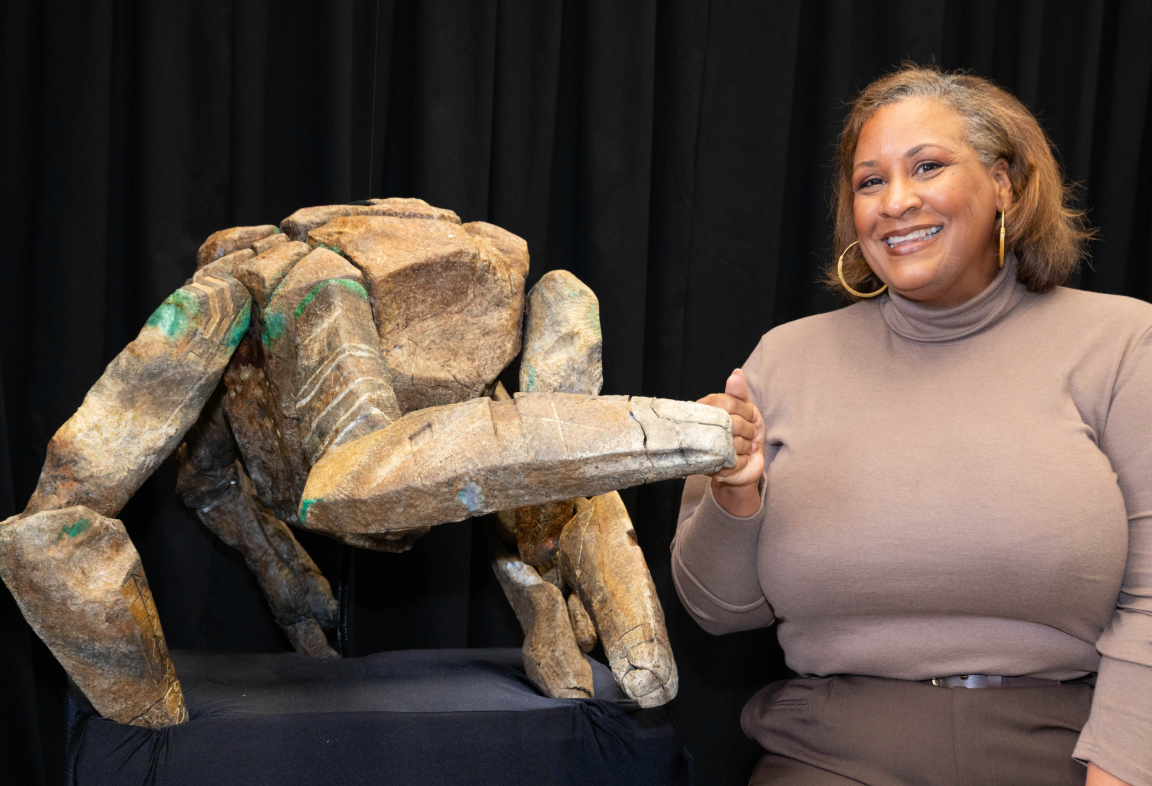

A visit to Neal Scanlan’s Creature Shop reveals how performance, practical effects, and collaboration shaped one of science fiction’s most unexpected breakout characters.
Picture it: a sunny but still cool London day, and I’m standing inside Neal Scanlan’s Creature Shop trying not to geek out and fully geeking out at the same time. This is one of those places where you come to understand that movie magic isn’t really magic at all, but rather foam and wires and a group of deeply committed people figuring things out in real time, working together toward the singular goal of making something feel alive in a way that genuinely connects with an audience.
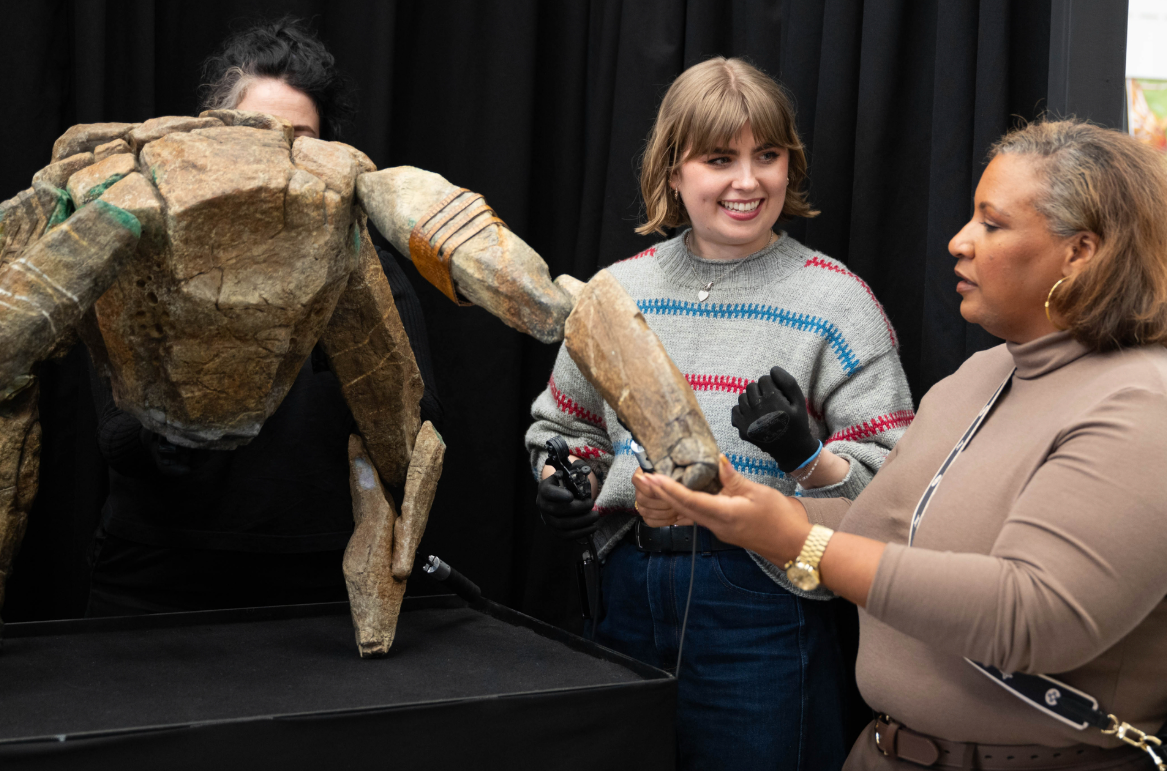
And in this case, that something was Rocky from Project Hail Mary.
If you’ve seen the film, you already know that Rocky feels different from almost any other character of his kind. He doesn’t come across like a typical CGI creation — there’s weight to him, a kind of presence, and something quietly emotional that makes you lean in a little more than you ever quite expect to. After seeing how he was created, that reaction made a great deal more sense.
Before getting into Rocky, I’ll say this, there were other builds in that shop, other creatures and other projects, the kind of things where you immediately recognize what you’re looking at and know, with complete certainty, that audiences are going to lose their minds when they finally see it. I won’t say what they were, but that moment of recognition happened more than once, and it was its own particular thrill.
Now, back to Rocky.
One of the biggest misconceptions surrounding the character is that he’s fully digital, but he isn’t — not even close. What we saw was a hybrid approach in which practical puppetry and CGI worked in careful concert, with the physical performance serving as the true foundation for everything that followed. That approach grew out of a very specific creative mindset, because as Neal Scanlan explained, the goal was never to showcase the technology or demonstrate what was technically possible. It was always, first and last, about whether you actually felt something when you looked at the character, because if you don’t, then it’s just a prop, no matter how sophisticated the machinery behind it.
You could see that philosophy at work in how they built Rocky from the very beginning. He didn’t emerge as a clean, finished design with a clear creative mandate behind him. The team spent weeks experimenting, constructing different versions, and methodically working through what felt right and what simply didn’t — and a lot of those early designs, while technically accomplished, failed to establish any real emotional connection. The version that finally clicked wasn’t polished in the slightest. It was a rough polystyrene sculpt that one of the designers carved late one night, simple and unassuming, but carrying within it a quality of genuine personality that all the more refined attempts had somehow missed.
Around the same time, James Ortiz was approaching the character from an entirely different direction. Before he was officially brought onto the production, he built a hand puppet on his own initiative, purely to explore how Rocky might move and communicate without any formal framework to guide him. That detail stood out to me, because it wasn’t part of some larger plan or studio directive, it was just an actor doing the work, trying to understand a character with no guarantees of where any of it might lead. That early, self-directed exploration ended up influencing the way Rocky was performed across the entire film.
Once he was hired, Ortiz didn’t simply operate the puppet according to someone else’s vision. He helped shape the character from the inside out, working through movement and behavior and eventually voicing Rocky as well, contributing to virtually every dimension of who the character became. And that mattered more than people might realize, particularly because Rocky doesn’t have a face no eyes, no expressions, none of the conventional tools that performers and animators typically rely on to convey inner life. Everything, absolutely everything, had to come through movement, and not random movement either, but intentional, carefully considered choices that communicated thought and emotion in the absence of any facial cues.
At one point, Ortiz explained that if Rocky stops moving, the character essentially stops working — he simply ceases to exist as a presence on screen — and once he said it, you could see exactly what he meant when watching the film. Rocky is always shifting, always reacting, always adjusting in small and telling ways that keep him feeling perpetually present, as though his mind is always running just beneath the surface.

Getting that right was far from straightforward. The team had to find a balance between something that felt genuinely alive and something that didn’t tip over into the unsettling or alien in a way that pushed audiences away rather than drawing them in. Early movement tests leaned too heavily into crab or spider territory, and the reaction to that direction was swift and clear — it just didn’t feel like the right character. What actually worked, somewhat counterintuitively, was allowing the movement to become a little less controlled and a little more unpredictable, because that slight loosening gave Rocky a quality that felt entirely unique while remaining warm and approachable at the same time.
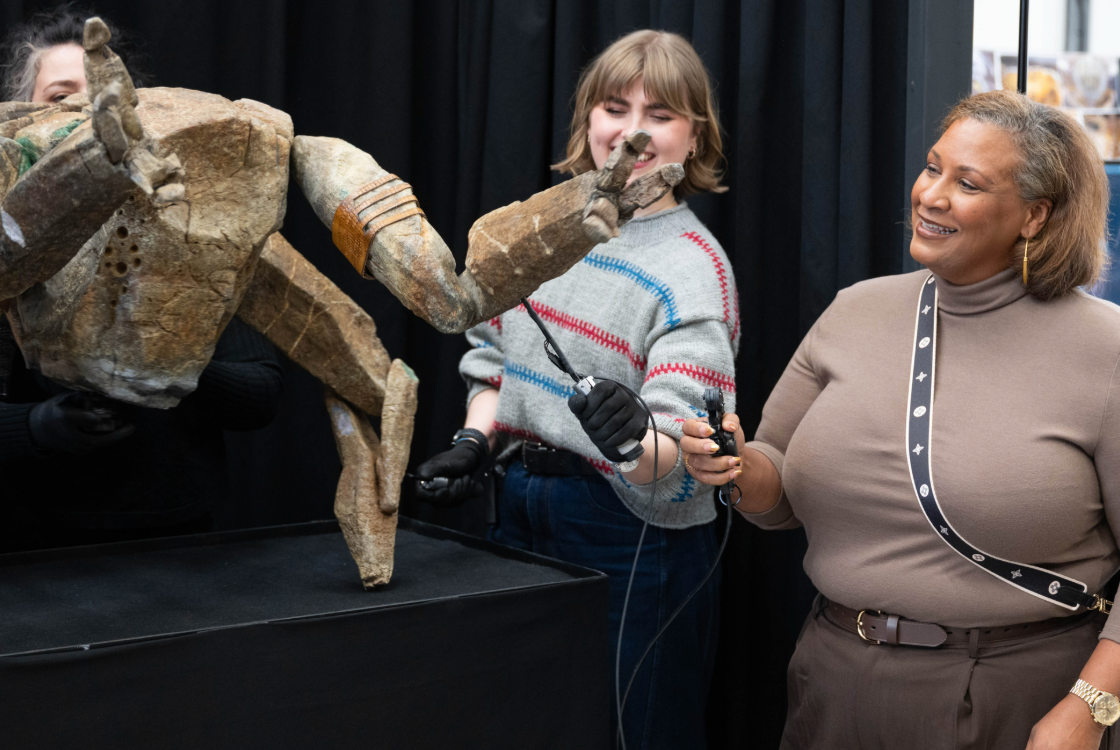
Another thing I hadn’t anticipated was the sheer number of people it took to bring him to life on any given day. Rocky wasn’t operated by a single puppeteer working in isolation, he was the product of a carefully coordinated collective effort led by Ortiz, together with the team he affectionately called the Rocketeers, which included Scarlet Wilderink, Claire Roi Harvey, Arina Ii, and Darcy Collins.
In a side conversation, Ortiz told me something that genuinely shifted how I understood the character. He said that the women on the team brought a different nuance to Rocky’s movement — not in any obvious or pronounced way, but in the details, in the timing and the reactions and the quieter emotional beats that accumulate into something you feel without quite being able to name. And once you sit with that observation for a moment, it makes complete sense, because Rocky doesn’t simply move through space in a mechanical fashion. He responds to what’s happening around him, and there’s a softness and attentiveness in those responses that keeps him from ever feeling cold or remote.
Watching the behind-the-scenes footage also made vividly clear just how physically demanding this work really was. The puppeteers were frequently operating in extremely tight spaces, sometimes lying flat on their backs, working with rods at awkward and uncomfortable angles while keeping one eye on monitors just to track what the performance actually looked like from the camera’s perspective. In some configurations, they couldn’t be anywhere near the puppet at all, which is where the “Waldo” system came into play — allowing them to control an animatronic version of Rocky remotely while still maintaining the integrity and continuity of their performance.

That sustained investment of effort across every setup is precisely why the character feels seamless when you watch him on screen. Even in the sequences where Rocky is fully digital, the animation was built directly on top of what the puppeteers had already created on set, so it was never a question of replacing their work, but always of extending and refining it, keeping the human performance at the center of everything.
Ortiz also spoke about working alongside Ryan Gosling and the importance of ensuring that Gosling never felt as though he was acting alone or reaching into empty space. Even when Rocky wasn’t physically present in a shot, Ortiz was still there, still delivering lines offscreen, so that the texture and rhythm of the interaction stayed grounded and reciprocal rather than one-sided.
That kind of invisible, unglamorous dedication doesn’t often get discussed in the way that visual effects breakdowns or casting announcements do, but you can feel it, unmistakably, when you watch the film.
By the time I walked out of the Creature Shop, what stayed with me wasn’t simply the technical ingenuity of how Rocky was constructed, but the depth and breadth of the collaboration that went into finding him in the first place, because it wasn’t a straight line from concept to completion, not by any stretch. It was a long process of trial and adjustment and genuine creative risk, with many different people contributing entirely different pieces until, finally, everything clicked into place and the character became, unmistakably, himself.
And once that happened, everything else followed.
Project Hail Mary is currently playing in theaters.