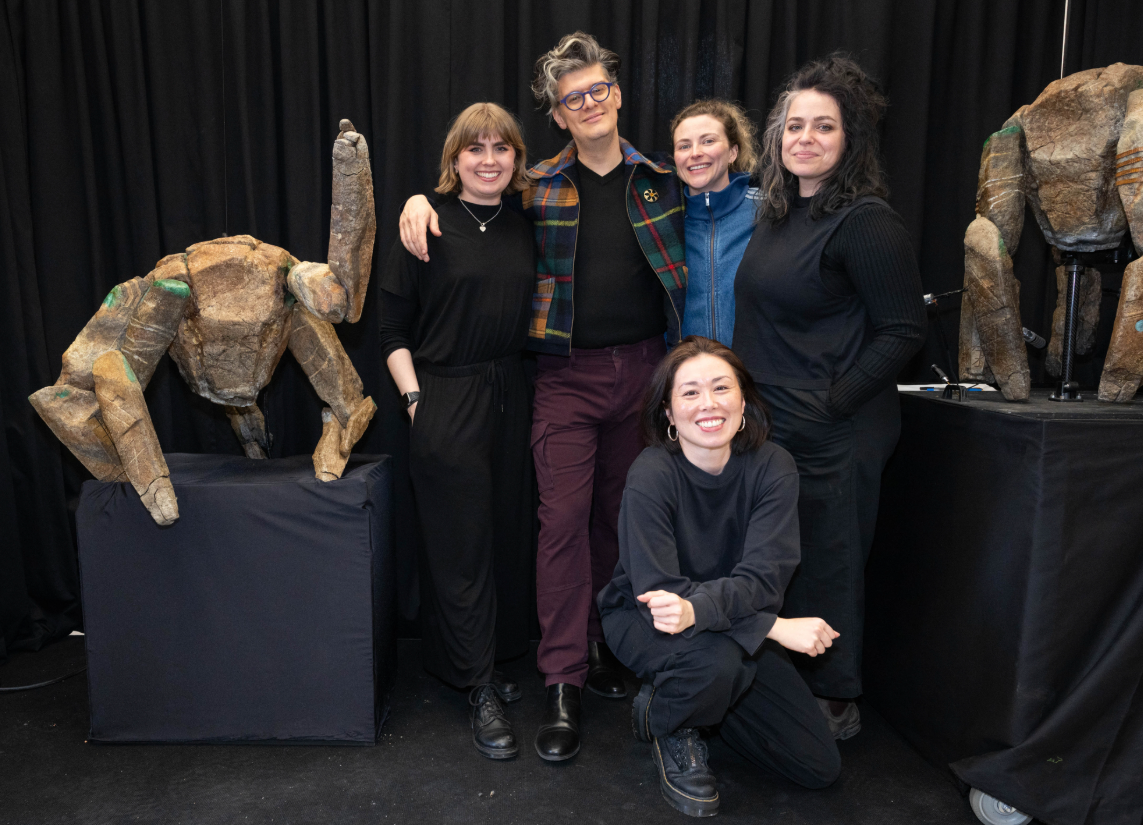

There’s always a moment on these kinds of visits where something clicks that you didn’t expect, and for me, it happened inside while we were learning how Rocky from Project Hail Mary came to life.
Because yes, Rocky is impressive. The design, the movement, the fact that he feels emotional without having a face. All of that lands. But what stuck with me wasn’t just the character. It was the people moving him, and more specifically, the women.
A lot of the conversation around Rocky naturally went to the build: the materials, the design process, how they balanced puppetry with CGI. All of that is interesting and it matters, but the performance side of it doesn’t get talked about as much. Rocky isn’t one person’s performance. It’s a coordinated, group effort.
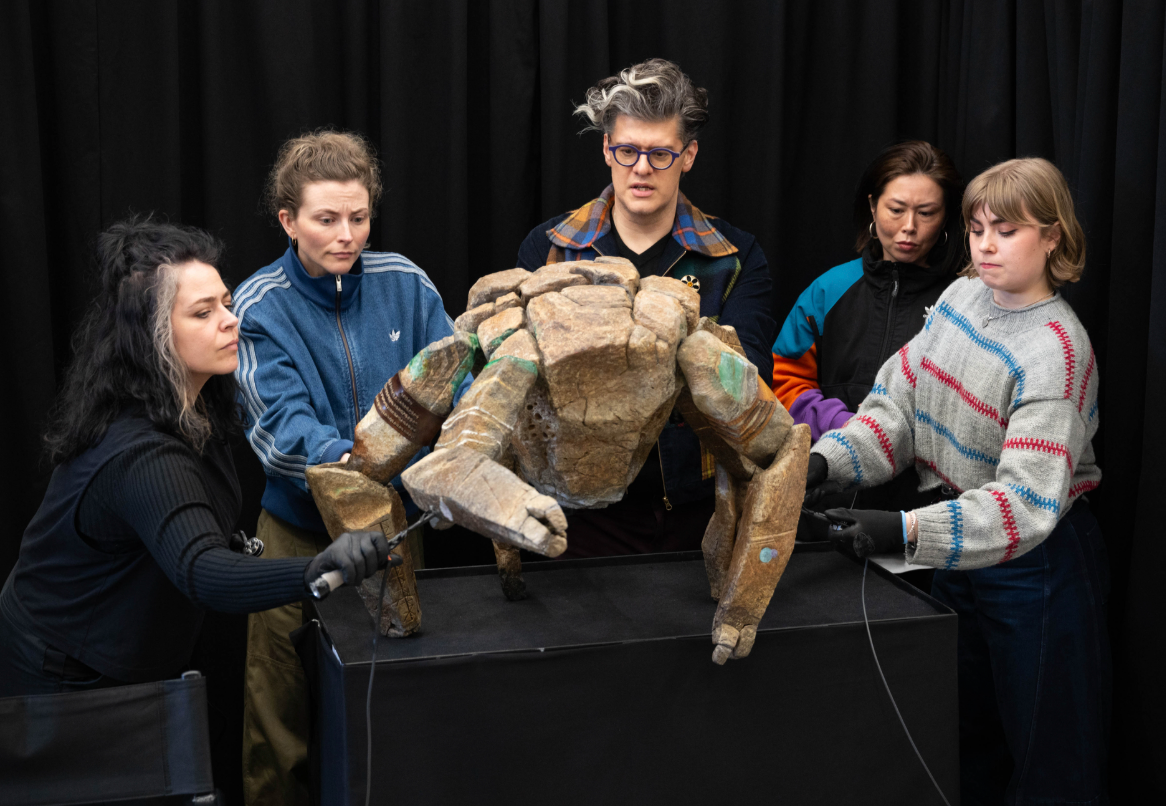
Part of that group is a team of puppeteers that included Scarlet Wilderink, Claire Roi Harvey, Arina Ii, and Darcy Collins. They’re not the names people are going to walk out of the theater talking about, but their work is right there in how Rocky moves.
During a side conversation, James Ortiz mentioned that the women on the team brought a different nuance to Rocky’s movement. He didn’t over-explain it, just said it plainly, and it made me look at the character differently.
Because Rocky doesn’t move like something mechanical. He reacts while still keeping a softness in certain moments, a kind of awareness in how he responds that keeps him from feeling cold, and that comes from people making shared choices. Everyone had a role, everyone had to stay in sync, and it only worked if they were paying attention to each other the whole time.
They showed us some of the behind-the-scenes footage, and it’s physical in a way that’s easy to underestimate. Tight spaces and awkward positions, people lying on the ground and holding rods at angles that don’t look comfortable at all, watching monitors just to track what they’re doing, sometimes without even being in the same space as Rocky.
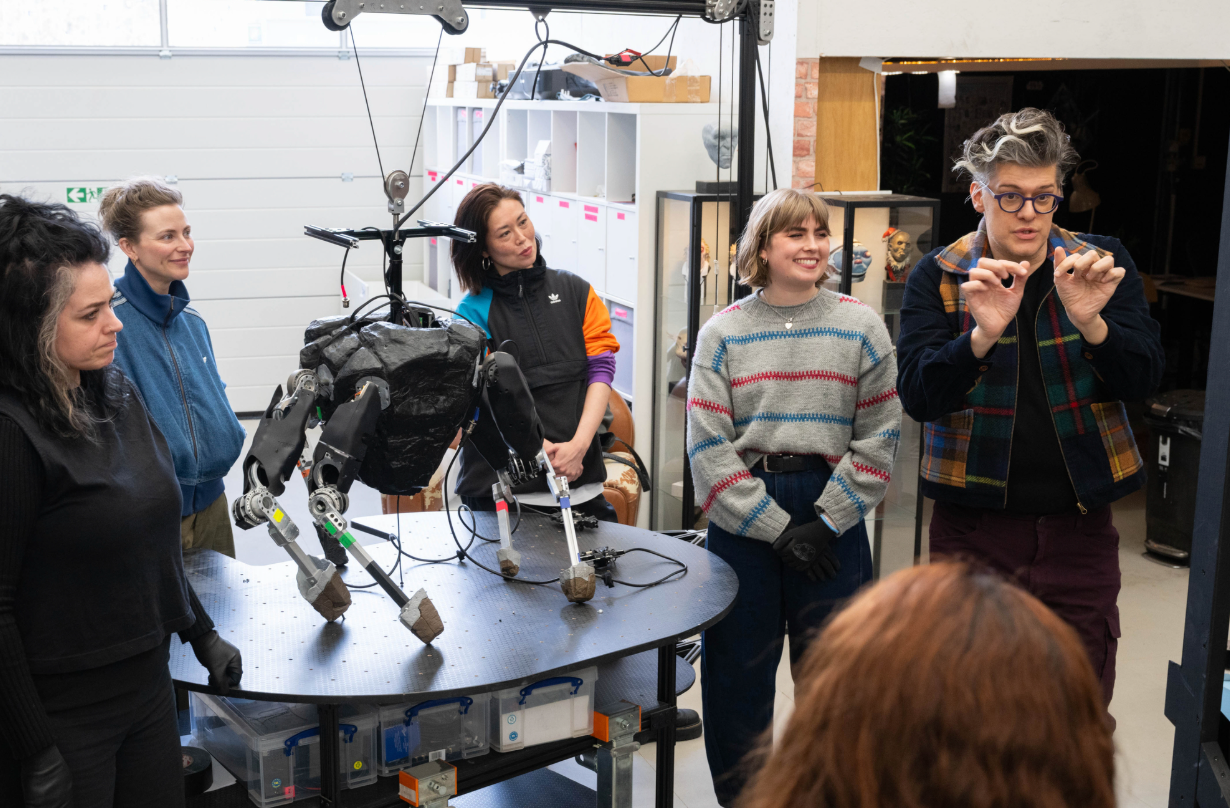
They could control an animatronic version of him remotely, but it was still their movement and their timing that drove it. Even when Rocky is fully digital, the animation is built on what the puppeteers already did, so it’s not starting from scratch so much as it’s building on a performance that’s already there.

So when you’re watching him on screen, you’re not just seeing effects. You’re seeing a performance without seeing the people behind it, and that’s what stuck with me, because this is the kind of work that sits in the background. You feel it without really thinking about who’s responsible for it, and in this case, a lot of that nuance came from women whose names most people won’t know unless they go looking. That doesn’t take away from anyone else involved in the character. It just adds another layer to how he came together.
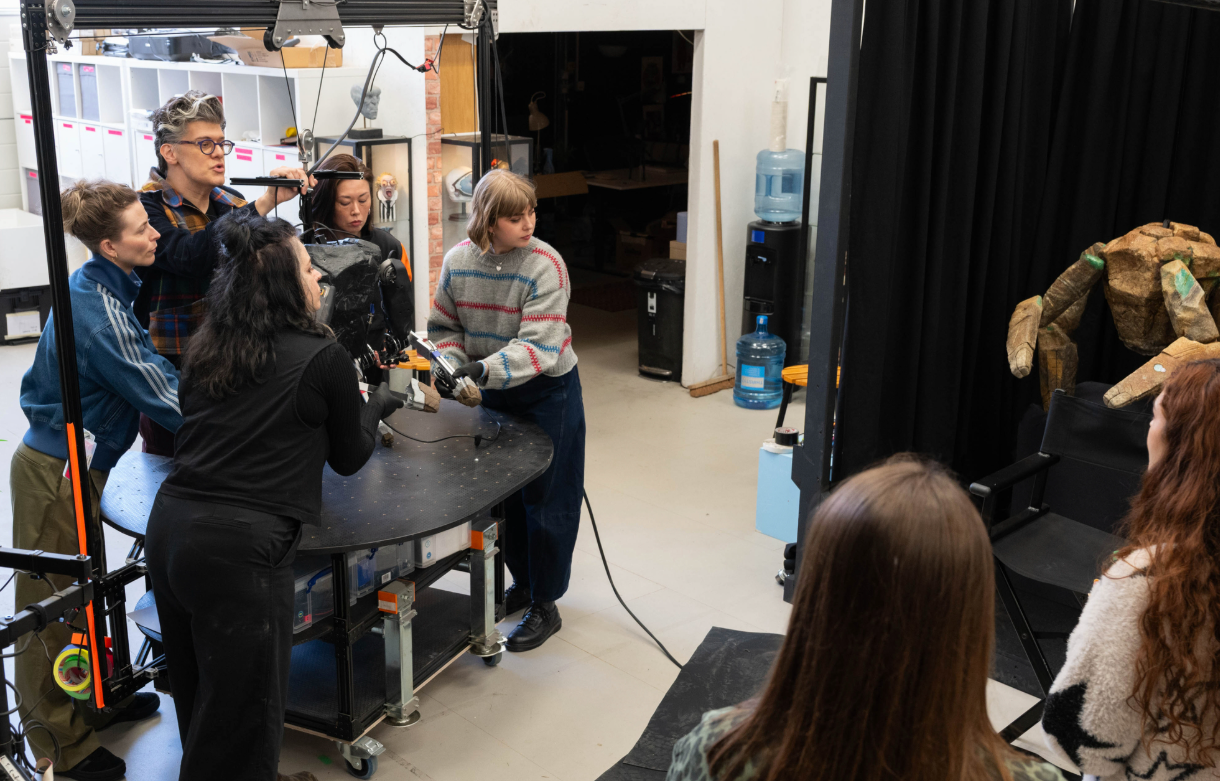
By the time I left theCreature Shop, I wasn’t thinking about Rocky the same way. I was thinking about how many people it takes to make something feel that real, and how some of the most important contributions are the ones you don’t immediately see. Once you notice it, though, it’s hard to unsee.
Project Hail Mary is now playing in theaters.