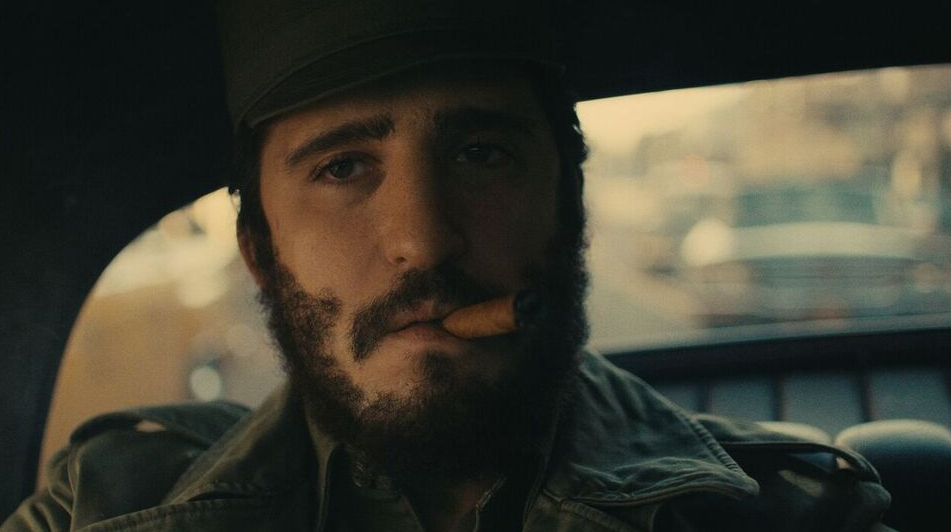

Historical fiction often works best when it finds the human stories hidden within world-changing events. Killing Castro, Eif Rivera’s latest political thriller, takes a little-known but fascinating chapter of Cold War history and transforms it into a tense, character-driven examination of power, surveillance, and political identity. While the film imagines events surrounding Fidel Castro’s famous 1960 stay in Harlem inside of Hotel Teresa, it is less concerned with historical recreation than with exploring the forces that shape history from behind the scenes.
Set during Castro’s visit to New York City for the United Nations General Assembly, the movie quickly establishes a city simmering with paranoia and competing agendas. The Cuban leader’s arrival sparks alarm among U.S. intelligence agencies, organized crime figures, and political operatives who view his growing influence as a threat. At the center of this web sits veteran CIA operative Frank Donovan, played with icy precision by Al Pacino, who oversees a covert operation designed to eliminate Castro before his revolutionary message can gain further traction.
Pacino’s performance is nuanced and rather than portraying a straightforward villain, he crafts a character whose belief in national security justifies increasingly troubling actions. The actor never misses and brings gravitas to every scene, making Donovan a compelling embodiment of Cold War anxieties and American interventionism.
However, if I were to choose the standout performer in the film, it would go to Diego Boneta as Fidel Castro. Instead of reducing the Cuban leader to either hero or antagonist, Boneta presents him as a charismatic and enigmatic figure whose presence commands attention whenever he enters a room. His interactions with Malcolm X, portrayed with quiet authority by Kendrick Sampson, form some of the film’s most fascinating moments. These scenes illuminate a rarely explored historical intersection between Black liberation movements and anti-colonial struggles abroad, adding intellectual depth to the thriller’s political framework.
The film’s emotional anchor, however, belongs to Xolo Maridueña as the young translator Leonel. Caught between his professional obligations and growing curiosity about the man he is tasked with observing, he serves as the audience’s guide through a maze of conflicting loyalties. Maridueña delivers one of the film’s most complex characters, capturing the uncertainty of a young man confronting the gap between official narratives and lived reality.
KiKi Layne also leaves a strong impression as a Harlem hotel manager Ava whose life becomes entangled in forces far beyond her control. Through her character, the film highlights how ordinary people are often swept into geopolitical conflicts without choice or preparation. Nicole Beharie, Logan Marshall-Green, Ron Livingston and Alexander Ludwig provide strong support, helping populate a world where everyone appears to be watching someone else.
Visually, Killing Castro excels at recreating a tense and divided New York. The contrast between the polished halls of international diplomacy and the vibrant streets of Harlem underscores the film’s central themes of visibility and marginalization. Cinematography frequently frames characters through windows, doorways, and surveillance lenses, reinforcing the sense that privacy has become impossible in a world defined by ideological conflict.
The screenplay occasionally struggles beneath the weight of its ambitions. With multiple agencies, political factions, and personal storylines competing for attention, some supporting characters receive less development than they deserve. There are some pacing issues at times as well. Certain historical references are introduced with intriguing promise only to be left underexplored. Nevertheless, the film’s commitment to examining the intersections of race, power, and international politics largely compensates for these shortcomings.
What ultimately distinguishes Killing Castro from conventional political thrillers is its focus on proximity rather than action. The film understands that the most compelling tension arises not from assassination plots or espionage operations but from conversations, observations, and moments of unexpected human connection. It asks how perceptions change when ideological enemies occupy the same space and whether genuine understanding can emerge amid systems designed to prevent it.
By blending historical drama with psychological suspense, Killing Castro offers a thoughtful and timely meditation on surveillance, political mythology, and the individuals caught between competing visions of the future. Anchored by strong performances and a rich historical backdrop, the film transforms a brief moment in Cold War history into an engrossing exploration of allegiance, belief, and the costs of power.
Killing Castro made its world premiere at the 2026 Tribeca Film Festival.