
There’s a restless energy pulsing through Kingston that feels impossible to ignore. The directorial debut from Carlos Key and Kalijah Rowe arrives with the urgency of filmmakers who have spent years observing the contradictions of higher education and are finally ready to drag them into the light. What results is an incendiary campus drama that’s messy in all the right ways, balancing biting social commentary with emotionally volatile character work. The closest comparison points are the institutional dissections of films like Dear White People, though Kingston carves out its own aesthetic identity rather than settling into director Justin Simien’s shadow.
Set within the elite halls of Kingston College, the film uses the Ivy League institution as both a literal setting and a metaphorical pressure cooker. Prestige hangs over every interaction like a cloud of invisible currency, dictating who belongs, who gets overlooked, and who is allowed to fail safely. Key and Rowe are clearly indebted to the social realist tradition, but they’re equally fluent in the language of satire, and the tension between those two modes gives the film its distinctive texture. The brilliance of Kingston lies in how deeply it understands the performance of academia. Everyone here is curating a version of themselves, whether they realize it or not, and the camera watches them do it with a cool, almost anthropological patience before suddenly lurching into intimacy.
At the center of the chaos are two students entangled in a situationship that quickly spirals into something larger and uglier. Leann Gardner and Nick Snipes bring sharp chemistry to characters whose inability to define their relationship becomes a catalyst for tribal warfare. Their dynamic captures a distinctly modern emotional paralysis, where intimacy exists without commitment and communication collapses under the weight of ego and social optics. Key and Rowe stage their scenes with a suffocating closeness, handheld and low-lit, before cutting to the wide, institutional grandeur of Kingston’s quads and lecture halls. It’s a formal strategy that mirrors the film’s central argument, that private anguish and public performance are inseparable in environments like this.
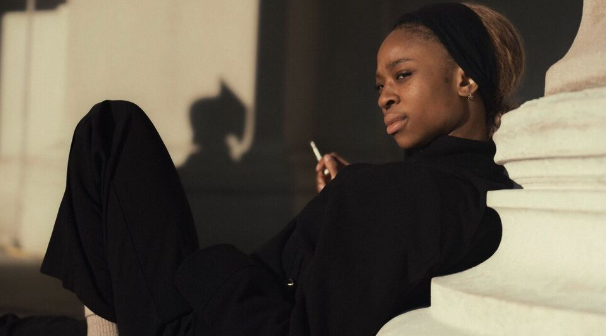
But the emotional core of Kingston belongs to Rose Badiru’s first-generation student, whose navigation through the institution becomes the film’s clearest indictment of elitism. Badiru delivers the strongest performance in the ensemble, grounding the film with a simmering frustration that never tips into caricature. Her character understands that Kingston’s promises of meritocracy are largely cosmetic, and every interaction she has with classmates and administrators reinforces the exhausting labor of proving she deserves to occupy the same space. Badiru achieves something rare; she makes the audience feel the weight of code-switching in real time, the millisecond calculations her character runs before every sentence. Her storyline cuts through the satire with devastating precision, and it’s the one narrative thread that lands every single beat.
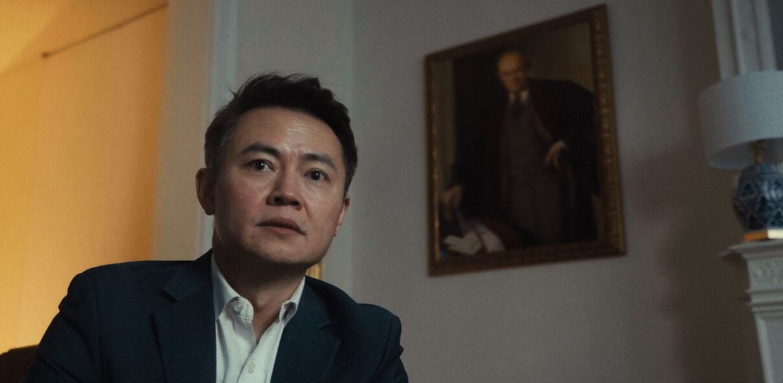
Meanwhile, Michael C. Liu’s Chinese professor offers one of the film’s most compelling supporting threads. In lesser hands, the disillusioned professor archetype could have felt overly familiar, a type Whit Stillman or Noah Baumbach might have handled with more ironic distance. But Liu injects the role with quiet desperation and dry humor that feels wholly his own. His mentorship of a reckless legacy student becomes one of the film’s most layered relationships, exploring whether institutions can ever truly evolve when power continues to recycle itself through wealth and access. The scenes between them have a theatrical quality, almost Mamet-esque in their subtext-loaded sparring.
What makes the film particularly effective is its refusal to simplify anyone into heroes or villains. Kingston College itself becomes the antagonist and an ecosystem that rewards manipulation, social capital, and inherited privilege while disguising itself as a beacon of intellectual enlightenment. The students weaponize identity politics against one another almost as often as they use them for solidarity, and the faculty are frequently too compromised or exhausted to intervene meaningfully. The screenplay understands the seductive toxicity of elite environments with the rigor of sociology and the instincts of drama.
Key and Rowe direct with a confidence that feels startling for a debut feature. The cinematography favors natural light that turns cold and institutional in corridors of power and warm and chaotic in dorm rooms and off-campus spaces, a visual grammar that does real thematic work without underlining it. The pacing is intentionally chaotic, mirroring the emotional instability of campus life, and while the film occasionally threatens to buckle under the weight of its many intersecting storylines, that disorder ultimately works in its favor. Kingston feels alive because it embraces contradiction. It’s funny, uncomfortable, self-righteous, vulnerable, and deeply cynical all at once.
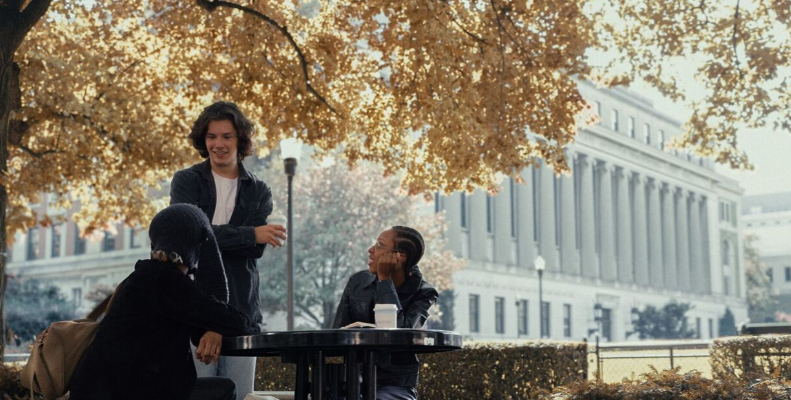
Conversations unfold like battlegrounds, with characters using academic language and social awareness as both shields and weapons. The film’s sharpest moments come when it exposes how fluently students and faculty alike can articulate systemic problems while still actively participating in them, a hypocrisy the film neither forgives nor fully condemns.

If there’s a weakness, it’s that the film occasionally prioritizes thematic ambition over narrative cohesion, a first-film problem that afflicted even the early work of directors who later mastered structure. Certain side characters feel underdeveloped, and some emotional arcs resolve abruptly. Yet even those imperfections contribute to the movie’s rawness. There’s very little polish here, but that lack of sanitization is exactly what gives the film its pulse. It suggests filmmakers who trust their instincts enough to leave rough edges intact, which is, frankly, the more interesting artistic choice.
With Kingston, Carlos Key and Kalijah Rowe announce themselves as filmmakers unafraid to interrogate modern institutions with fury and intelligence. Their debut is confrontational, wildly entertaining, and uncomfortably perceptive about the state of academia and the emotional fragmentation of the students trying to survive inside it.
It’s one of the year’s most exciting directorial debuts because it doesn’t merely ask whether elite institutions are broken. It asks whether they were ever designed to work fairly in the first place, and it asks with the formal vocabulary of filmmakers who are still finding their voice but already know exactly what they want to say.
Kingston made its world premiere at the 2026 Tribeca Film Festival.