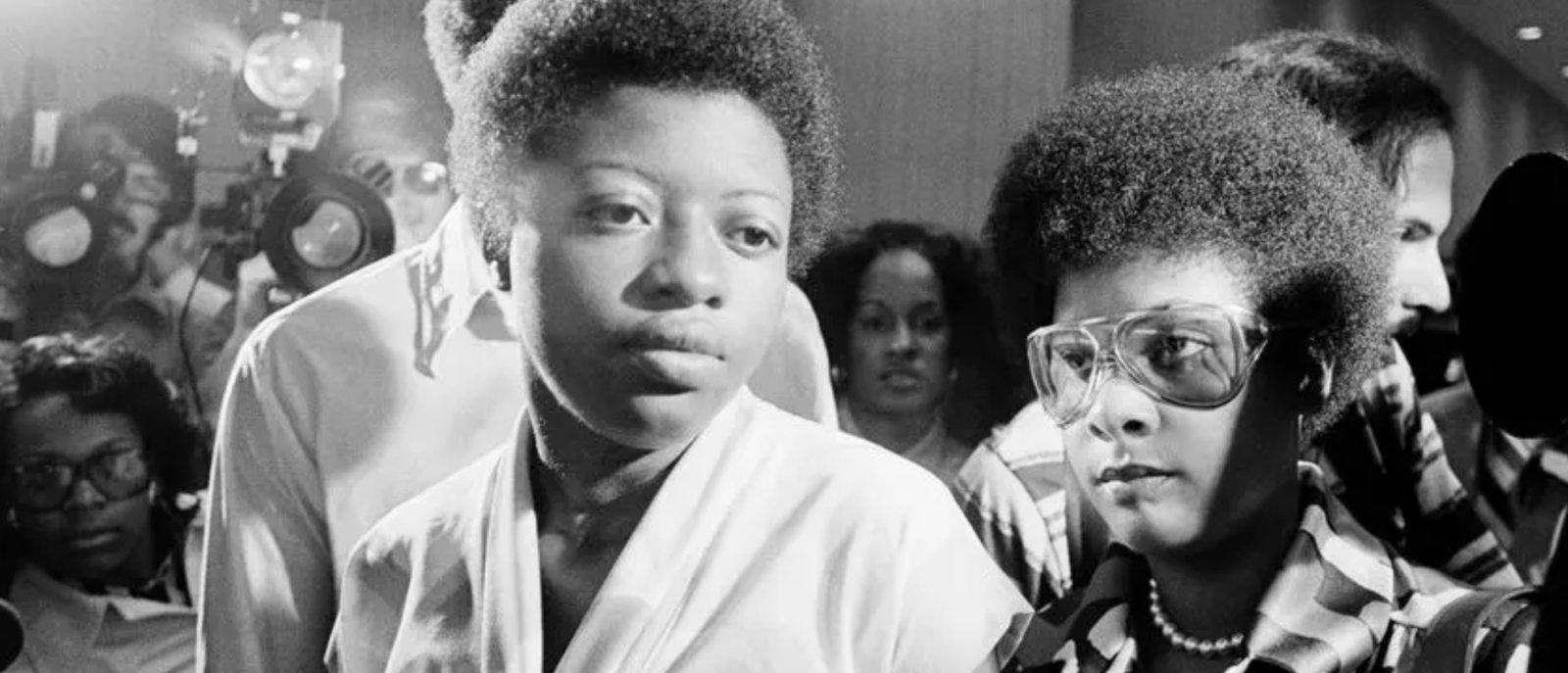

Today the BlackStar Film Festival highlighted its Luminiferous Shorts. These are films that illustrate light bearers and revolutionaries. Within this shorts block, the three films featured were the documentary Old Man River, the documentary Free Joan Little and the experimental film A Bundle of Silences.
Among the three, I want to review the following film Free Joan Little. From Peabody award-winning filmmaker Yoruba Richen, history is unearthed in a groundbreaking way in this compelling hard-hitting narrative that strikes you at your core. Joan Little (pronounced Jo-Ann) at 20-years old was incarcerated in a small North Carolina town.
When a white prison guard named Clarence Alligood was found dead in her jail cell, Joan Little fled for her life, escaping custody and going on the run through the small, segregated town of Washington, North Carolina. Meanwhile, local law enforcement was given strict orders: shoot to kill.
She was Black. She was a woman. He was white. He was a man. And in the eyes of a deeply racist justice system, that was enough to presume her guilty.
Richen’s film takes audiences on a compelling journey through court documents, archival footage, interviews, and firsthand commentary from the people who were there when Joan Little’s trial unfolded. Among those featured is her Black female attorney, Karen Bethea-Shields, who was the only Black woman in her graduating class at Duke Law School. She recounts her experience representing Little and the immense challenges surrounding the case.
Activist Angela Davis also appears in the documentary, reflecting on her active involvement in the case and the intersection between Joan Little’s fight for justice and the broader women’s rights movement of the 1970s. What’s particularly striking is the level of solidarity that emerged around Little’s case. Her story galvanized activists across racial and political lines, drawing support from a number of prominent civil rights leaders, including Julian Bond and Shirley Chisholm, who used their platforms to amplify her cause.
During the Q&A shortly after the film ended, Yoruba Richen explained that the film’s story is rooted in a much longer history of activism and resistance. Beginning in the 1940s, this work was carried forward through cases and, three decades later, through the formation of the Free Joan Little Defense Committee in Detroit. She discovered this history while researching what to include in the film, noting that it had only been touched upon briefly in her previous work on Rosa Parks.
“I always knew that I wanted to go back,” she explained, particularly because of how much the Joan Little trial and the movement surrounding it resonated beyond the United States. The case received international attention, and despite the unlikely circumstances surrounding it, the activists involved ultimately won.
The journey to making Free Joan Little began roughly three years ago, but for the director, the story has only become more relevant with time. More than a historical account, she sees the film as a model of resistance — one that offers audiences a powerful example of what collective action can accomplish, even when the odds seem impossible.
Joan Little’s case is the first case where a Black woman is found not guilty in a case against a white man for manslaughter — and this was in the 70s! Attorney Karen Bethea-Shields also added a significant point while trying the case for the defense as she was educating the jury on what rape is.
To take things a step back here, in the case of Joan Little, she was a victim and was defending herself against Clarence Alligood who raped her. I won’t describe the gory details of what he did, the documentary depicts the court transcript of her testimony describing the horrific acts he committed, but he sexually assaulted her and she clearly defended herself.
Karen’s remarkable moment to the jury was convincing them that rape isn’t just about sex. That it is about power and control. As it turned out, Clarence Alligood had a history of assaulting female inmates at this prison, knowing he could get a way with it because of his position. And once that defense was used and understood and multiple witnesses also testified they too were victims of Alligood, Little was able to prove her innocence.
Free Joan Little most certainly took my breath away as I was surprised I never heard of her case before, but I was also so impressed by Joan’s resilience and bravado through this whole ordeal. She never gave up and was confident all the way until the very end.
I sincerely hope Free Joan Little reaches a much wider audience and finds a streaming home that allows the film to be seen by as many people as possible. Joan Little’s story is an important, often overlooked chapter in the history of racial and gender justice, and this documentary offers audiences an opportunity to learn about her fight, the movement that rallied around her, and the lasting significance of her case.
The BlackStar Film Festival runs till August 9th in Philadelphia, PA.