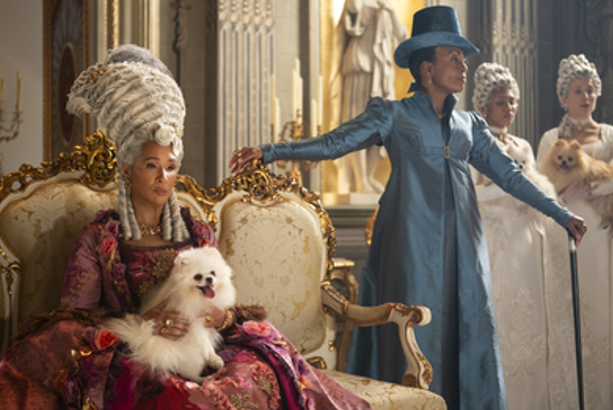

After three seasons of Bridgerton and the emotionally rich detour of Queen Charlotte: A Bridgerton Story, audiences think they know Queen Charlotte and Lady Danbury. They are icons now. Pillars of the ton. Women who command rooms with a look, a pause, a perfectly timed remark. But according to Golda Rosheuvel and Adjoa Andoh, the upcoming chapters of Bridgerton are less about polish and power and more about excavation.
What we are seeing now, both actresses explain in their latest interview with BGN, is a deeper layer. One shaped not just by court politics or romantic intrigue, but by memory, vulnerability, and the uncomfortable necessity of looking backward in order to move forward.
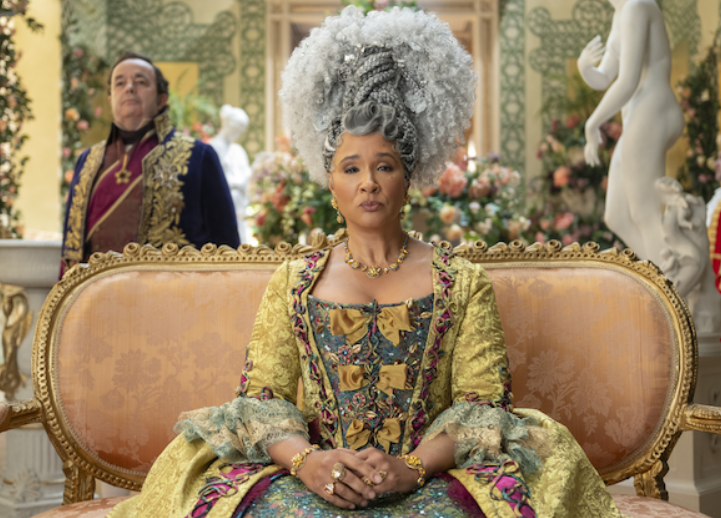
For Rosheuvel, returning to Queen Charlotte after the standalone prequel has fundamentally shifted how she approaches the character. The audience has now witnessed Charlotte’s origin story. They have seen the cost of love, duty, and isolation. That knowledge reframes everything.
As an actress, Rosheuvel relishes the chance to lean into what she calls the “nasty, messy, gritty” parts of the character. Not for shock value, but because that mess adds texture. It complicates the woman behind the crown. Charlotte is no longer simply a monarch presiding over a glittering social hierarchy. She is a woman who has lived, lost, and survived inside a gilded cage, and that cage is starting to feel smaller.
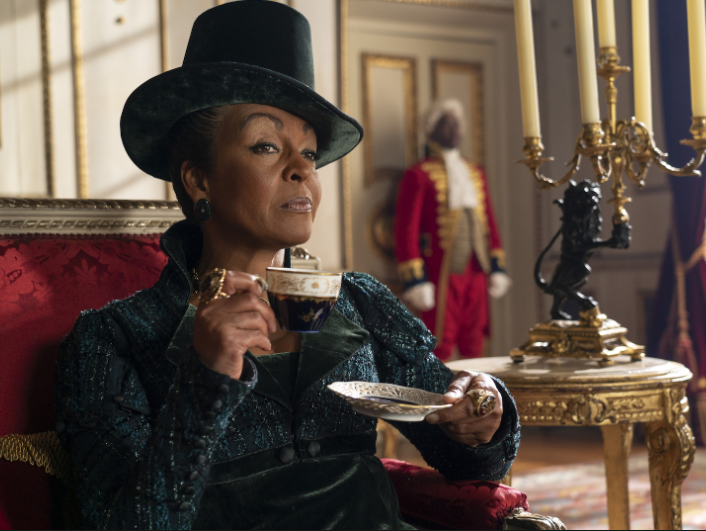
Lady Danbury’s journey is running on a parallel emotional track, though it unfolds differently. Adjoa Andoh describes this season as a turning point for her character, one where Lady Danbury begins to step off the relentless task of navigating social hierarchies and instead confronts something far more personal.
When Lady Danbury’s brother enters the story, it cracks open a part of her life that has remained largely unseen since Queen Charlotte. The audience has understood her as a political operator, a survivor, a kingmaker. What they have not fully explored is her interior world. Her family history. The emotional residue of the choices she made as a very young girl.
Andoh traces that history carefully. Lady Danbury was once a four-year-old child whose life took a decisive turn. She did what she had to do. She survived. She had children. She learned how to move through a hostile world. She formed a powerful bond with Queen Charlotte, and together they figured out how to exist within the rigid machinery of court life.
But survival does not erase questions. It delays them.
Now, those questions are resurfacing. Lady Danbury begins to ask, “Who was that four-year-old child?” And once that question is asked, it cannot be unanswered.
There is a universal truth embedded in that moment, Andoh notes. Many people reach a point in life where forward motion becomes impossible without reflection. You hit a wall and realize you cannot continue until you understand where you came from. Going back is not nostalgic. It is necessary.
For Lady Danbury, however, going back comes at a cost. Her relationship with Queen Charlotte is not just personal. It is political. Emotional dependence and institutional power are intertwined. She cannot simply walk away without consequence.
This creates a wrenching dilemma. Lady Danbury knows she has to leave, even temporarily, to confront her past. But leaving means asking something devastating of the one person who has been her constant. It means risking heartbreak on both sides. And it means acknowledging a painful truth. No matter how deep their friendship runs, Charlotte is still the queen.
That tension is where the story becomes most potent. It allows the show to dig into vulnerability, fractures, and emotional fault lines that have always existed beneath the surface. These women know each other intimately. They share history, secrets, and survival strategies. And yet they are forced to renegotiate what their bond looks like when their needs collide.
For the audience, that conflict resonates far beyond the world of Bridgerton. It mirrors the challenge of long friendships in real life. How do you hold onto the people who sustain you while also honoring the person you are becoming? How do you choose yourself without betraying someone you love? What happens when loyalty and self-preservation come into conflict?

Rosheuvel adds another layer to this dynamic by reflecting on how Queen Charlotte responds when Lady Danbury finally asks the hard questions. In that moment, Charlotte’s entire life flashes before her eyes. Reality bites. The safety of the gilded cage is suddenly exposed for what it is. Protection, yes. But also confinement.
When someone rattles that gilded cage and light spills in, Charlotte is forced to acknowledge that there is a world beyond her carefully controlled domain. A world where people change, grow, and sometimes need to leave her behind, even if only briefly.
That realization is destabilizing. And that is precisely why it is compelling.
What Rosheuvel and Andoh are offering this season is not spectacle, but depth. Queen Charlotte and Lady Danbury are no longer just symbols of authority and elegance. They are women standing at emotional crossroads, reckoning with the past, negotiating the present, and uncertain of what the future will demand of them.
In peeling back these layers, Bridgerton reminds us that even the most powerful figures are shaped by unresolved questions. And sometimes, the bravest thing a person can do is stop moving forward long enough to look back.
Bridgerton Season 4 Part 1, premieres globally January 29, 2026 on Netflix.