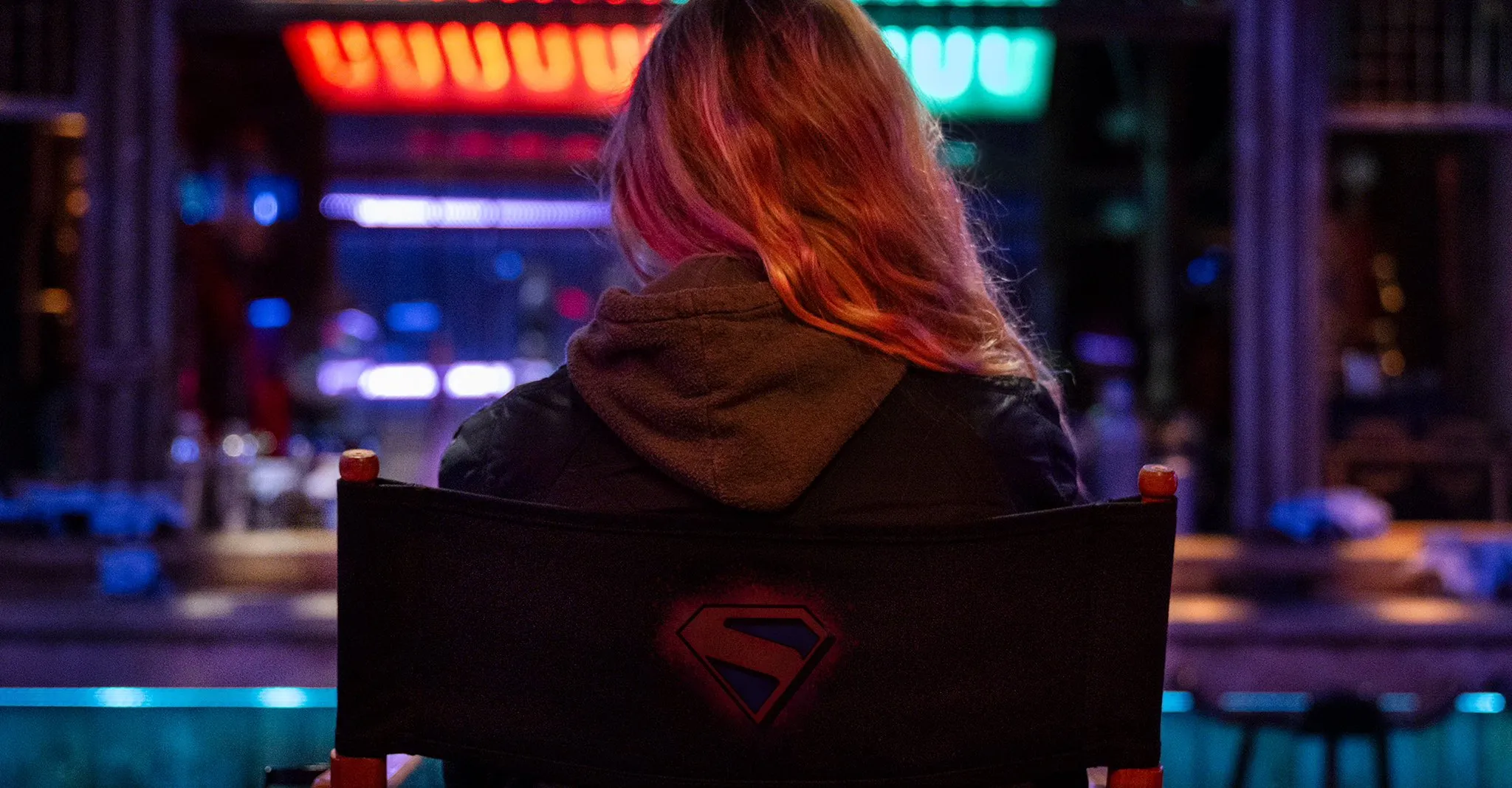

When DC and Warner Bros. announced they were adapting Tom King and Bilquis Evely’s Supergirl: Woman of Tomorrow for the big screen, the fan community had a very specific and completely understandable reaction: please don’t mess this up. The 2021-2022 eight-issue miniseries is one of those rare comics that everyone could agree on was gold. King’s writing strips Kara Zor-El down to something raw and relatable, using the voice of a young alien girl named Ruthye Marye Knoll to tell the story of Supergirl. Evely’s art is breathtaking in ways that leave you in awe as you turn the pages as the imagery is lush, detailed, and deeply strange in the best ways. The whole thing reads like a space western filtered through grief and hope, so getting that onto a screen would be a challenge. Black Girl Nerds was invited to the Warner Bros. Leavesden set in the UK, and, after speaking with producer Chantal Nong and production supervisor Sophie Scott, it’s clear that the filmmakers took the adaptation seriously.
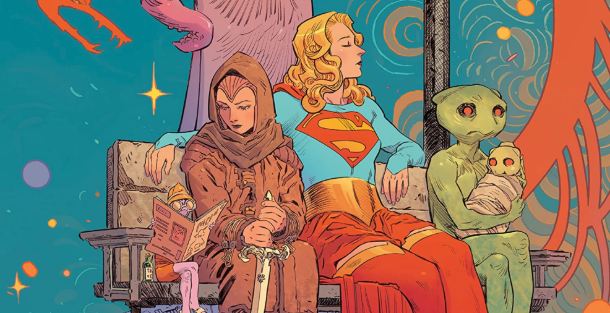
The core of the narrative is largely intact. Kara is on a distant planet celebrating her birthday when she meets Ruthye, a young girl seeking someone to help her avenge her father’s murder by Krem of the Yellow Hills. When Krem shoots Krypto with a poisoned arrow and steals Kara’s ship to make his escape, Supergirl’s vacation officially ends. The two then travel across the galaxy in pursuit of justice. The grittiness that King embedded in the comic is very much present in the film. Sophie Scott was direct about that: “I think that model is very evident in our film.” Gillespie’s storytelling style, known from films like I, Tonya and Cruella, is drawn naturally to that kind of morally complex duo dynamics.
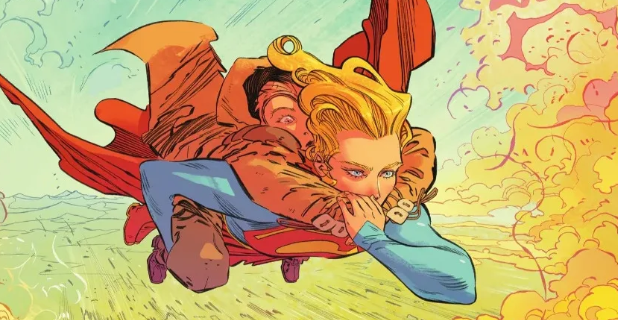
The production also leaned hard into Evely’s visual world. From the alien landscapes to the Brigand ship to the design of individual costumes and props, the art department used the comic as a primary reference. Director of photography Neil Lamont (Oscar-winner on Wicked) pulled from the graphic novel panels when designing sets. Certain locations, like the pub where Kara and Ruthye first meet, exist in the film because they exist in the comic, brought to physical life on a stage in England. Some of the most notable differences are how the story is told entirely from Ruthye’s point of view, framed as a kind of history she’s retelling as an old woman. The film belongs to Supergirl. Ruthye is very much present, as Nong described them as travel buddies who carry the bulk of the film together, but this is Kara’s movie, hands down.
Both characters are also younger than in the comic. Milly Alcock, who plays Kara, was 24 during production. Eve Ridley, who plays Ruthye, turned 13 during pre-production. The script, Nong explained, was working with a specific vision of Kara: someone who has been a hero on Earth but who hasn’t fully come into herself yet. The suit, as we heard multiple times, arrives at the end of the film, a deliberate choice to make the super suit feel earned rather than assumed.
The most significant addition to the story is also the most talked-about: Lobo. In King’s comic, Lobo doesn’t appear. The role that Lobo fills in the film, the charismatic, unpredictable wild card who complicates Kara and Ruthye’s chase, doesn’t have a direct equivalent in the source material. Jason Momoa reportedly raised his hand to play Lobo the moment James Gunn and Peter Safran took the reins at DC, and the production found a way to make his inclusion story-driven. Nong’s framing of that decision was smart: “In a story like this, you generally want somebody to twist it up, change the game unexpectedly.” Lobo, she said, represents what she and Gunn call a “gray hat”, not a villain, not a hero, but someone who operates by his own code. In a story about Kara moving from uncertainty to identity, and Ruthye moving from grief to purpose, having Lobo around to ask hard questions from a morally chaotic position adds a level of depth that was missing before. As someone who has read the comic, I was shocked to hear about Lobo’s inclusion, knowing he isn’t in the material.

One of the coolest things about the adaptation is how literally the production tried to translate Evely’s art. Costume designer Michael Mooney described going very close to the comic version of the super suit, and the results (what we saw on set) do exactly that. Props supervisor Charlie Horwood talked about the comic as a primary reference for weapons design. Ruthye’s sword, for example, follows the shape of the comic version while adding real-world craft in its Afghan filigree detailing. Sophie Scott described production designer Neil Lamont pulling from architecture around the world. There’s a planet in the film that the team calls Evely, named directly after the comic’s artist, Bilquis Evely, a dying world with a dusty, collapsing aesthetic that Evely rendered in her signature style across multiple issues.
What becomes clear, spending time in these spaces, is that the adaptation was built on respect. Not slavish recreation as changes were made, characters were added, ages were adjusted, and perspectives were shifted. But the emotional truth of what Tom King and Bilquis Evely made is visible in every corner of the production. The question of whether it all lands on screen, of course, gets answered when Supergirl hits theaters June 26.