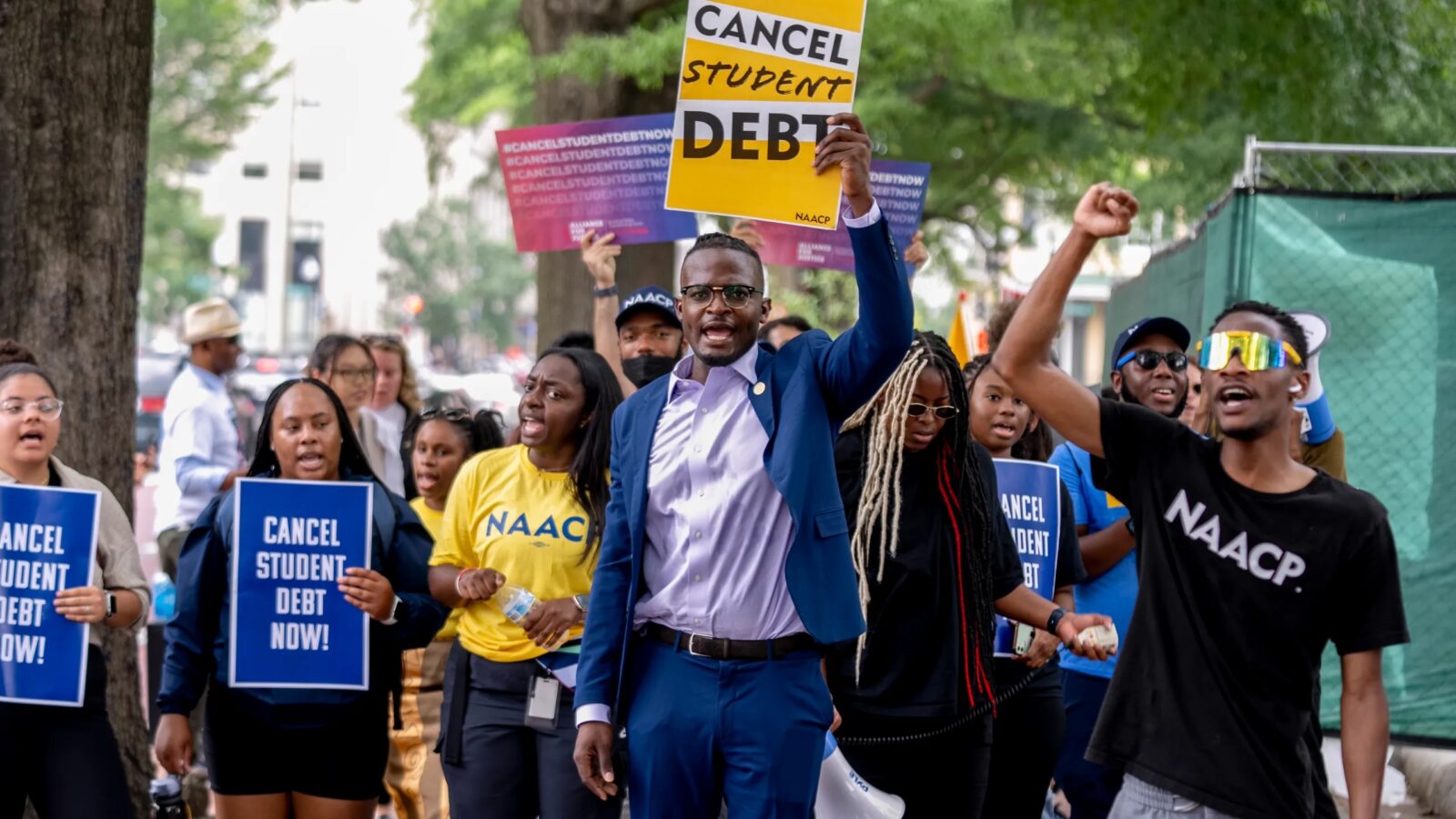

The issue of student loan forgiveness has been a topic of intense debate for quite some time. While the idea of student loan forgiveness was gaining momentum in public discourse, the new Trump administration’s policies (or lack thereof) will play a pivotal role in shaping the student loan landscape. For marginalized communities, whose families often carry disproportionate amounts of student loan debt, these policies can have an outsized impact.
Before examining the specifics of the Trump administration’s approach to student loan forgiveness, it’s important to understand the broader context.
During the 2020 presidential campaign, Joe Biden committed to implementing a student loan forgiveness plan. This was a primary issue he had to have a plan for. His proposal came about after Congress approved, and Donald Trump signed, the CARES Act, which temporarily paused payments and interest for federal student loan borrowers during the COVID-19 pandemic. This pause was extended multiple times, ultimately ending in September 2023.

A year into President Biden’s presidency, he unveiled a plan to forgive $10,000 in student loan debt for each borrower, and $20,000 for Pell Grant recipients. The relief was restricted to individuals earning less than $125,000 annually, or $250,000 for married couples, and was also limited to the amount of outstanding eligible debt a borrower had.
Since September 2023, the student loan debt crisis in the United States has grown to over $1.7 trillion. However, the impact of this crisis is not evenly distributed. Black students face unique challenges when it comes to student loan debt, including higher levels of borrowing, higher rates of default, and a longer time frame to pay off loans.
Research has shown that Black students are more likely to borrow money to attend college and, even after graduating, tend to have more debt than their white counterparts. Also, Black borrowers often face greater challenges in repaying their loans due to systemic economic disparities, including lower median household wealth, wage gaps, and discriminatory hiring practices.
These disparities are especially pronounced in the federal student loan system, where Black borrowers are more likely to default on loans, leading to long-term financial instability. The promise of student loan forgiveness programs, like Public Service Loan Forgiveness (PSLF) and Income-Driven Repayment (IDR) plans, offered a potential pathway to relieve some of this burden for borrowers. But under Trump’s initial administration these programs faced challenges.
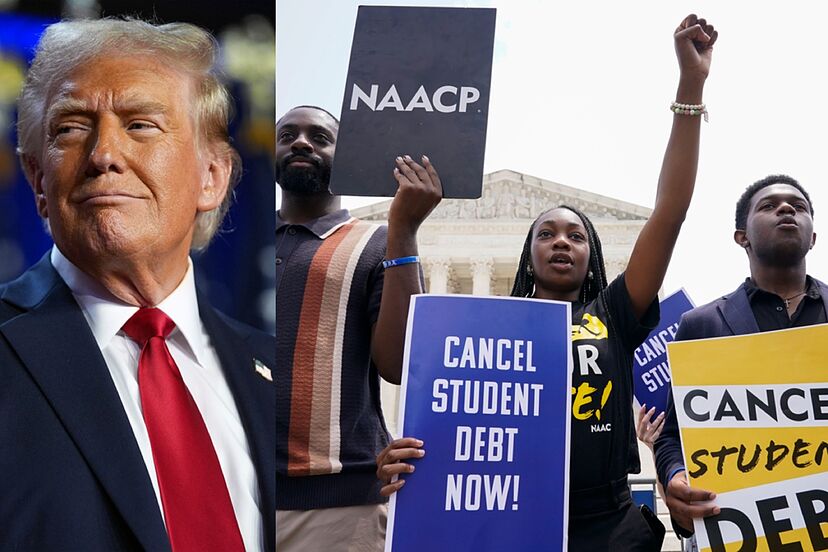
When Trump served as president from 2017 to 2021, there was a contradictory approach to student loan debt and forgiveness. While he actually expressed support for limited student loan forgiveness, his policies were often geared toward scaling back or limiting the effectiveness of programs that already existed. While Trump proposed some changes to make it easier for borrowers, the reform was slow moving and did not address the immediate needs of struggling borrowers, particularly those from communities of color.
Based on Trump’s past actions and policy stances, there are a few things that come to mind for me that could have significant implications for student loan forgiveness, especially for Black borrowers.
During his first term, Trump strongly opposed broad-based student loan forgiveness plans, including proposals such as those from Senator Elizabeth Warren and Senator Bernie Sanders, which suggested forgiving a large portion or even all student loan debt for borrowers. He referred to these plans as “crazy” and “too expensive.”
Another concern is the impact on Historically Black Colleges and Universities (HBCUs). Trump’s policies on HBCUs during his first term were favorable, because he piggy-backed off President Obama’s programs that he had put in place. The increased funding for and initiatives aimed at improving access to higher education for Black students, was not Trump “saving HBCUs.” The numbers from the Obama years did not increase under Trump. Student loan forgiveness specifically for Black borrowers — outside of general public service loan forgiveness — was not a priority.
With that said, he may very well support targeted financial assistance for HBCUs, but would likely resist more aggressive student debt relief policies that could disproportionately benefit Black borrowers as a whole. With his threat of eliminating the Department of Education, his focus would likely be on reducing government involvement in higher education and student loans rather than offering blanket debt relief.
Because Black borrowers tend to face higher levels of student loan debt, they are more likely to struggle with repayment due to systemic racial wealth inequality. However, Trump’s administration has historically been more concerned with economic policies aimed at reducing regulations and cutting taxes. But these market-based solutions might not be sufficient enough to address the unique financial difficulties they experience. Without targeted policies like expanded student loan forgiveness or race-specific debt relief, the burden for Black borrowers could remain high under his administration.
The Biden administration revealed updated guidance for borrowers in the SAVE (Savings on a Valuable Education) plan. The SAVE plan is an income-driven repayment, that was released last year. The program provides borrowers with lower payments, interest benefits, and several routes to eventual student loan forgiveness. SAVE remains blocked due to a court order issued last August in response to a legal challenge brought by a group of Republican-led states. As a result, more than eight million borrowers were pushed into an involuntary forbearance, where most remain today.
During Trump’s first term, his judicial appointments had a significant impact on the federal judiciary. This time, it could lead to more conservative judges being appointed to federal courts which could affect future rulings related to student loan forgiveness. For example, if the courts were to strike down or limit government forgiveness programs, it would hinder access to loan forgiveness for many borrowers, especially Black borrowers who disproportionately benefit from these programs.
The truth is, in Trump’s administration, student loan forgiveness — especially on a broad scale — will likely not be a priority. He might pursue limited relief, but any policies and programs designed to significantly reduce the student debt burden for Black borrowers, such as widespread forgiveness, are unlikely to be enacted. We’ve seen Trump’s approach to addressing racial disparities. So, hope is not high. For Black borrowers, this could mean continued financial strain without significant relief.