



***
(Republished from 2013)
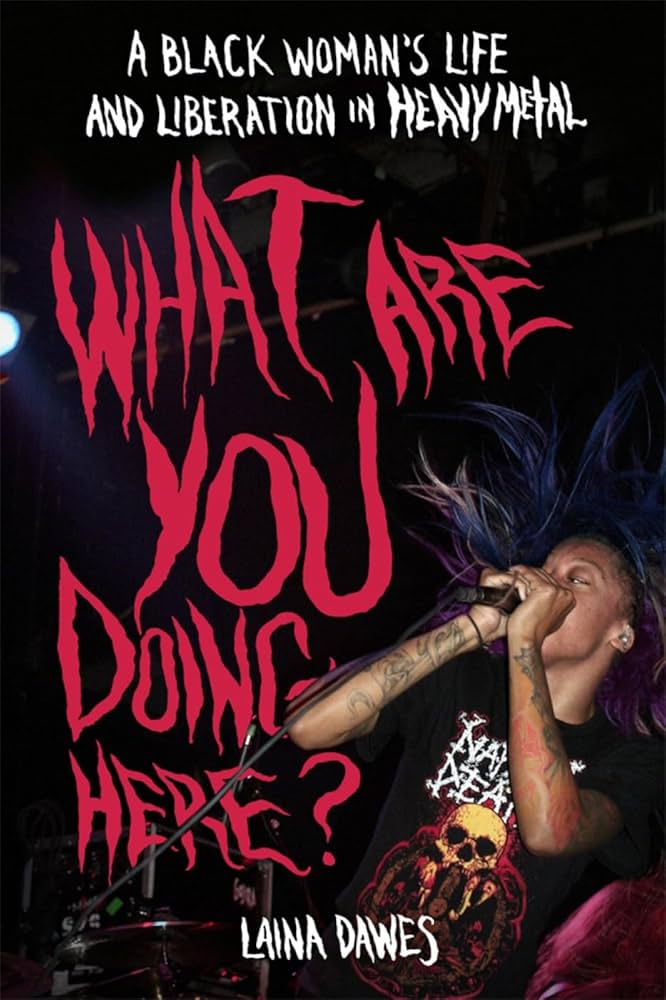
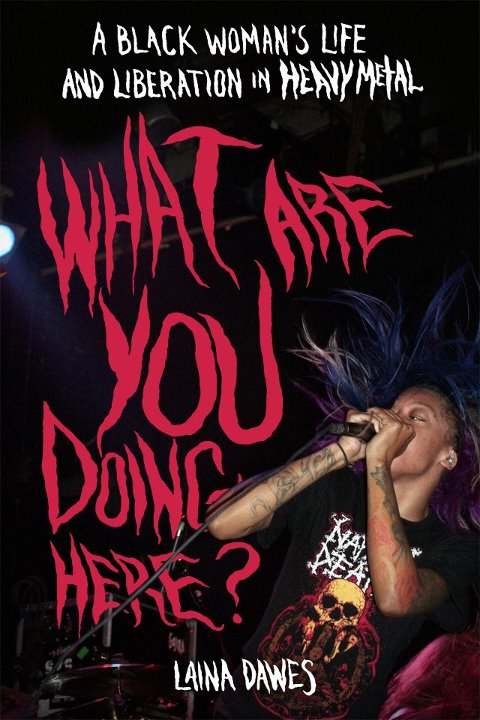
I recently learned about Canadian music critic and heavy metal enthusiast Laina Dawes, and her work immediately caught my attention. The title of her book, “What Are You Doing Here: A Black Woman’s Life and Liberation in Heavy Metal”, is both striking and thought-provoking, offering a powerful entry point into her experiences within a genre where Black women have long been underrepresented. Her writing promises not only a personal narrative but also a broader exploration of identity, belonging, and liberation within heavy metal culture. For anyone passionate about music or interested in stories that challenge and expand cultural spaces, this book is well worth adding to your reading list.
The heavy metal scene has long been shaped by a dual imbalance. It is not only male-dominated, but also largely oriented toward white audiences, creating an environment where certain voices and identities are often marginalized or overlooked. Like many areas of music, it reflects broader societal patterns in which genres become racialized, and unspoken rules emerge about who “belongs” where. These assumptions can be limiting, reinforcing stereotypes that suggest musical preferences are tied to ethnicity rather than individuality. In reality, taste is far more fluid and expansive than those narrow expectations allow. Not all Black listeners gravitate toward hip hop, just as not all white listeners are drawn to heavy metal, and the richness of music culture lies in that diversity.
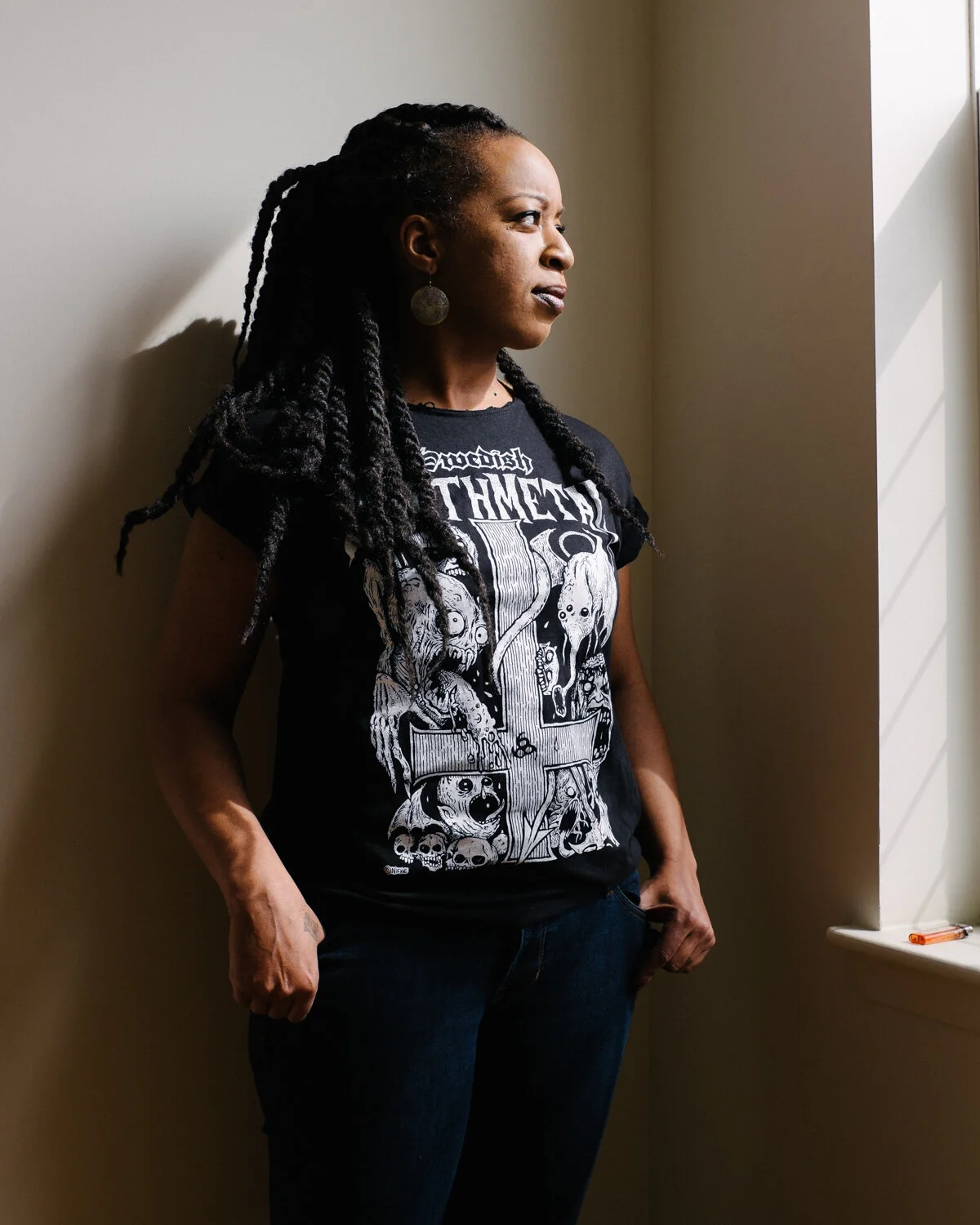
For Laina Dawes, this disconnect between perception and reality became a defining part of her journey. Growing up in Ontario, she often found herself navigating spaces where she stood out, both racially and culturally. Heavy metal, however, offered something that transcended those boundaries. It became a refuge and a release, a place where the intensity of the music mirrored her own feelings of frustration, isolation, and resistance. In a world where she sometimes felt removed or unseen, metal provided a sense of recognition and emotional clarity.
Her story highlights not only the power of music as a tool for personal expression, but also the importance of challenging the rigid categories that attempt to define it. By occupying and embracing a space that was not traditionally seen as hers, Dawes’ experience speaks to a broader truth. Music does not belong to any one group. It evolves through the people who connect with it, reshape it, and find themselves within it.
According to Vice.com who wrote a feature story on Laina,
she says,
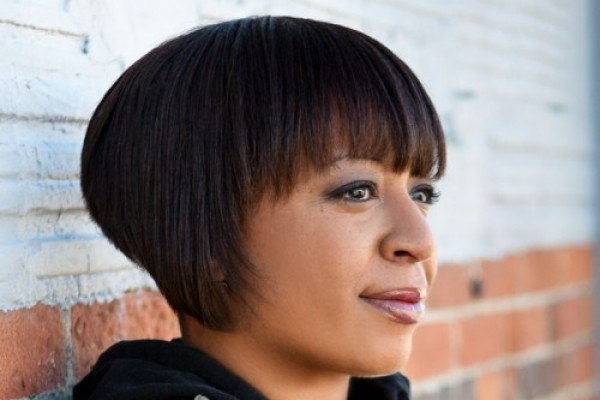 “As women, and as minorities, the ‘voice’ of Black women’s experiences is commonly ignored, and the music served as a way to get those feelings out, and to create an individual way of expressing themselves. You can scream, pump your fists and allow yourself to feel in the same ways as ‘white men’ are ‘allowed to express themselves in the metal scene.”
What Are YOU Doing Here?
The title itself carries a tone that many of us may recognize. It echoes those subtle but pointed moments when we step into spaces like rock concerts or country bars and are met with questioning looks, as if our presence needs to be explained. Too often, assumptions about gender or skin color create the sense that we should be somewhere else, rather than exactly where we are.
For Laina Dawes, that tension becomes the foundation of a much larger and more meaningful narrative. Her story resonates not only within the music industry, but especially with Black women who have rarely seen themselves reflected in heavy metal spaces. Through her work, she actively encourages Black women to embrace the genre, not as outsiders, but as participants who can find both comfort and power in it. She reframes heavy metal as a space where Black female identity, including sexuality, can be expressed on its own terms.

At its core, heavy metal is an art form rooted in intensity, rebellion, and self-expression, qualities that lend themselves to empowerment when reclaimed. While the genre has historically been shaped by misogynistic imagery and exclusionary norms, that landscape is gradually shifting. A growing number of women artists are entering the scene, challenging outdated stereotypes and expanding what heavy metal looks and sounds like. Dawes underscores this evolution in her interview with Vice Media, noting how these changes are opening the door for a more inclusive and dynamic future.
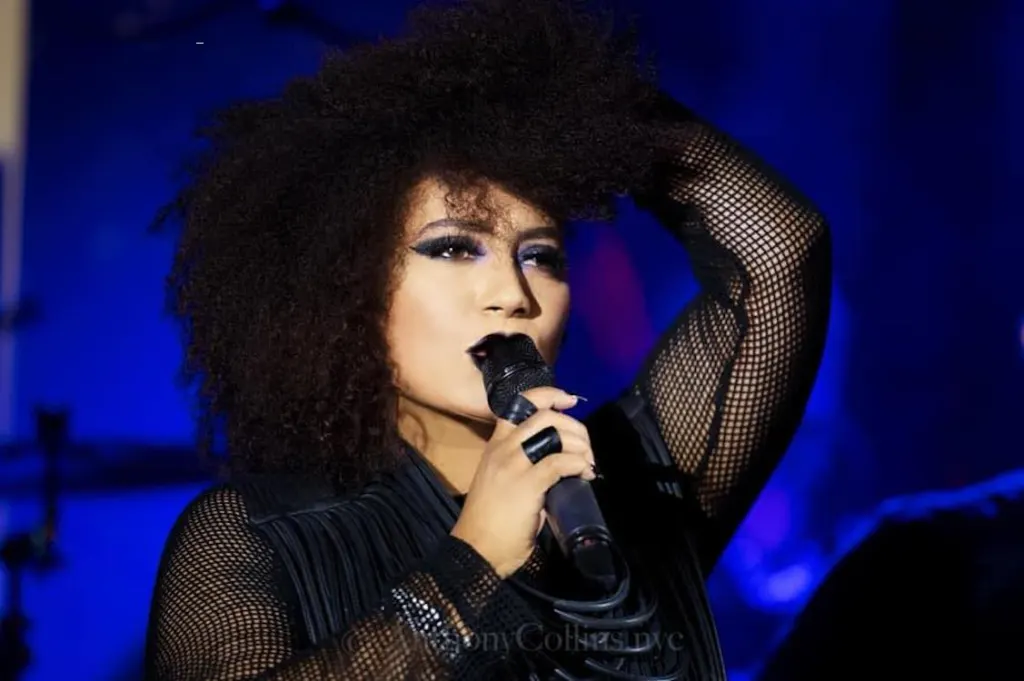
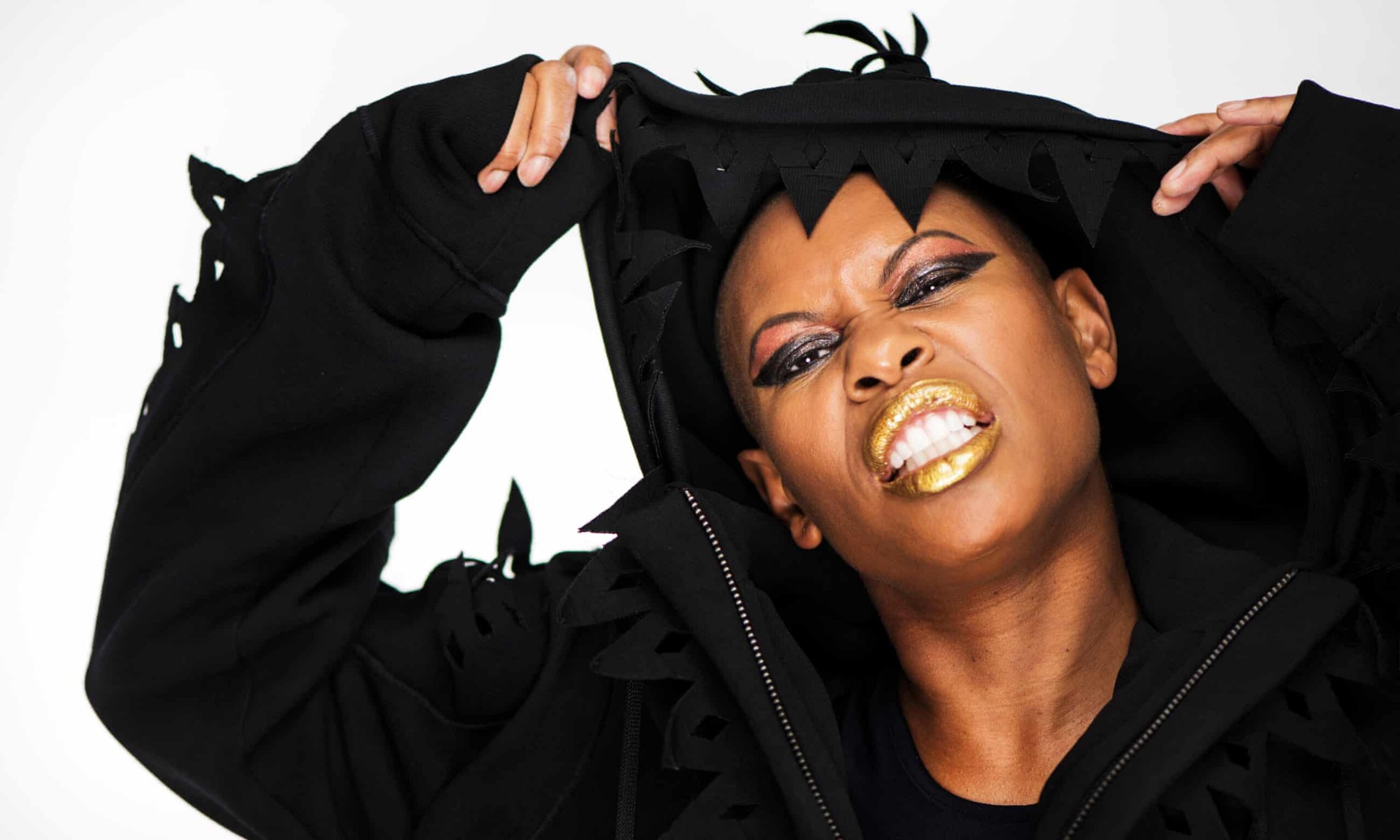
I really admire Black female singers, such as MilitiA from Judas Priestess and Skin from Skunk Anansie, as they are in control of their image, how they want to use their bodies in their performance, versus a hip-hop artist, who needs to be hyper-sexualized in order for people to take notice of her. Metal is more about technical and musical proficiency than what you look like, and I think that in hardcore and punk too, Black women can have more control over their performance and how they want to present themselves. The images of Black women in popular culture can be so two-two-dimensional – the oversexed groupie or ‘animal’ or the overweight, sassy ghetto chick. The metal scene can provide a place of sexual empowerment for Black women, as it provides an alternative to all that.
Ultimately, Laina Dawes challenges us to rethink not only who belongs in heavy metal, but who gets to define cultural spaces at all. Her work is a reminder that identity and expression cannot be confined by stereotypes or expectations. As the genre continues to evolve, it creates room for more diverse voices to be heard and celebrated. In that sense, heavy metal becomes more than just music. It becomes a site of resistance, self-definition, and empowerment for those bold enough to claim their place within it.



Wow! My friend told me about this last week and I added it to my list of books to read. It seems amazing.
i love this!