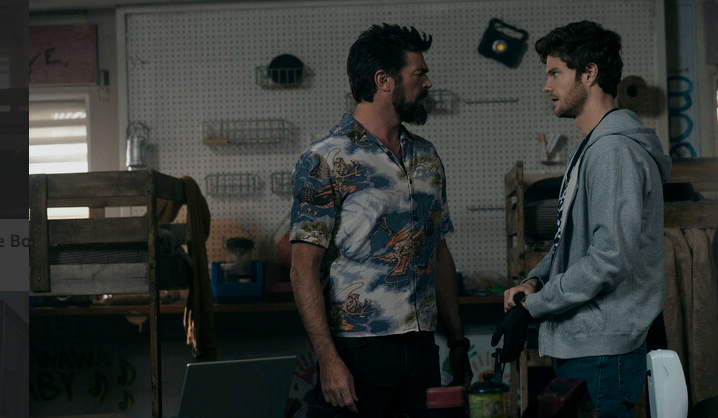

In a recent interview with Black Girl Nerds with the cast of The Boys, the focus turned toward something that has always defined the series beneath its blood-splattered mayhem, and that’s hope. As the show heads into its final season, BGN asked a simple but revealing question to Jack Quaid and Karl Urban. If they could distill Hughie’s mindset entering these final episodes into one insight, what would it be?
The answers offered a layered portrait of a character who has never been defined by power, but by persistence.
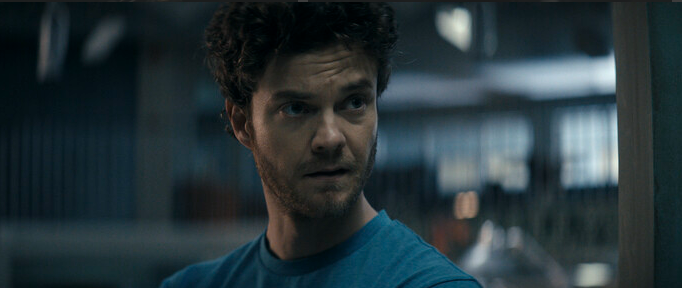
For Hughie Campbell, portrayed by Jack Quaid, the final season is not about transformation into someone harder or more ruthless. Instead, it is about the stubborn endurance of belief in something better, even when everything around him has collapsed into violence, betrayal, and moral compromise. Quaid describes Hughie as someone clinging to hope in a world that repeatedly punishes him for it. Even when circumstances are bleak, even when he is metaphorically and literally trapped, he refuses to surrender that internal compass.
Quaid puts it plainly in the interview: Hughie is “hopeful, which is tough because things are not going well.” That contradiction is the point. Hughie is not hopeful because the world gives him reason to be. He is hopeful because it is the only way he knows how to resist becoming like the people he is fighting.
That resistance is also deeply tied to loyalty. Hughie’s relationships, especially with Billy Butcher, remain one of his defining emotional battlegrounds. The revelation that Butcher killed Victoria Neuman, someone Hughie believed could have been an ally, fractures that trust even further. It sets up a confrontation that is not just political or strategic, but deeply personal. And yet, even here, Hughie refuses to fully abandon the possibility of redemption.
Quaid emphasizes that tension, noting Hughie still sees “a kernel of something of the old Butcher” and believes it is worth fighting for. That instinct, to reach for the humanity in someone who continually rejects it, defines Hughie as much as any action he takes.
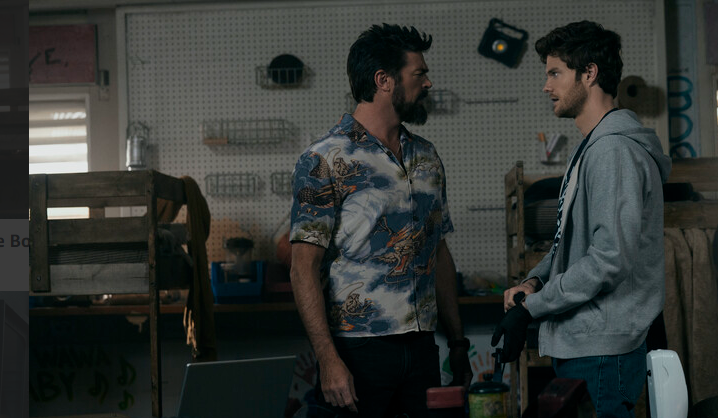
Karl Urban, speaking about Butcher, expands the idea in a way that reframes the entire emotional architecture of the series. Even as Butcher descends further into a worldview shaped by annihilation and control, Urban notes that hope is still present, just distorted. Butcher may believe in catastrophic solutions, but he still believes in outcomes. He still believes something can be won.
Urban highlights the central question the final season seems to be circling which is not whether victory is possible, but what it costs to achieve it. In that framing, Hughie and Butcher become opposing interpretations of the same impulse. One insists on preserving the possibility of goodness. The other is willing to destroy anything in pursuit of certainty.
What makes Hughie compelling at this stage is not that he is evolving into a hardened version of himself, but that he is refusing to. In a world that rewards brutality, his insistence on empathy and belief in redemption becomes its own form of rebellion.
As The Boys moves toward its conclusion, Hughie’s mindset may be its quietest but most enduring question which in a story defined by corruption and collapse, what does it mean to keep hoping anyway?
The series finale of The Boys is currently streaming on Prime Video.