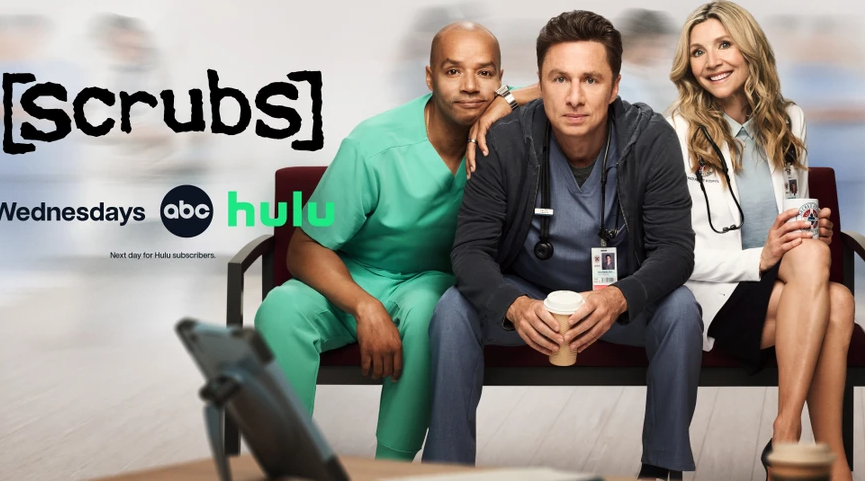

More than 20 years after Scrubs first introduced audiences to the beautifully dysfunctional doctors of Sacred Heart, Zach Braff, Donald Faison, and Sarah Chalke are returning to a world that feels familiar while existing within a very different television landscape.
Naturally, the return of Scrubs comes with plenty of nostalgia. Fans remember J.D. and Turk’s friendship, Elliot’s endless anxieties, Dr. Cox’s brutally funny insults, the Janitor’s schemes, and the bizarre fantasies that could transform an ordinary day at the hospital into something completely ridiculous. However, nostalgia alone cannot sustain a television revival, especially one attempting to recapture a comedic formula audiences first fell in love with more than two decades ago.
What made Scrubs work was the chemistry between its cast, and according to Chalke, that connection is something no writers’ room or studio can manufacture.
BGN spoke with Chalke, Braff, and Faison about returning to Scrubs, reconnecting with characters they have known for decades, and figuring out how the irreverent comedy of the original series translates to television in 2026. Their responses suggest that the show’s greatest advantage isn’t necessarily its recognizable characters or beloved running jokes, but the genuine relationships that have developed between its stars over the past 25 years.
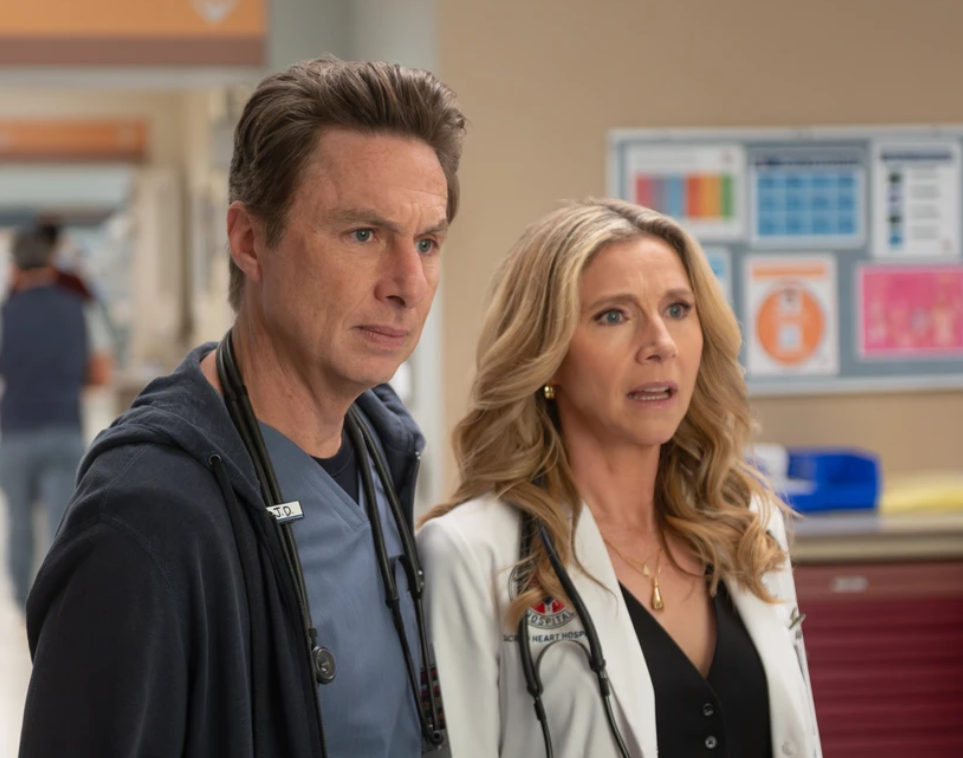
When asked what the “secret sauce” is that makes the Scrubs ensemble work, Chalke pointed to something much deeper than comedic timing.
“I think it’s the history, to be honest,” Chalke told BGN. “You can hope that you have chemistry when you meet a new cast, and day one, you’re like, ‘What’s the vibe gonna be on this set, and are we gonna get along? And how well are we gonna get along?’”
For this cast, those questions were answered a long time ago.
“You can manufacture a lot of things, but one thing you can’t manufacture is history,” Chalke continued. “We’ve known each other and been friends for 25 years, and I think that it comes across.”
There is something noticeably different about watching performers who have genuinely known each other for decades. They understand one another’s rhythms and know when to push a joke, when to pull back, and when to give their scene partner enough room to try something unexpected. For a comedy as dependent on its ensemble as Scrubs, that familiarity provides the actors with a creative freedom that would be difficult to reproduce with an entirely new cast.
“There’s a safety and a comfort in that that lends itself really well to comedy when you feel like, ‘I can try anything, and it doesn’t matter if it doesn’t work. I’ll just try it,’” Chalke explained. “And I think in that, that’s where the kind of magic stuff happens.”
That history may ultimately be one of the greatest advantages the new Scrubs has, but the more complicated question is whether the comedy surrounding those relationships can evolve along with them. The television environment that produced Scrubs in 2001 is dramatically different from the one in which the series now finds itself.
The original Scrubs could be raunchy, politically incorrect, absurd, sentimental, and occasionally downright inappropriate, sometimes within the same episode. Some of those jokes have aged considerably better than others, while certain characters were built around behavior that would be interpreted very differently by audiences today.
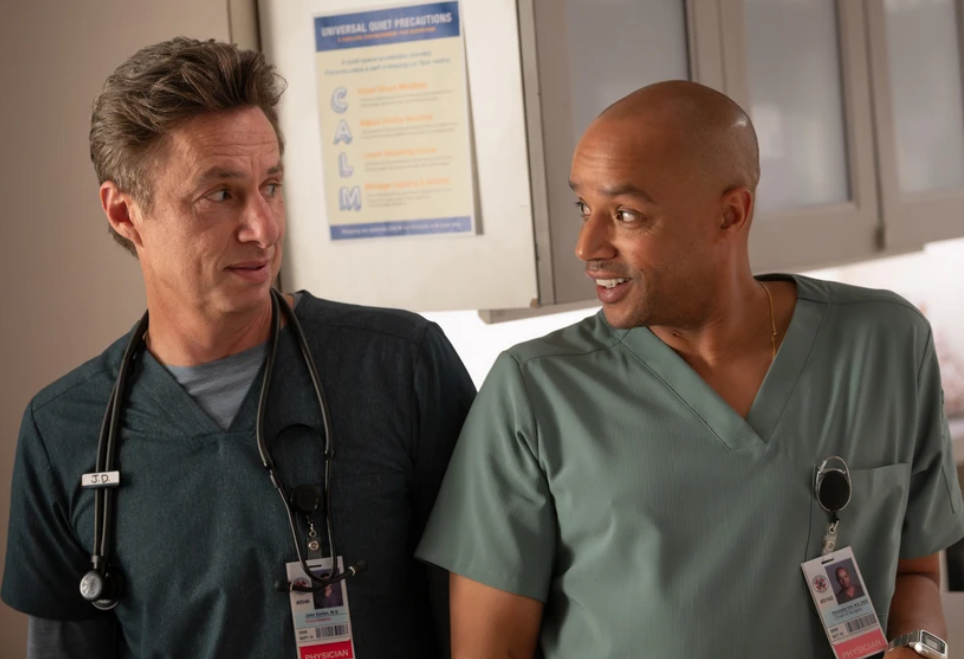
“You know, I’ve been directing shows on streaming, and to come back to ABC in prime time at 8:00, it’s shocking how much you’re not allowed to do,” Braff told BGN.
What makes that observation particularly interesting is that the original Scrubs was itself a network television comedy. Yet Braff remembers the show being able to push its humor further during its original run.
“Even back in the day, 20-whatever years ago, on NBC at 9:30, we got away with a whole lot more,” Braff said.
That distinction says quite a bit about the balancing act facing the new Scrubs. A revival cannot simply pretend the last 25 years never happened, particularly when audiences, television standards, and cultural conversations surrounding comedy have changed considerably. At the same time, stripping away every potentially offensive or uncomfortable element of the original series could leave Scrubs feeling like a sanitized version of itself.
Faison understands that tension particularly well, especially because he apparently remains one of the cast members most likely to test those boundaries.
“I’m the one that they try to censor a lot because my mouth sometimes gets me into a lot of trouble,” Faison told BGN.
While Faison joked about being censored, he also confirmed that updating the show’s humor was a genuine creative conversation behind the scenes. Rather than assuming that jokes from the original series could simply be transplanted into the revival, the creative team had to consider how the spirit of those stories could remain intact while acknowledging the era in which the new episodes are being produced.
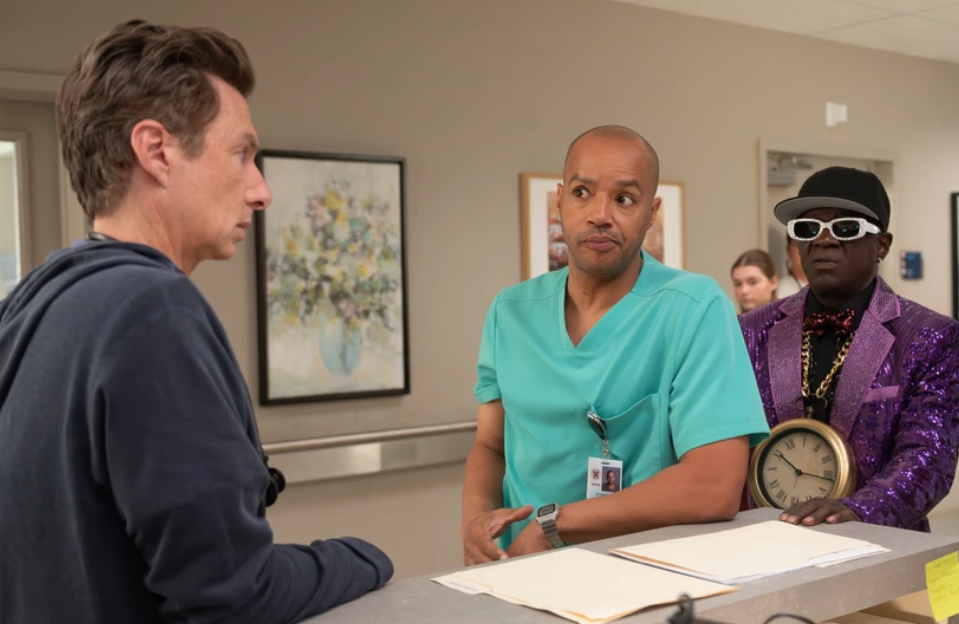
“Definitely comedy has changed,” he said. “I know for a fact that there was definitely conversation about how do we still tell the same stories that we told back in the OG Scrubs days.”
Some of those stories pushed boundaries even by the standards of the original series, which makes recreating that comedic freedom more complicated today.
“Some of them were very risky,” Faison continued. “How do we do that in today’s world?”

That may be one of the most interesting questions surrounding the return of Scrubs. The challenge isn’t simply determining whether J.D. still disappears into elaborate fantasies or whether Turk and J.D. can immediately fall back into their familiar bromance. Instead, the series has to determine whether its comedy can mature alongside its characters without sacrificing the weirdness and irreverence that made the show distinctive in the first place.
There is often a temptation with legacy television to recreate exactly what audiences remember rather than explore what those characters would realistically look like decades later. Scrubs, however, has an opportunity to take a more interesting approach because its characters are no longer young doctors stumbling through the earliest stages of their careers and personal lives. They now have decades of experiences behind them, and their perspectives on medicine, friendship, relationships, family, and adulthood should naturally have changed.
The comedy should be allowed to change with them.
That doesn’t mean Scrubs suddenly needs to become overly cautious or afraid of making audiences uncomfortable. The original series frequently found its best moments by balancing outrageous comedy with unexpectedly sincere storytelling. An episode could feature a ridiculous fantasy sequence or inappropriate joke before abruptly reminding viewers that Sacred Heart was a hospital filled with people confronting illness, death, friendship, love, and failure.
That tonal flexibility was always more important to the identity of Scrubs than any individual joke, which is why Chalke’s observation about the cast’s history carries so much weight. The revival doesn’t have to manufacture the relationship audiences most want to see because Braff, Faison, Chalke, and the other returning cast members already share decades of history with one another.
Twenty-five years of friendship gives these performers the freedom to take risks together, experiment with their characters, and discover what Scrubs should sound like today instead of desperately trying to recreate exactly what it sounded like in 2001.
The new Scrubs doesn’t need to prove that nothing has changed since audiences last spent time with these characters. In fact, acknowledging how much has changed may ultimately be what allows the revival to work. Sacred Heart can evolve without losing the chaotic energy, emotional sincerity, and ensemble chemistry that made audiences care about these characters in the first place.
If Chalke is right, the most important ingredient has been there all along. The cast already has the history, chemistry, and trust that cannot be recreated through nostalgia alone. Now the real test is whether Scrubs can use that history to create something that feels familiar without being stuck in the past.
Scrubs airs Wednesdays on ABC and streams on Hulu.