
Horror has always had its scream queens. From women fleeing masked killers to heroines confronting supernatural forces, the genre has built an entire legacy around female characters fighting for survival. However, for decades, Black women were frequently relegated to supporting roles, disposable victims, or characters whose deaths served someone else’s storyline. Even when they survived, their stories rarely received the same attention as those of their white counterparts.
Fortunately, Black women have been challenging these conventions for generations. And today’s actresses aren’t simply waiting around to become the next victim. They’re fighting demons, confronting generational trauma, battling vampires, surviving alien invasions, and occasionally becoming the monsters themselves.
The modern Black scream queen is no longer confined to a single archetype. She can be a mother, a spiritual healer, a college professor, a comedian, or a woman confronting the darkest parts of her identity. Whether she’s delivering bloodcurdling screams or silently calculating her next move, she brings something distinctive to horror.
As we celebrate the evolution of Black women in the genre, we’re highlighting the actresses whose performances have helped transform horror into a space for complex Black female characters.
From the Final Girl to the Black Scream Queen
Historically, the term “scream queen” has been associated with actresses who became recognizable through their work in horror films. Names like Jamie Lee Curtis, Janet Leigh, and Heather Langenkamp helped establish the archetype of women who could carry horror franchises through memorable performances.
For Black actresses, however, the road to becoming recognized horror icons has been considerably more complicated.
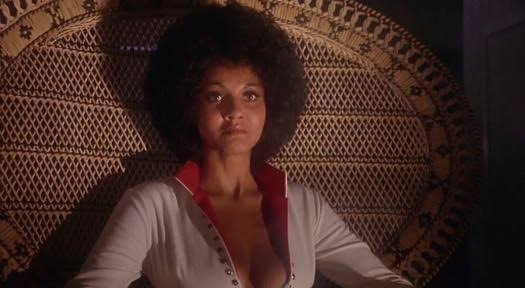
Blaxploitation-era horror films such as Sugar Hill (1974), starring Marki Bey, offered an alternative to Hollywood’s traditional portrayals of Black women. Rather than playing a helpless victim, Bey’s character commands an army of zombies to exact revenge against the people responsible for her boyfriend’s murder.
Marlene Clark’s performance in Ganja & Hess (1973) also challenged conventional horror storytelling. As Ganja Meda, Clark portrayed a woman whose relationship with a vampire becomes an exploration of sexuality, power, addiction, and identity.
These performances demonstrated that Black women could occupy the center of horror narratives without surrendering their agency.
By the 1990s, actresses like Angela Bassett and Jada Pinkett Smith were bringing Black female protagonists to mainstream supernatural horror. Their performances helped establish the foundation for a generation of actresses who would eventually redefine the scream queen for contemporary audiences.
Angela Bassett: Horror Royalty
Long before today’s wave of elevated horror, Angela Bassett was demonstrating that Black women could bring sophistication, sensuality, and commanding authority to supernatural storytelling.
In Wes Craven’s Vampire in Brooklyn (1995), Bassett stars opposite Eddie Murphy as Detective Rita Veder, a woman investigating a series of mysterious deaths while discovering her connection to the supernatural. Her character finds herself caught between her professional responsibilities and the seductive influence of Murphy’s vampire, Maximillian.
Bassett’s performance gives Rita an emotional complexity that elevates the film beyond its horror-comedy premise. Rather than simply existing as the vampire’s romantic obsession, Rita struggles with questions of identity, family history, and her supernatural inheritance.
Nearly two decades later, Bassett brought that same commanding presence to FX’s American Horror Story.
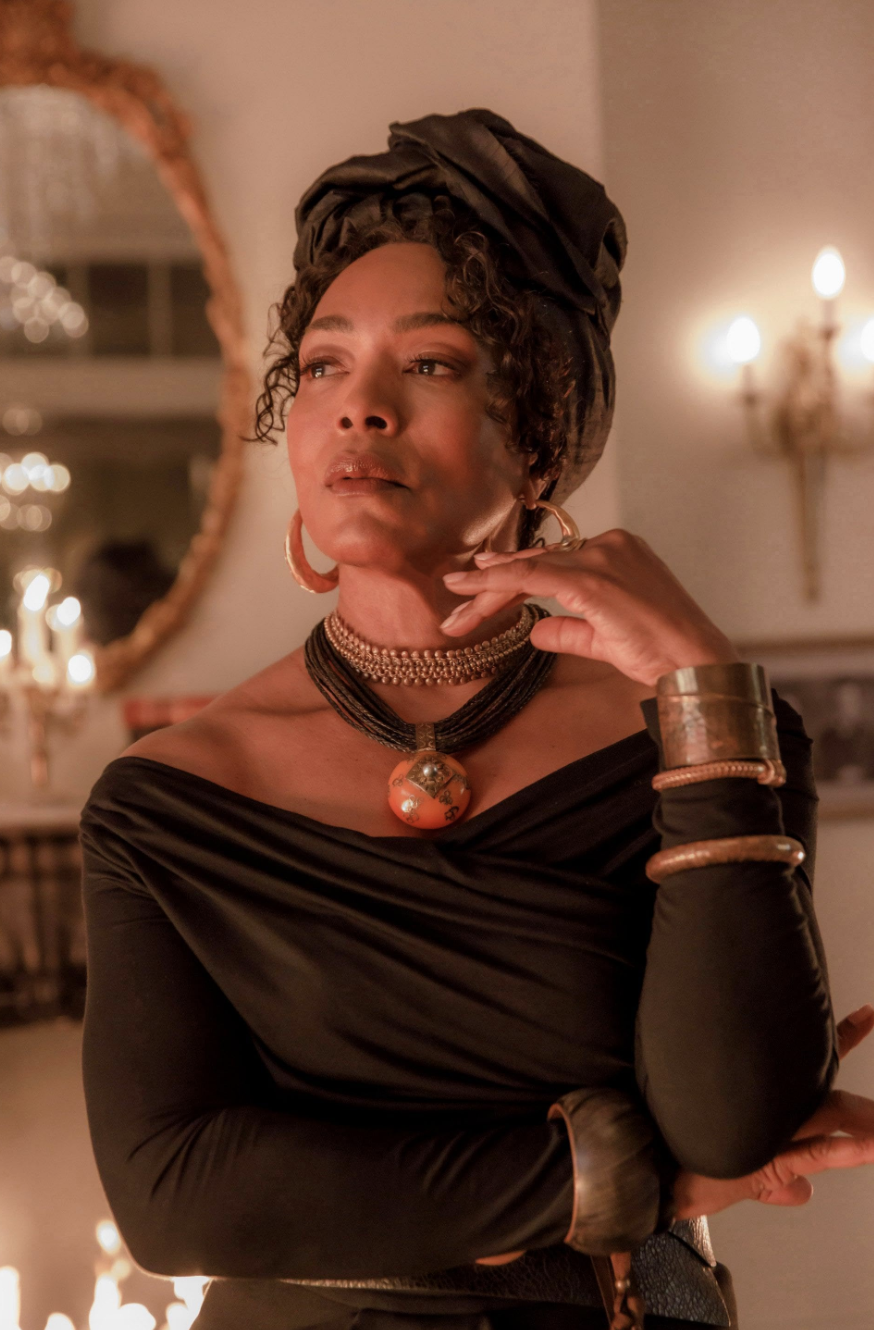
Her portrayal of Marie Laveau in American Horror Story: Coven introduced audiences to a fictionalized version of the legendary New Orleans spiritual practitioner. Bassett transformed the character into a formidable adversary whose supernatural abilities, personal grievances, and complicated relationship with the coven made her one of the season’s most memorable figures.
She returned in American Horror Story: Freak Show as Desiree Dupree, a performer navigating exploitation, prejudice, and personal independence. Bassett has returned as Marie Laveau in the current season of American Horror Story now streaming on FX.
What makes Bassett such an important figure in horror is her ability to portray women who refuse to surrender their power, even when the world around them attempts to diminish it. Whether she’s confronting a vampire or commanding an entire supernatural community, Bassett’s characters are rarely interested in playing the helpless victim.
Jada Pinkett Smith: The ’90s Horror Heroine Who Deserved More
If there’s one film that deserves more recognition in conversations about Black women in horror, it’s Ernest Dickerson’s Tales from the Crypt Presents: Demon Knight (1995).
Jada Pinkett Smith stars as Jeryline, a young woman working at a boarding house that becomes the site of a supernatural siege. When a mysterious stranger arrives carrying an ancient artifact, the building’s occupants find themselves battling demonic forces determined to unleash hell on Earth. Jeryline initially appears to be an ordinary young woman caught in extraordinary circumstances. However, as the body count increases, she emerges as the film’s central heroine.
Her survival is particularly significant because Demon Knight places a Black woman in the role traditionally reserved for white final girls. Jeryline isn’t simply the last person standing by accident. She actively confronts evil and ultimately inherits the responsibility of protecting humanity from demonic forces.
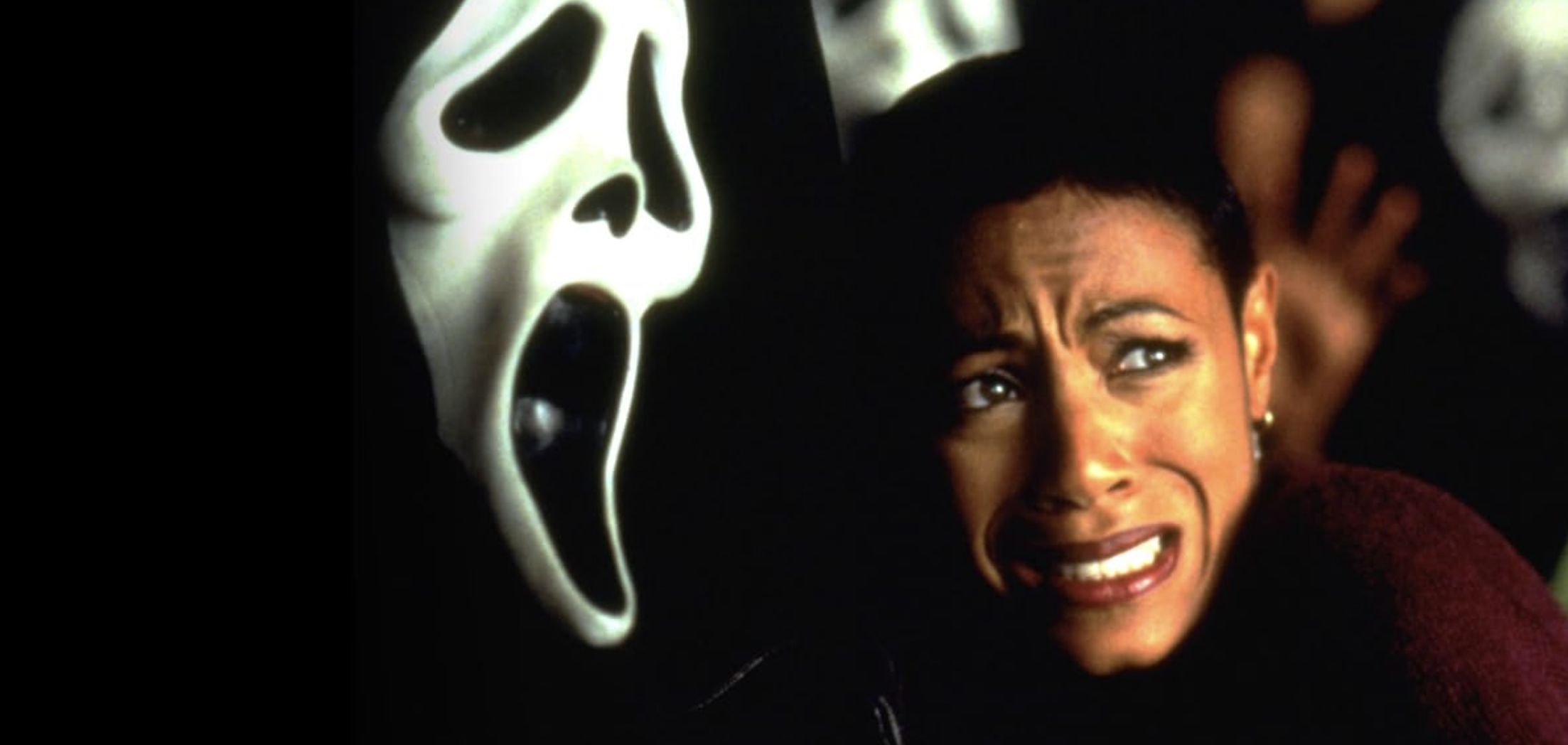
Two years later, Pinkett Smith appeared in the unforgettable opening sequence of Wes Craven’s Scream 2 (1997). As Maureen Evans, she attends a screening of the fictional slasher film Stab with her boyfriend, only to become the victim of a Ghostface killer in a theater packed with unsuspecting moviegoers.
Her murder is one of the franchise’s most disturbing opening sequences, particularly because the surrounding audience initially mistakes her suffering for part of the entertainment.
The contrast between these two roles illustrates the complicated history of Black women in horror. In Demon Knight, Pinkett Smith becomes the heroine who saves the day. In Scream 2, her character becomes an early victim whose death establishes the danger facing the film’s predominantly white protagonists. Both performances remain important to discussions about Black representation in mainstream horror.
Lupita Nyong’o: The Modern Scream Queen Who Can Do It All
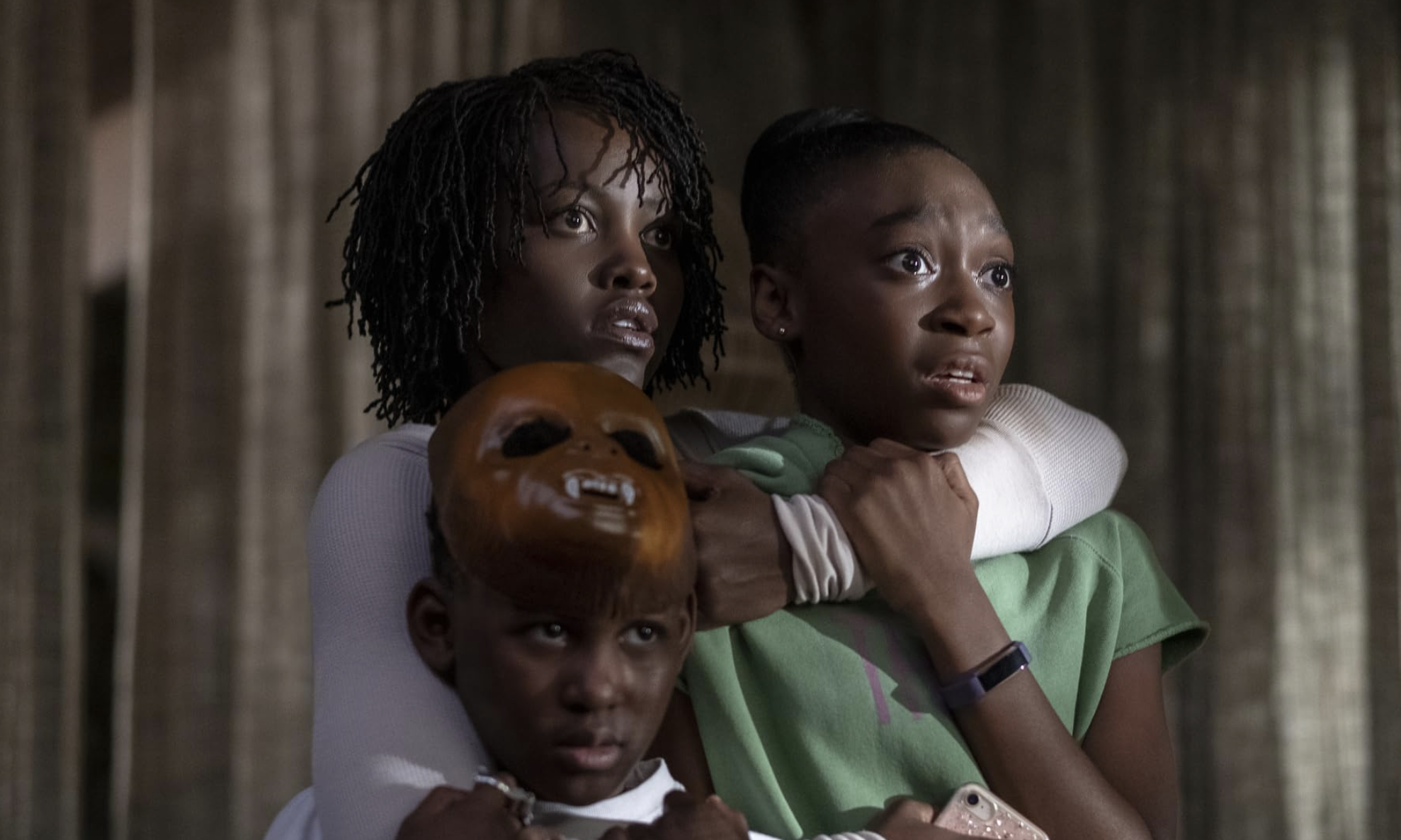
Few contemporary actresses have established themselves as convincingly within horror as Lupita Nyong’o.
Her performance in Jordan Peele’s Us (2019) is an extraordinary example of an actress transforming the conventions of the genre.
Playing both Adelaide Wilson and her terrifying doppelgänger, Red, Nyong’o delivers two radically different performances that explore identity, privilege, repression, and the psychological consequences of America’s social inequalities.
Adelaide initially appears to be a mother determined to protect her family from murderous intruders. Red, meanwhile, is an unsettling figure whose distorted voice, calculated movements, and chilling determination make her one of contemporary horror’s most recognizable antagonists. What makes Nyong’o’s performance particularly effective is how the film gradually complicates our understanding of both women.
Rather than presenting a straightforward conflict between an innocent protagonist and a monstrous villain, Us challenges audiences to reconsider who deserves sympathy and what constitutes monstrosity.
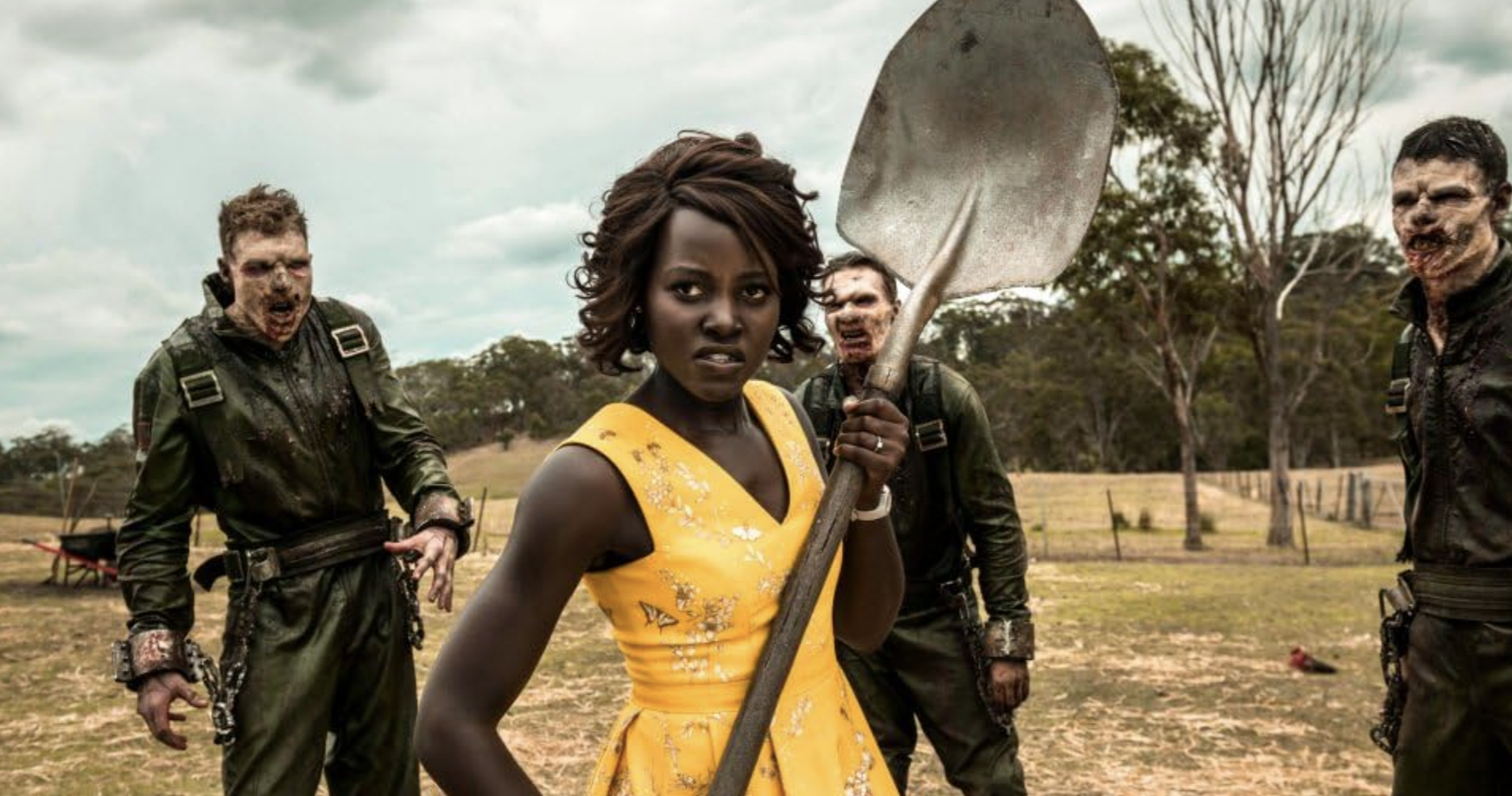
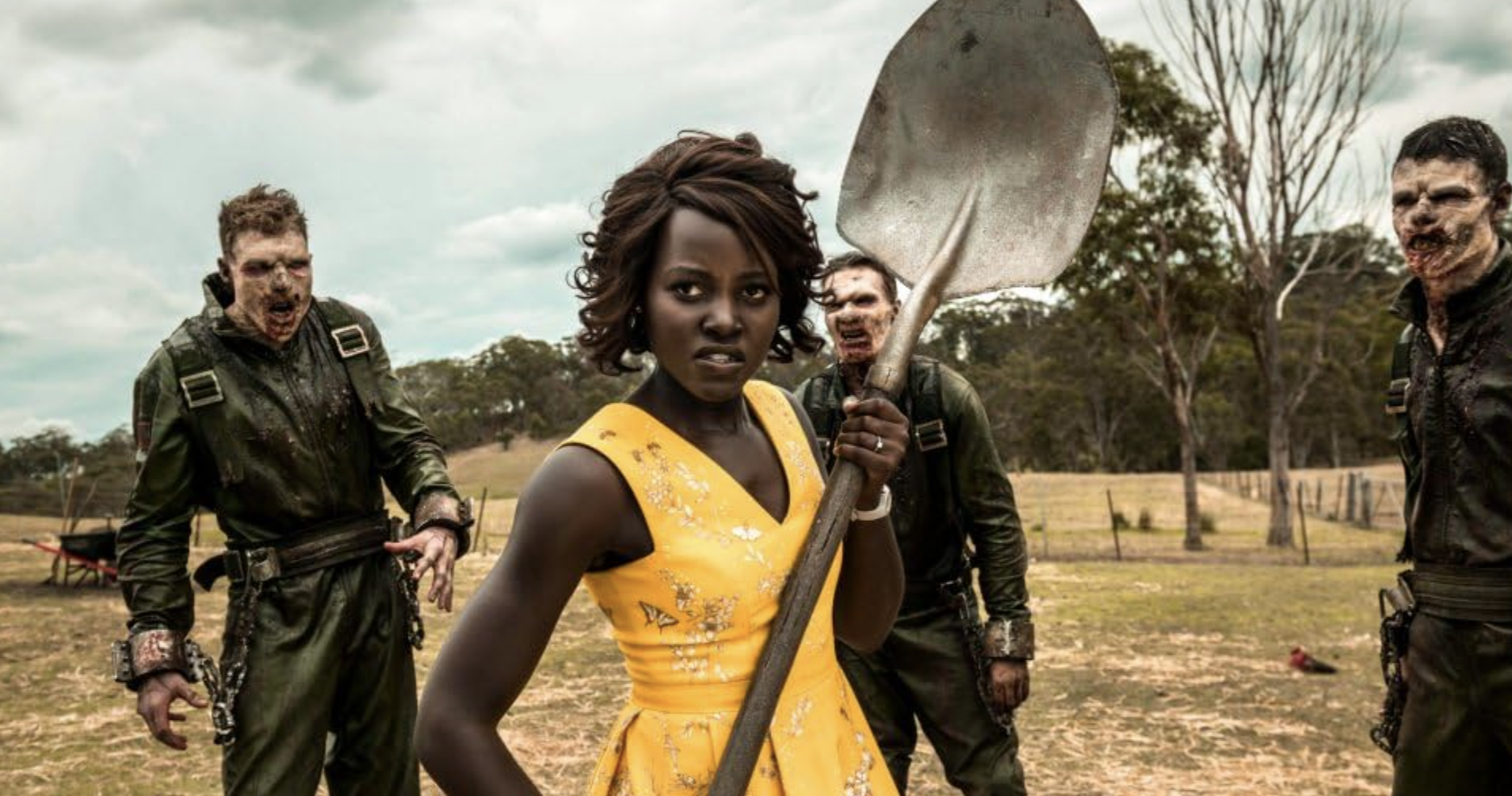
That same year, Nyong’o demonstrated her versatility in the Australian zombie comedy Little Monsters.
As kindergarten teacher Miss Caroline, she must protect a group of children when a school excursion turns into a zombie apocalypse. Her character’s seemingly endless optimism, musical abilities, and fierce determination provide the film with both its comedic energy and emotional foundation. Then came A Quiet Place: Day One (2024).
Nyong’o portrays Samira, a terminally ill woman navigating New York City during the initial stages of an extraterrestrial invasion. Unlike traditional action-oriented survival stories, the film explores how someone already confronting mortality responds when the entire world suddenly faces extinction.
Samira’s relationship with her cat, Frodo, and her unexpected friendship with fellow survivor Eric bring an intimate emotional dimension to the franchise. Nyong’o communicates much of Samira’s terror, frustration, and determination without dialogue, an especially demanding task in a film where making noise can mean death. Across these three films, Nyong’o has portrayed a protective mother, a terrifying antagonist, a courageous teacher, and a woman navigating the end of the world.
Wunmi Mosaku: Reclaiming Black Spirituality Through Horror
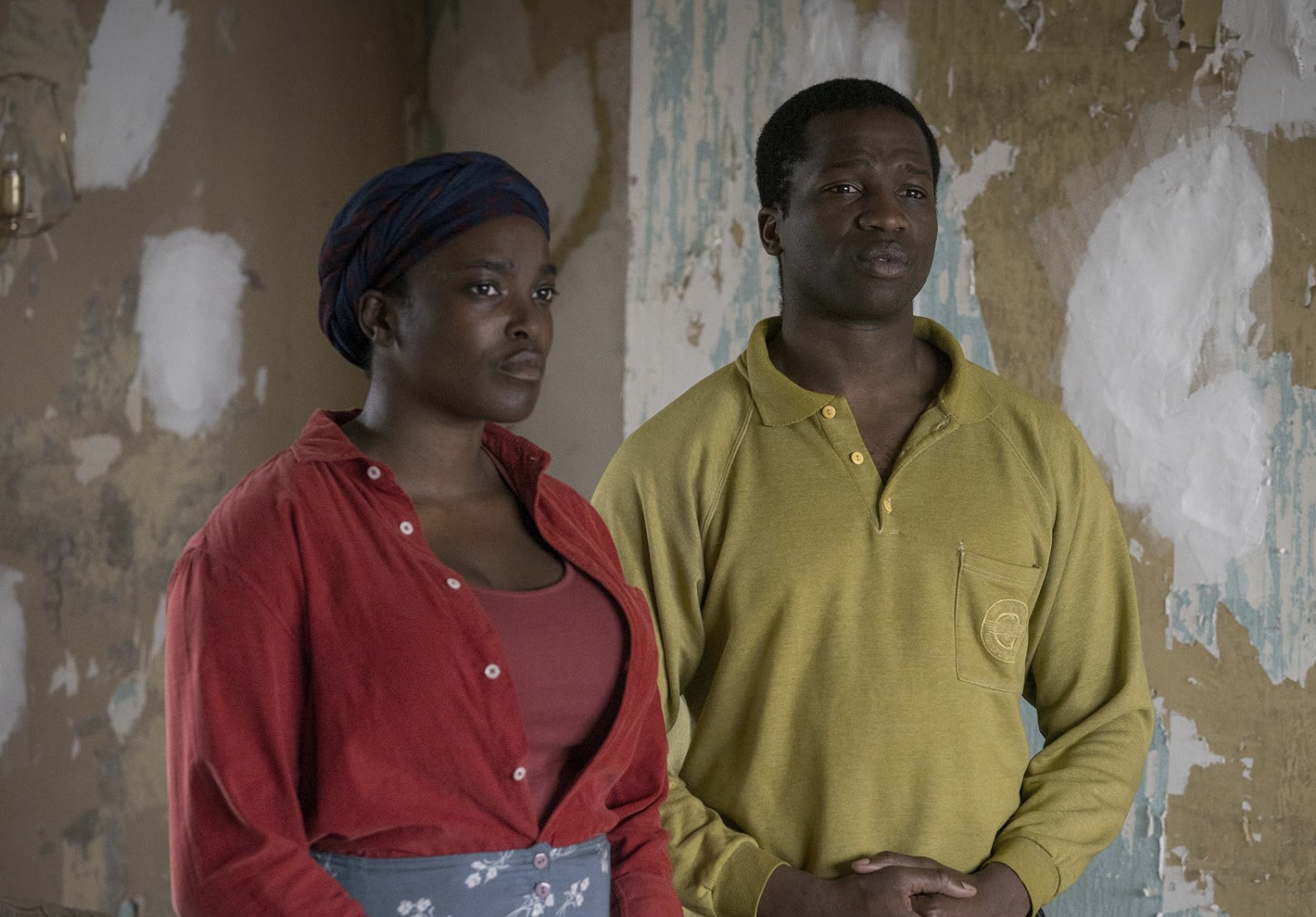
Wunmi Mosaku has established herself as a formidable presence in contemporary horror, particularly through performances that explore cultural identity, spirituality, and the lingering consequences of trauma.
In Remi Weekes’ His House (2020), Mosaku portrays Rial, a South Sudanese refugee attempting to build a new life in England alongside her husband, Bol. After escaping the violence of their homeland, the couple discovers that their new house harbors a terrifying supernatural presence. While His House delivers traditional haunted-house scares, its underlying story examines survivor’s guilt, displacement, and the psychological consequences of migration.
Mosaku’s performance is especially compelling because Rial refuses to abandon her cultural identity, even as her husband desperately attempts to assimilate into British society. Her relationship with the supernatural forces haunting their home becomes an exploration of grief and unresolved trauma. Five years later, Mosaku delivered another memorable horror performance in Ryan Coogler’s Sinners (2025).
As Annie, a Hoodoo practitioner and former lover of Smoke (Michael B. Jordan), Mosaku portrays a woman whose spiritual knowledge becomes essential when vampires descend upon a Mississippi juke joint. Annie’s understanding of supernatural forces and ancestral traditions makes her an indispensable figure in the fight against evil. Her character also challenges Hollywood’s longstanding tendency to portray African diasporic spiritual practices as inherently sinister. Instead, Sinners presents Annie’s knowledge as a source of protection, healing, and cultural continuity.
Between His House and Sinners, Mosaku has helped establish a different kind of horror heroine: a woman whose cultural knowledge and spiritual identity are sources of strength rather than characteristics she must abandon to survive.
Regina Hall: From Horror Comedy to Psychological Terror
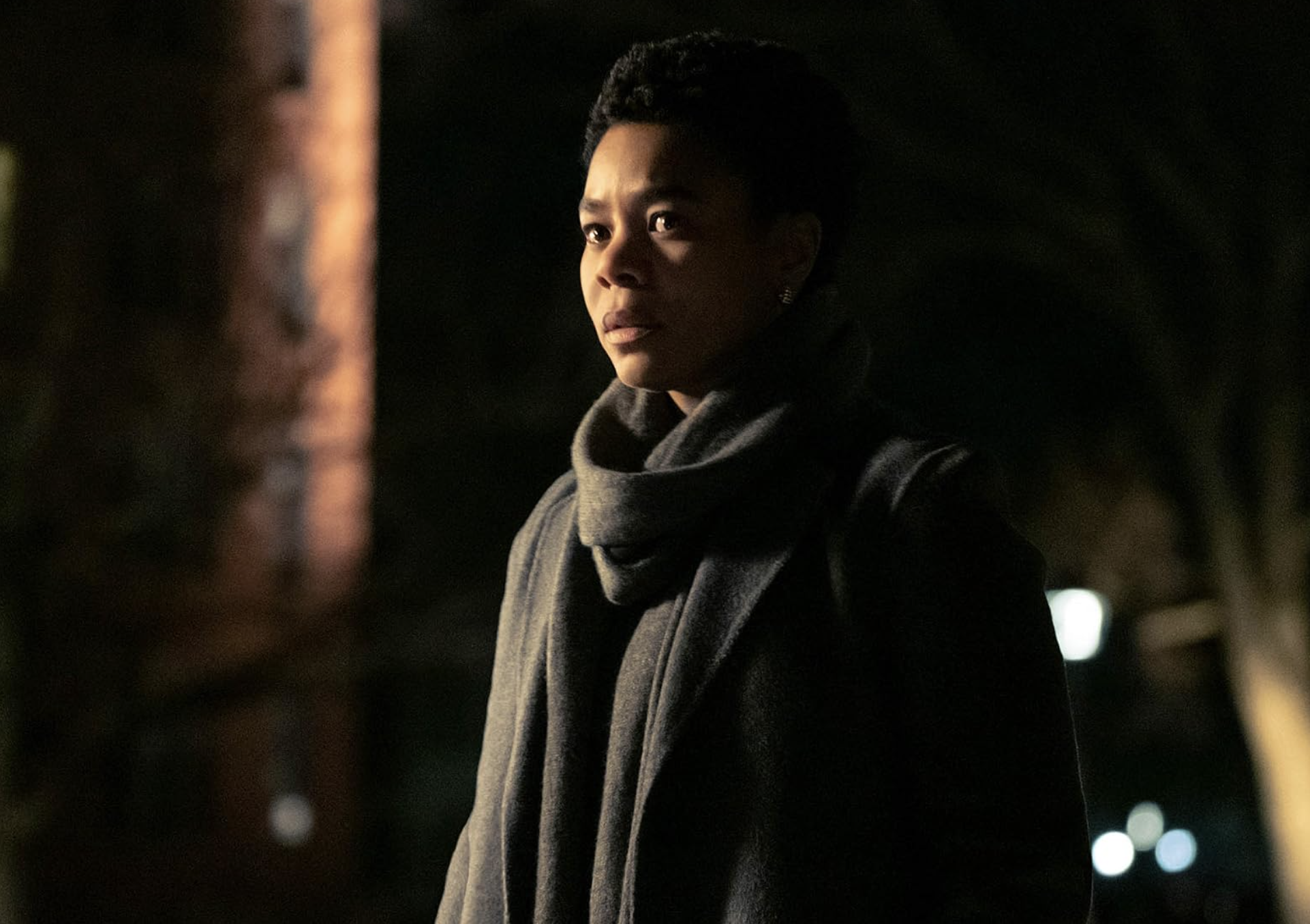
When discussing Black scream queens, it would be practically criminal to overlook Regina Hall.
For an entire generation of moviegoers, Hall is synonymous with Brenda Meeks, the hilariously outspoken character from the Scary Movie franchise. Brenda is everything conventional horror heroines are frequently discouraged from being. She’s loud, confrontational, unapologetic, and completely uninterested in following the genre’s traditional rules.
Whether she’s arguing with characters in a movie theater or reacting to increasingly ridiculous supernatural encounters, Brenda provides some of the franchise’s most memorable comedic moments. What makes Brenda such an entertaining character is her refusal to behave like a traditional horror victim. While other characters scream and flee, Brenda often responds to terrifying situations with sarcasm, insults, and spectacularly questionable decisions.
However, Hall’s contribution to horror extends well beyond comedy. In Mariama Diallo’s psychological horror film Master (2022), Hall portrays Gail Bishop, a professor who becomes the first Black woman appointed to lead a residence hall at the prestigious fictional Ancaster College. Gail’s professional achievement quickly becomes a nightmare as she confronts institutional racism, disturbing campus traditions, and the possibility that the university is haunted.
The film explores how Black women navigate predominantly white institutions, particularly when their professional success fails to protect them from discrimination. Hall delivers a restrained performance that contrasts sharply with her comedic work as Brenda. Her character’s growing isolation and frustration create a different kind of horror, one rooted in experiences that many Black women recognize. Rather than relying exclusively on supernatural scares, Master examines the psychological consequences of navigating environments where racism can feel as pervasive as any ghost.
Jasmin Savoy Brown: A New Generation of Final Girls
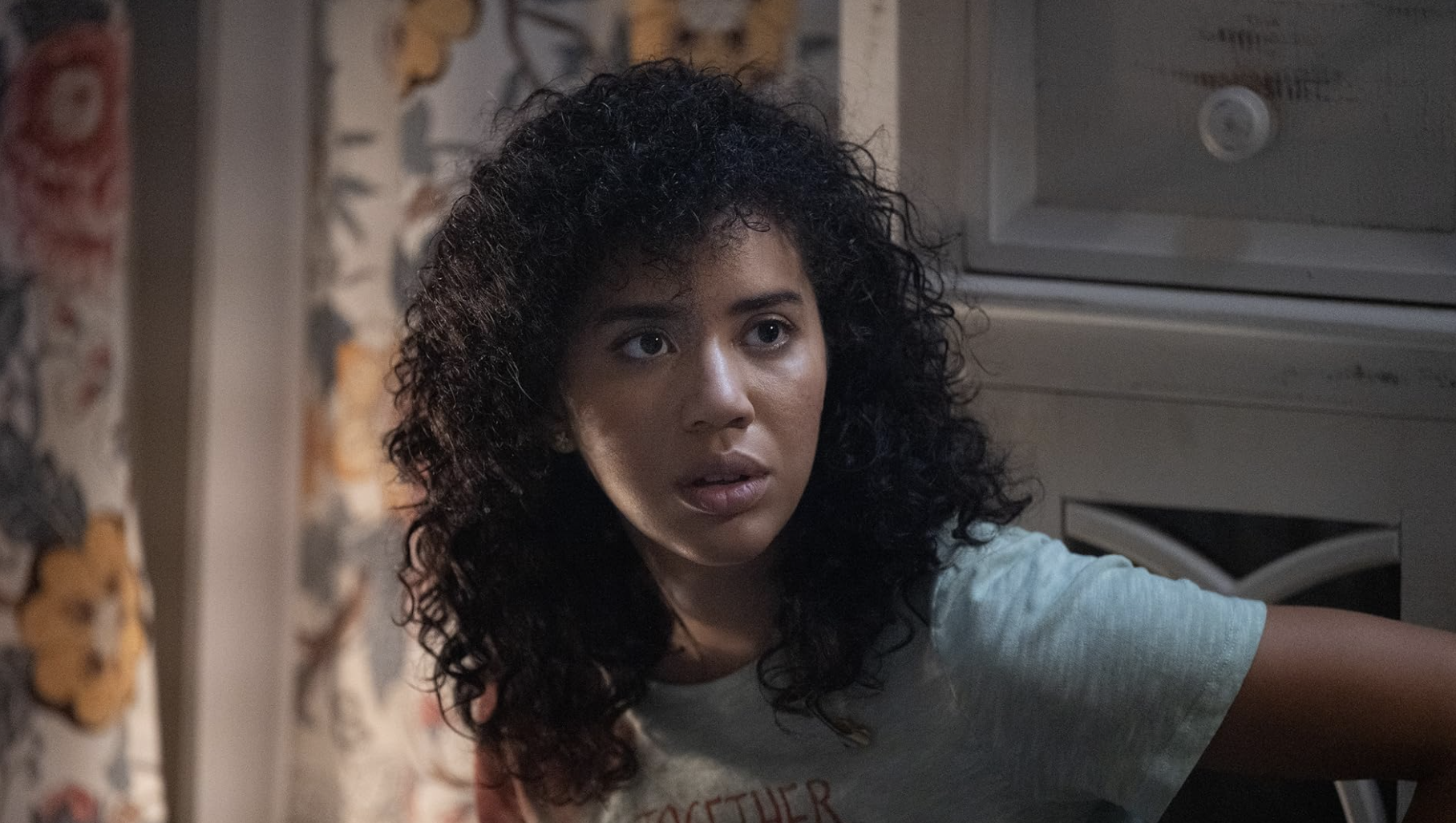
The Scream franchise has always enjoyed poking fun at horror conventions, particularly the unwritten rules determining who survives a slasher movie.
Jasmin Savoy Brown’s Mindy Meeks-Martin takes that tradition into a new generation.
Introduced in Scream (2022), Mindy is the niece of original franchise character Randy Meeks. Like her uncle, she’s an enthusiastic horror fan whose encyclopedic knowledge of slasher films makes her particularly qualified to identify the dangers facing her friends. Mindy is also a queer Black woman, bringing representation to a franchise historically centered on white protagonists. Unlike many horror characters who seem determined to make the worst possible decisions, Mindy understands the genre’s conventions. Unfortunately, knowing the rules doesn’t necessarily guarantee survival.
Outside Scream, Brown starred in The Sound of Violence (2021), a psychological horror film about a young woman who experiences synesthetic sensations connected to violent sounds. Her character’s relationship with violence becomes increasingly disturbing as she attempts to recreate the sensory experiences she associates with traumatic events.
Brown’s performances reflect an important evolution in contemporary horror. Black women can be knowledgeable genre enthusiasts, complex antagonists, and recurring franchise characters rather than disposable supporting players. Mindy, in particular, represents something horror audiences have long deserved: a Black woman who understands the rules of the genre and gets the opportunity to keep playing.
Anna Diop: Motherhood, Folklore, and Psychological Horror
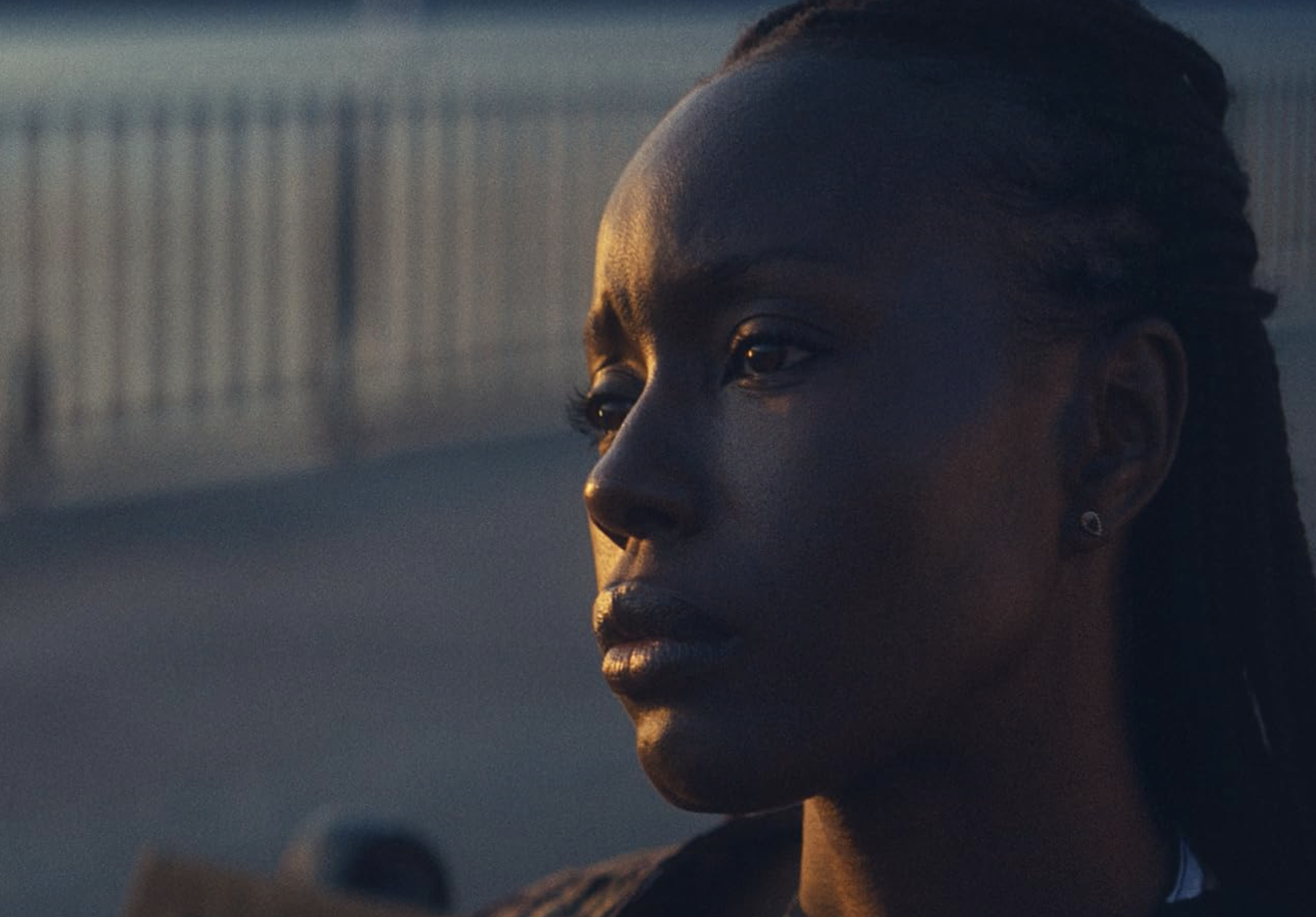
Anna Diop has emerged as another compelling figure in contemporary horror, particularly through her performances in films exploring motherhood, immigration, and cultural identity.
In Jordan Peele’s Us (2019), Diop portrays Rayne Thomas and her Tethered counterpart, Eartha. Although her appearance is relatively brief, the dual roles place her within one of contemporary horror’s most culturally significant films. Her breakthrough as a horror leading lady arrived with Nikyatu Jusu’s Nanny (2022).
Diop stars as Aisha, a Senegalese immigrant working as a nanny for a wealthy Manhattan family while attempting to save enough money to bring her young son to the United States. As Aisha navigates an increasingly exploitative working environment, she begins experiencing disturbing supernatural visions connected to West African folklore.
The film draws upon figures such as Mami Wata and Anansi, incorporating African spiritual traditions into a psychological horror narrative about displacement, motherhood, and economic inequality. Diop’s performance is particularly effective because Aisha’s supernatural experiences cannot be separated from her emotional circumstances. Her isolation, longing for her son, and vulnerability as an immigrant create an atmosphere in which everyday exploitation becomes just as frightening as the supernatural.
Her work represents a particularly exciting direction for Black horror, one in which African folklore and contemporary experiences are given the same narrative importance as traditional Western supernatural mythology.
What Modern Black Scream Queens Represent
The evolution of Black women in horror reflects a larger transformation in the genre itself.
For decades, mainstream horror frequently treated Black characters as expendable. Their deaths were used to establish danger, motivate other characters, or provide brief moments of shock. Black women faced the additional challenge of navigating stereotypes that limited their emotional complexity and narrative importance.
Today’s horror landscape offers considerably more possibilities.
Lupita Nyong’o can portray both the heroine and the monster. Angela Bassett can command supernatural forces. Wunmi Mosaku can draw upon ancestral knowledge to confront evil. Regina Hall can use comedy to dismantle horror conventions before exploring the psychological terror of institutional racism. Meanwhile, actresses like Jasmin Savoy Brown and Anna Diop are helping introduce a new generation of horror heroines whose identities and experiences are central to their stories.
Their performances also demonstrate why representation behind the camera matters.
Filmmakers such as Nikyatu Jusu, Mariama Diallo, and Jordan Peele have created opportunities for Black actresses to explore stories that mainstream horror historically overlooked. Ryan Coogler’s Sinners further demonstrates how Black history, music, spirituality, and supernatural storytelling can intersect within a major studio production.
Importantly, the modern Black scream queen doesn’t always have to survive to leave a lasting impression. Nor must she be morally flawless, physically invincible, or perpetually strong. She can be frightened, vulnerable, angry, grieving, funny, selfish, or deeply flawed. She can confront monsters while struggling with her own personal demons. And sometimes, she can be the monster.
As horror continues evolving, Black actresses are claiming more space within a genre that once struggled to imagine them as its central heroines. Their contributions deserve recognition not simply because they represent progress in diversity, but because they expand the creative possibilities of horror itself.